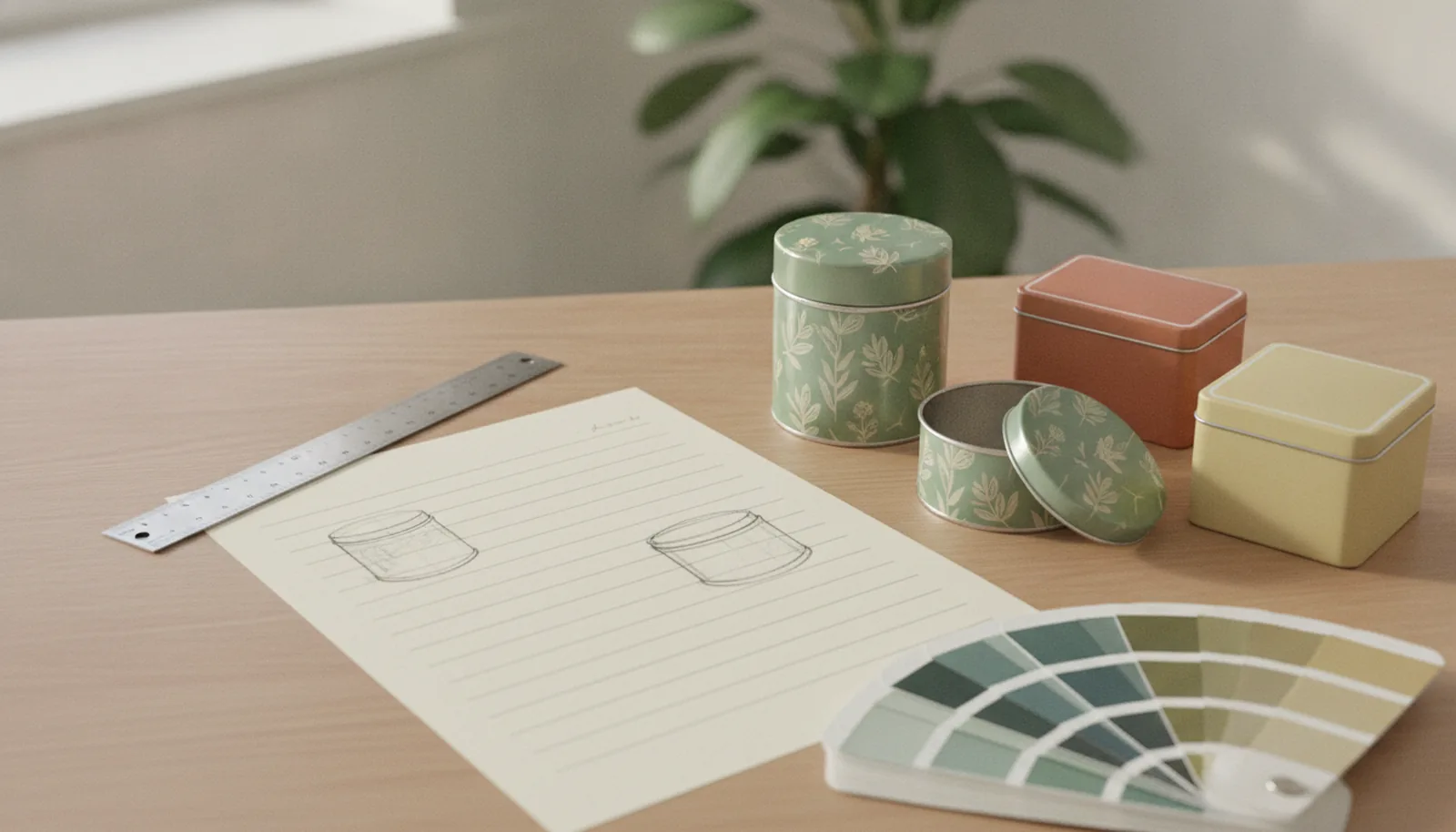
If you've never ordered custom tin packaging before, the first email is the hardest one to write. You know what the product is and roughly what you want the tin to feel like. What you don't know is which details a factory needs before it can give you a real number — and so the first exchange turns into a week of questions going back and forth before anyone has quoted anything.
A good brief shortens that week to a day. It doesn't need to be long, and it doesn't need to be final. It needs to answer seven questions, in roughly the order a factory will ask them.
What a brief actually is
A brief is the one-page version of your project: what goes inside the tin, how many you need, when you need them, what they should look like, and where they're going. Everything a manufacturer quotes — tooling, unit price, lead time, freight — is calculated from those five facts.
Think of it the way an architect thinks about a site survey. Nobody draws the house first and measures the lot afterwards. The brief is the measurement, and the reason it matters so much in tin specifically is that tin is a tooled product. A paperboard carton can be resized with a new cutting die in days. A tin's shape comes from a steel mold, and a tin's print comes from an offset press running full sheets of tinplate. Decisions made in the brief are cheap. The same decisions made after tooling are not.
Start with the product, not the tin
The most useful first line of any brief is what the tin will hold and how much of it. "A 2 oz loose-leaf tea" is a better start than "a 2.4-inch round tin", because loose-leaf tea varies enormously in density — the same weight of a rolled oolong and a fluffy white tea need very different volumes. We see this often enough that it's worth saying plainly: give the fill weight or count, the product's dimensions if it's solid, and whether it sits loose, in an inner bag, or in a tray.
From there, the internal dimensions can be worked out properly rather than guessed. Our guide to choosing the right tin size goes deeper on headspace and fit, and if the product needs to be held in place, custom tins with inserts are worth deciding on now — an insert changes the internal height you need.
Quantity: why MOQ exists and what to put in the brief
Minimum order quantity is the question almost every first inquiry asks, so here is ours: 3,000 pieces, on every project — existing mold or new.
The reason there is a minimum at all is mechanical. Decorative tins are printed by offset lithography onto flat tinplate sheets before the metal is cut and formed. Each job needs its own printing plates, its own press set-up, and its own run of sheets to get color up to standard before the good ones start coming off. Those costs are the same whether the run is two thousand tins or twenty thousand, so the smaller the run, the more of that fixed cost each tin carries. At some point the unit price stops making sense for anyone.
That's why a request for four tins, or for a few hundred by next month, isn't a fit for this process — and it's better to hear that on day one.
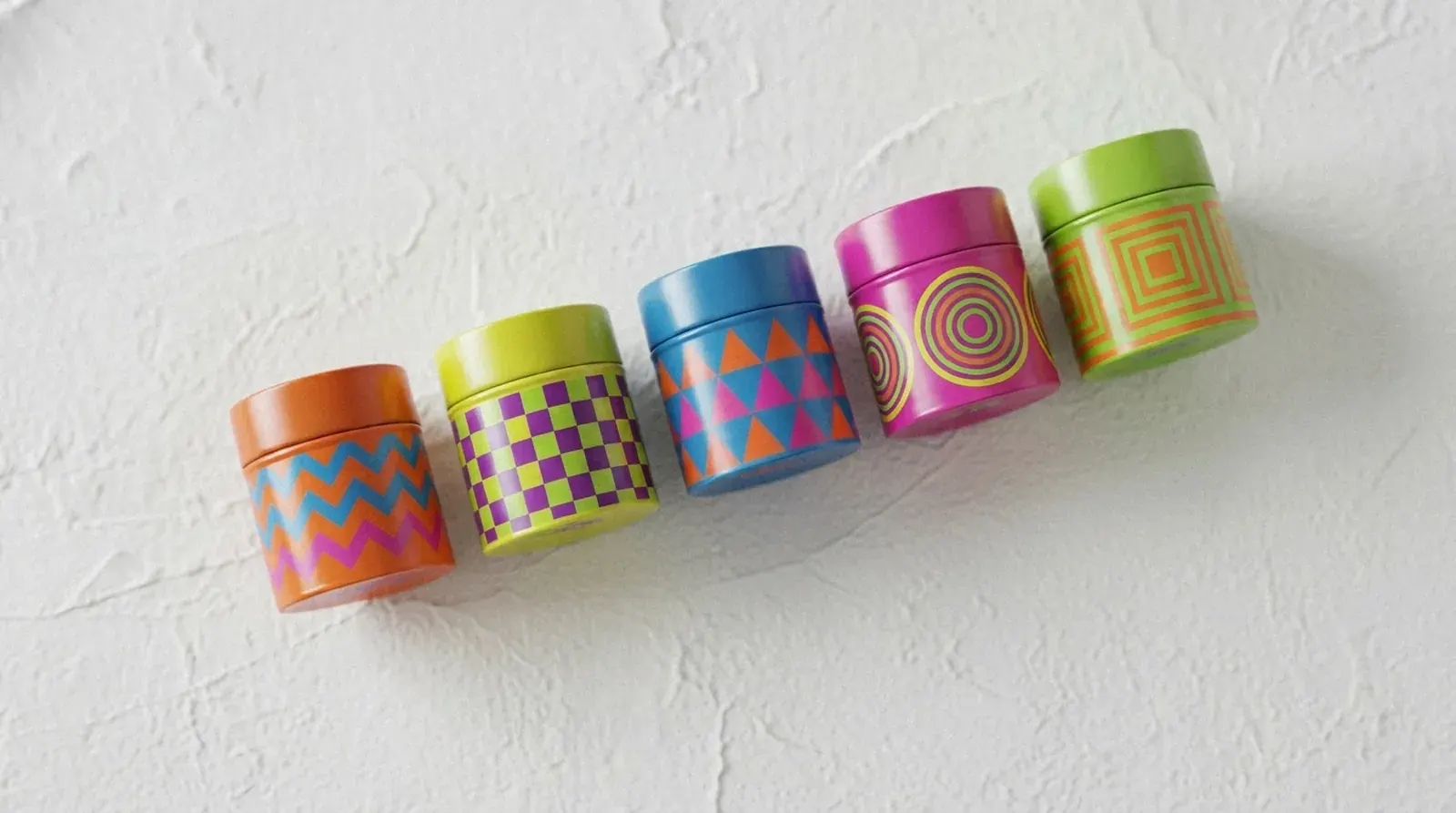
Two things make 3,000 more reachable than it first sounds. The first is that the minimum can be split across three or four different designs on the same tin, in equal quantities — 1,000 each of three designs, or 750 each of four. For a brand with a range of flavors, scents or seasonal editions, that's often the whole line in one order of custom printed tins. The second is to think in yearly quantities rather than launch quantities. Tins don't expire, and a year's supply ordered once carries the set-up cost once.
So in the brief, give your expected annual volume and how many designs you'd want it divided into. If you can stretch beyond the minimum, ask for pricing at a second and third tier as well — the price breaks between tiers show where your sensible order size sits.
Existing mold or new mold — the decision that sets your timeline
This is the biggest fork in the project, and it's worth making before you fall in love with a shape.
An existing mold means the tin's structure is already tooled. Our factory holds more than 5,000 of them — rounds, squares, rectangles, ovals, hinged boxes, canisters — and your artwork, finish and embossing are what make the tin yours. Samples from existing molds take 10 to 14 days. There's no charge to use an existing mold.
A new mold means the shape itself is custom: a tin modelled on a building, a product silhouette, a size nothing in the library matches. That's entirely doable — custom mold development is a large part of what we do — but tooling adds 4 to 6 weeks depending on complexity, and it adds a one-time cost that only pays back across volume.
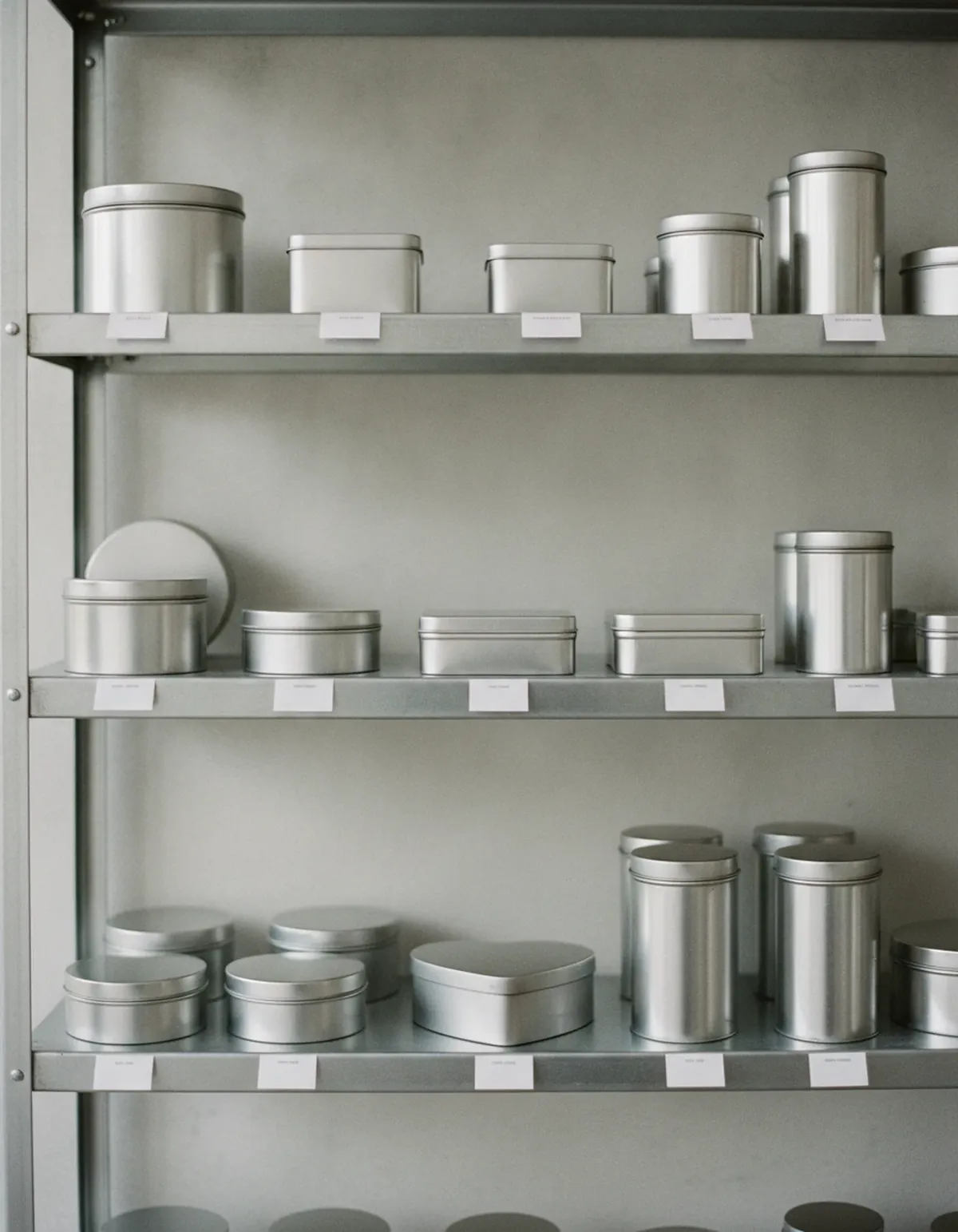
For a first project, the practical approach is to send your target dimensions with a tolerance — "about 85mm across, give or take 5mm" — and ask what exists nearby. A few millimetres of flexibility often turns a new-mold project into an existing-mold one, and takes more than a month off the schedule.
Work the timeline backward from your in-hand date
Put a date in the brief, and make it the date the tins need to be at your filling line or warehouse — not the launch date.
Then work backward. Production typically runs 30 to 60 days depending on complexity, finish and order size. Ocean freight to North America adds 4 to 6 weeks, and less to destinations closer to the factory; air freight is 5 to 10 days at a much higher cost per unit. Samples from an existing mold add 10 to 14 days at the front, and a new mold adds a further 4 to 6 weeks before that.
Added up, an existing-mold project takes roughly 8 to 16 weeks from approved artwork to delivery, and a new-mold project roughly 12 to 22 — where you land in that range depends largely on how far the tins have to travel. Neither figure includes the time you spend reviewing samples and signing off artwork, or customs clearance at the other end — and the approval stage is the one part of the schedule that's entirely in your hands.
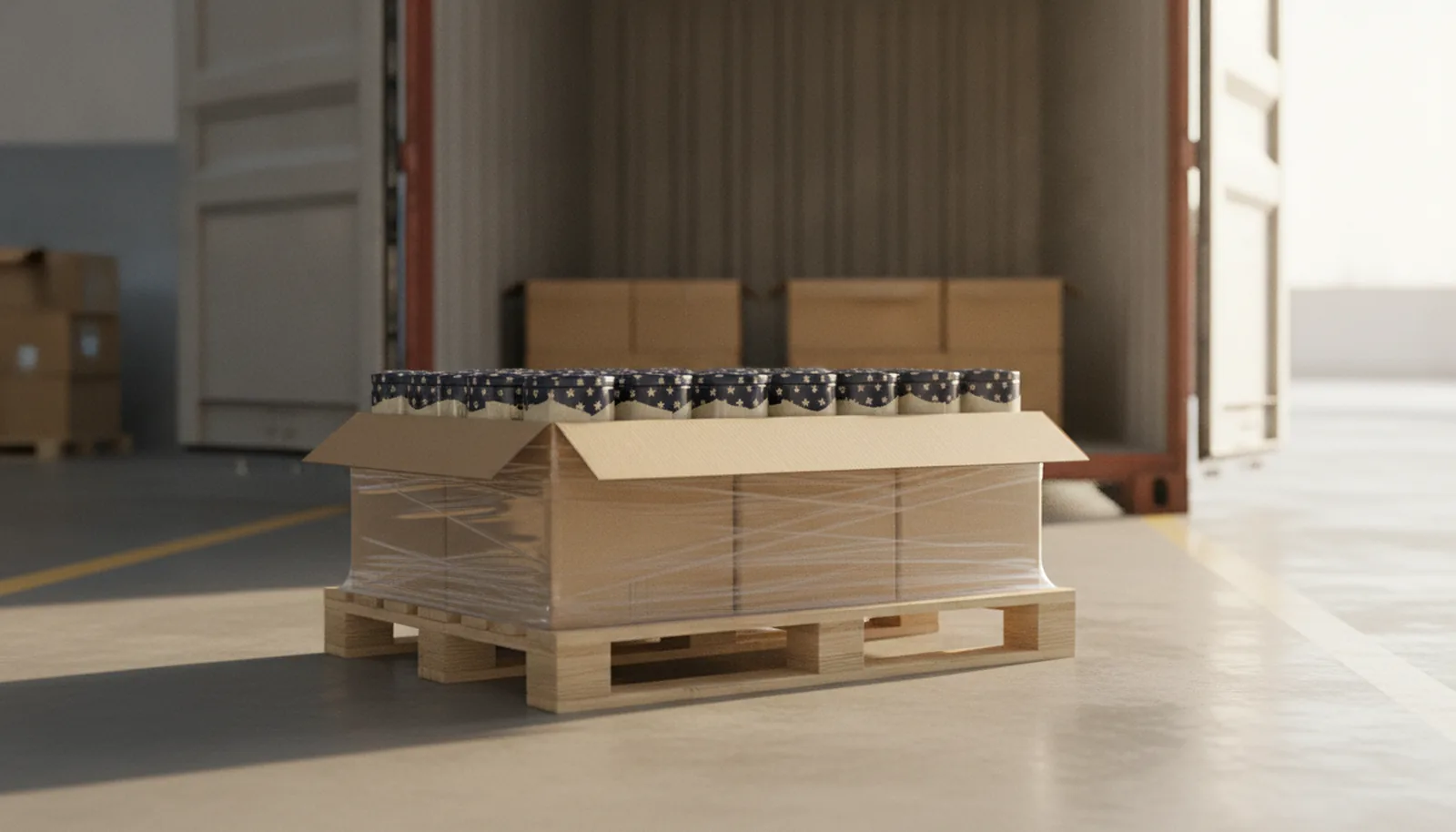
Seven weeks from first email to tins in hand is not an ocean-freight timeline. It can sometimes be done by air on an existing mold, and a factory will tell you quickly whether it can — but only if the date is in the brief. If your tin is for the holiday season, the conversation belongs in early summer.
Artwork for custom tin packaging: what to have ready
You don't need finished artwork to get a quote. You do need to say how the tin will be decorated, because that's what the printing is priced on: how many sides are printed, whether it's CMYK alone or CMYK plus Pantone spot colors, and whether there's printing inside the lid.
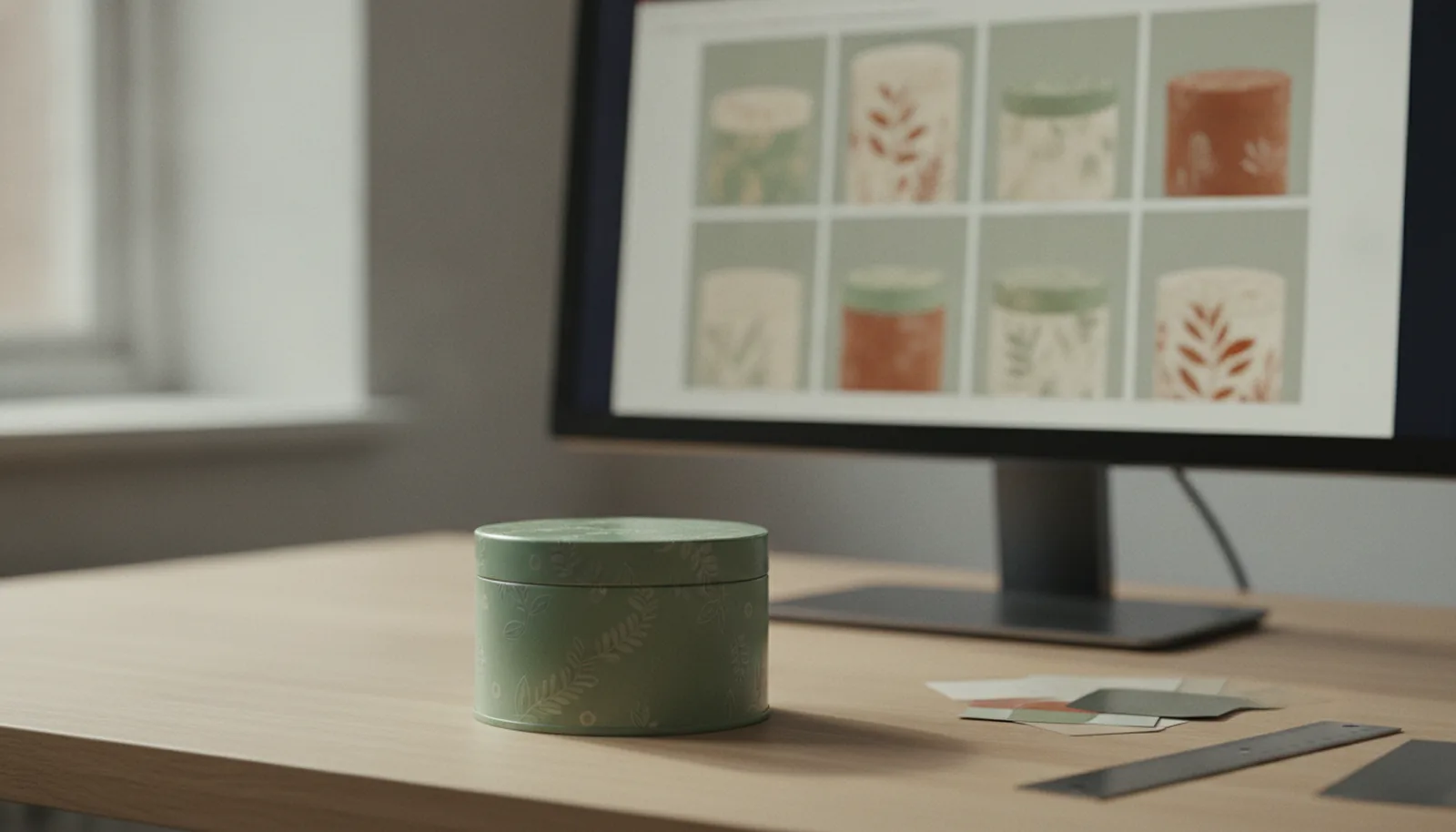
Final artwork comes later, and it's built on a die-line — the flat template the factory supplies for your specific tin, showing exactly where the body, lid and lip sit once the metal is formed. Design before you have the die-line and you'll be redoing it. Our walkthrough on reading and placing artwork on a die-line covers the zones in detail; the short version is that artwork should arrive as vector files (.ai, .pdf or .eps) in CMYK, with fonts outlined, bleed extended past the trim, and a separate white layer.
That white layer is the part people new to metal miss. Tinplate is silver, not white, so a white base coat is printed first wherever you want color to read the way it does on screen. Leave the white out and the bare metal shows through the ink — which is a beautiful effect when it's intended and a surprise when it isn't.
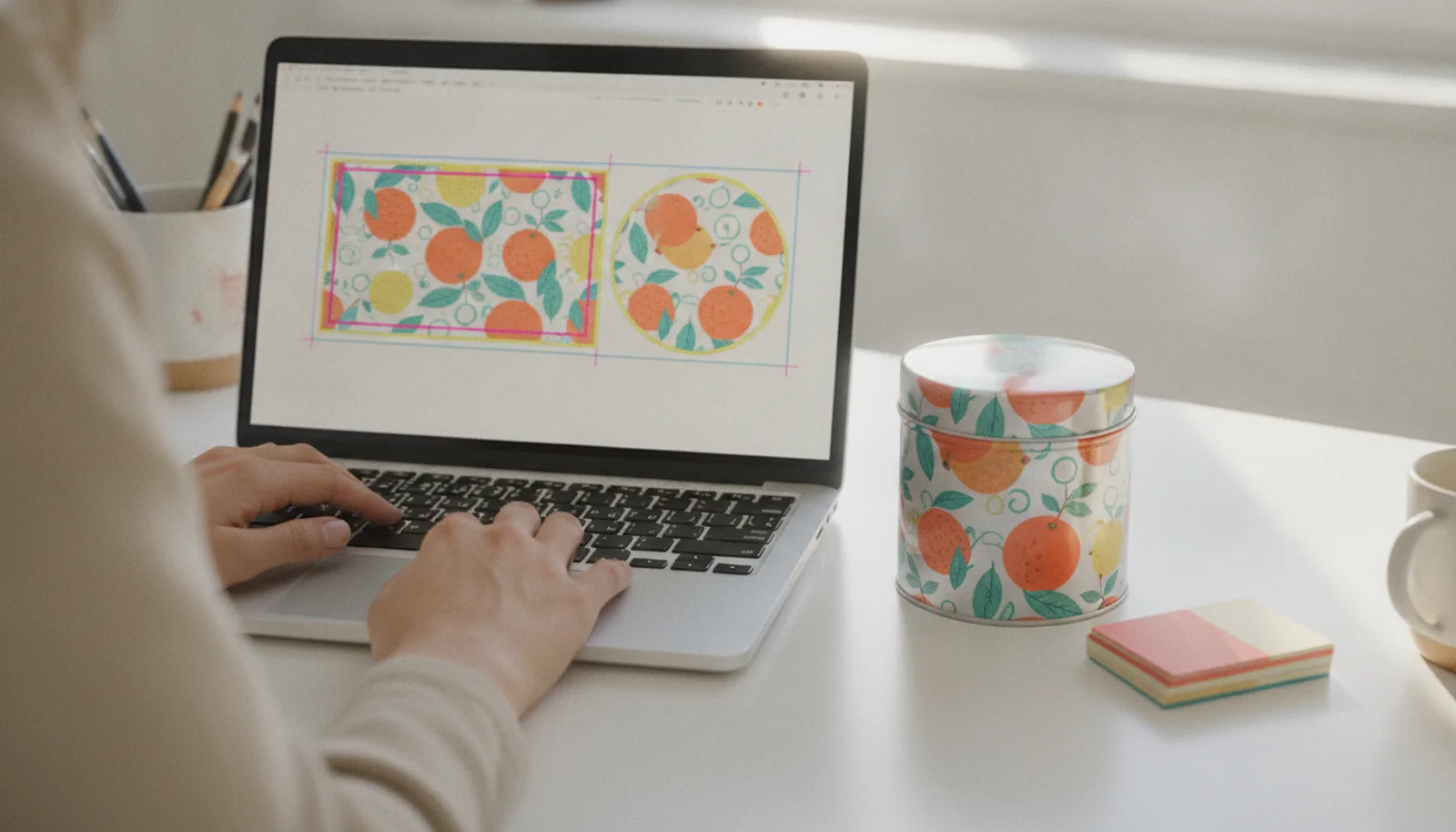
Color matching deserves one line in the brief too. If your brand has Pantone references, list them. Metal shifts color in ways paper doesn't, and our guide to printing on tin explains why a physical proof on metal is the only version of your color worth approving.
Food contact and certifications: say where the tin will be sold
Two facts decide the compliance side of the project: whether the product touches the metal directly, and which countries the tin will be sold in. Both belong in the first email.
Direct contact matters because the rules attach to the surface the food touches. Loose tea, unwrapped cookies or mints sitting against the inside of the tin make the interior coating a food-contact surface. Product in an inner bag, wrapper or liner is indirect contact — the application our BRC certification covers — so it's worth stating which one you're planning.
Destination matters because "food-safe" isn't one global standard. In the United States, coatings on metal that contact food fall under 21 CFR 175.300, the FDA regulation for resinous and polymeric coatings. In the European Union, Regulation (EU) 2024/3190 prohibits bisphenol A in food contact materials including varnishes, coatings and printing inks; it entered into force on 20 January 2025, and the general transition period for most articles ended on 20 July 2026, with longer transitions for a few specific categories. If you're selling metal tins for food into both markets, the manufacturer needs to know at the outset so the right coating system is specified once.
Factory certification is the other half. When a retailer asks whether your packaging supplier is "BRC certified", they mean the BRCGS Global Standard for Packaging Materials — now on Issue 7, which audits have been conducted against since 28 April 2025. Ask for the certificate itself rather than taking the logo on trust, and read four things on it: the issue, the grade, the expiry date and the scope.
Ours, for reference: our flagship factory is certified to Issue 7 at Grade A, audited by Intertek in April 2026 and valid to 25 June 2027, in the metal forming and print processes categories, with a scope covering tin containers for food and non-food indirect-contact packaging applications. Any BRCGS certificate can be validated in the BRCGS Directory. The scope line is the one to read closely on any supplier's certificate, because it tells you what the audit actually covered — and if your product will sit directly against the metal, say so at the outset so the requirement is understood before anything is specified. Our certificates — BRCGS, ISO 9001, ISO 14001, ISO 45001, SGS testing and EcoVadis Bronze — are available on request, and all paints and coatings we use are food-grade.
One honest boundary: a manufacturer's documents cover the tin. Whether the finished, filled product meets a given retailer's or regulator's requirements is still the brand's responsibility to confirm.
Finish, embossing and the extras that change the quote
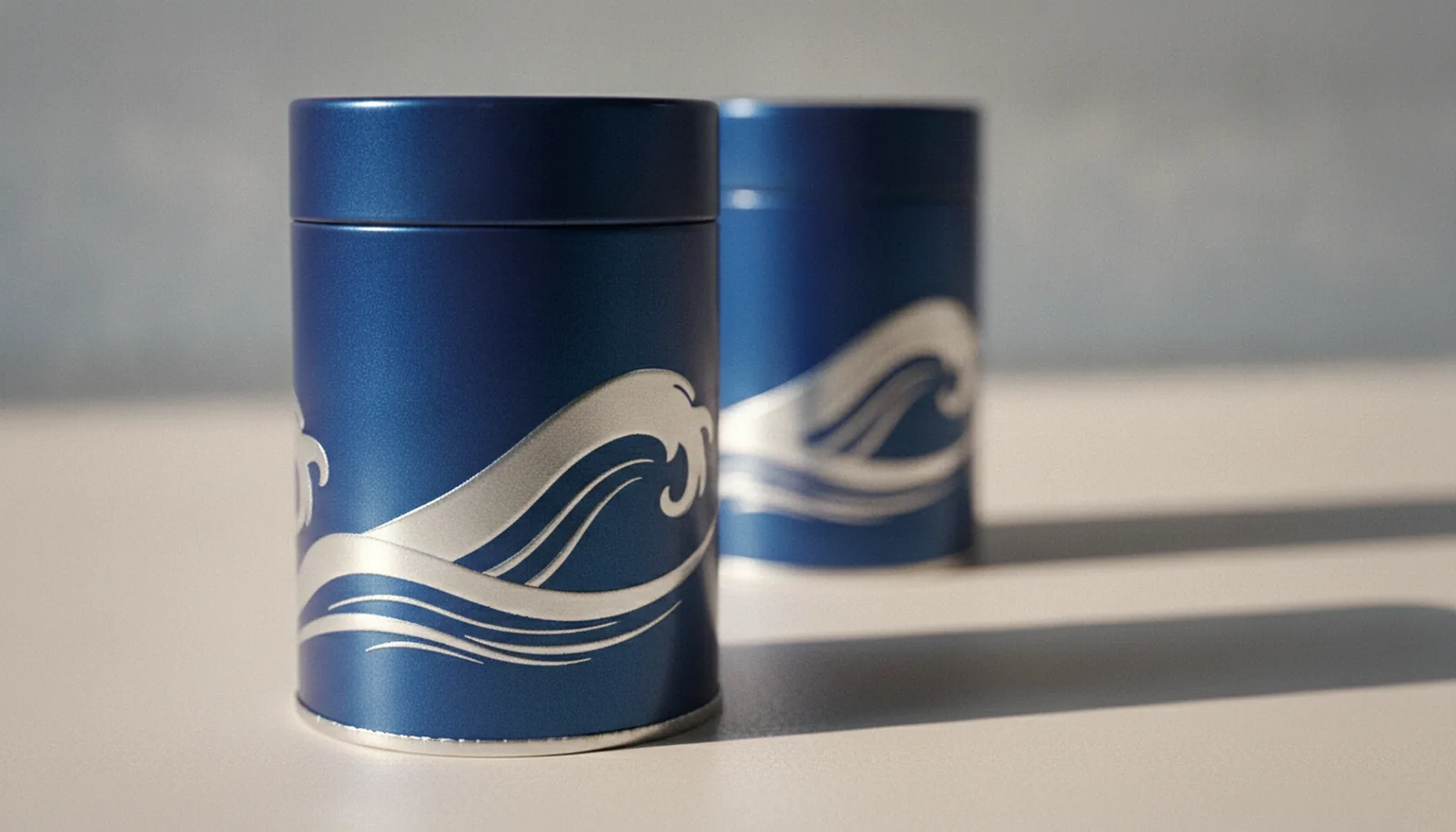
Finish is where a tin gets its character, and it's also where quotes quietly diverge. Matte, gloss, satin and textured varnishes each behave differently and can be combined — a matte body with a spot-gloss logo, for instance. If you're undecided, our guide to choosing the right tin finish lays out the options.
Embossing and debossing add tactile depth, down to 1mm precision on logo linework and fine pattern. An embossing tool can be added to an existing mold: the tool itself is a one-time cost, and there's still no charge for using the mold. Say in the brief whether you want embossing, and where. The same goes for window lids, hinges, inner lids, inserts and anything else beyond a printed body and lid. None of these are difficult. Each one is a line on the quote, and leaving them out of the brief is the most common reason a second quote looks nothing like the first.
Shipping: say where the tins are going
Tins are light but they ship as volume — a container of empty tins is mostly air — so freight is a meaningful share of landed cost, and the delivery address changes the answer.
Give the destination city and country, whether the delivery point is your own warehouse, a co-packer or a fulfilment centre, and whether you want pricing at the port of shipment (FOB) or delivered to your door with duties paid (DDP). Those are different quotes with different responsibilities: the first leaves freight, import clearance and duties with you, the second bundles them in. If you've never imported before, say so. Door-to-door shipping with customs support exists for exactly that situation, and it's easier to price in from the start than to add later. For US-bound projects, our guide to tariffs and shipping in 2026 explains what currently sits between the factory price and the landed one.
If the tins will be shipped individually to consumers rather than on pallets to retail, mention that as well. Tin packaging for e-commerce has its own considerations around closures and outer cartons.
The one-page brief
Put together, a first brief fits comfortably on a page. What the tin will hold, with fill weight or count, and whether it's in direct contact with the metal. Target dimensions with a tolerance, and whether you're open to an existing mold. Yearly quantity, and the number of designs it's split across. The date the tins need to be in hand. How the tin is decorated — sides printed, Pantone references, finish, embossing, any extras. The countries it will be sold in. And the delivery address, with a note on whether you want pricing to the port (FOB) or to the door (DDP).
A reference image helps more than a paragraph of adjectives. So does being frank about what's still undecided: "not sure yet" is a perfectly useful answer in a brief, because it tells the factory which options to quote side by side.
If you have most of that, you have enough to start. You can browse custom tin packaging we've produced for brands like DAVIDsTEA and Rifle Paper Co. to find a shape close to what you have in mind, check unfamiliar terms in the glossary, or send us your brief — we typically reply within one business day, and the first thing we'll do is tell you which existing molds come closest.
Frequently asked questions
What is the minimum order quantity for custom tin packaging?
Ours is 3,000 pieces on every project, existing mold or new, which can be split across three or four different designs on the same tin in equal quantities. The minimum exists because offset printing on tinplate carries fixed plate and set-up costs that have to be spread across the run. Planning around a year's supply rather than a launch quantity is usually what makes the number work.
How long does a custom tin project take from start to finish?
On an existing mold, allow roughly 8 to 16 weeks from approved artwork to delivery: 10 to 14 days for samples, 30 to 60 days for production, and ocean freight that runs 4 to 6 weeks to North America and less to closer destinations. A new mold adds 4 to 6 weeks of tooling, for roughly 12 to 22 weeks in total. Air freight shortens the shipping leg to 5 to 10 days at a higher cost. Your own approval time and customs clearance sit on top of those figures.
Do I need finished artwork before asking for a quote?
No. A quote needs to know how the tin will be decorated — how many sides are printed, whether Pantone spot colors are involved, the finish, and any embossing — but not the final files. Final artwork should be built on the die-line the factory supplies for your specific tin, so designing before you have it usually means designing twice.
What does "food-safe" mean for a tin?
It means the surface that touches the food complies with the food-contact rules of the market where the tin is sold. In the US that points to FDA regulation 21 CFR 175.300 for coatings on metal; in the EU, food contact materials are subject to their own rules, including the bisphenol A prohibition in Regulation (EU) 2024/3190. Tell the manufacturer whether the product touches the metal directly and which countries you're selling into. Our paints and coatings are food-grade, and our BRC certification covers indirect food contact.
Is a new mold worth it for a first order?
Sometimes. A new mold makes sense when the shape itself is the idea — a tin modelled on a product or a landmark — and when the volume is there to absorb a one-time tooling cost. For most first projects, an existing mold with distinctive artwork, finish and embossing gets to market more than a month sooner, and the custom shape can follow once the product has proven itself.
References
1. 21 CFR 175.300 — Resinous and polymeric coatings, U.S. Electronic Code of Federal Regulations.
2. EU prohibition on the use and trade of bisphenol A in food contact materials — Regulation (EU) 2024/3190, European Commission, Access2Markets.
3. Updates on the publication of Packaging Materials Issue 7, BRCGS.
4. BRCGS Directory — public register for validating BRCGS certificates.