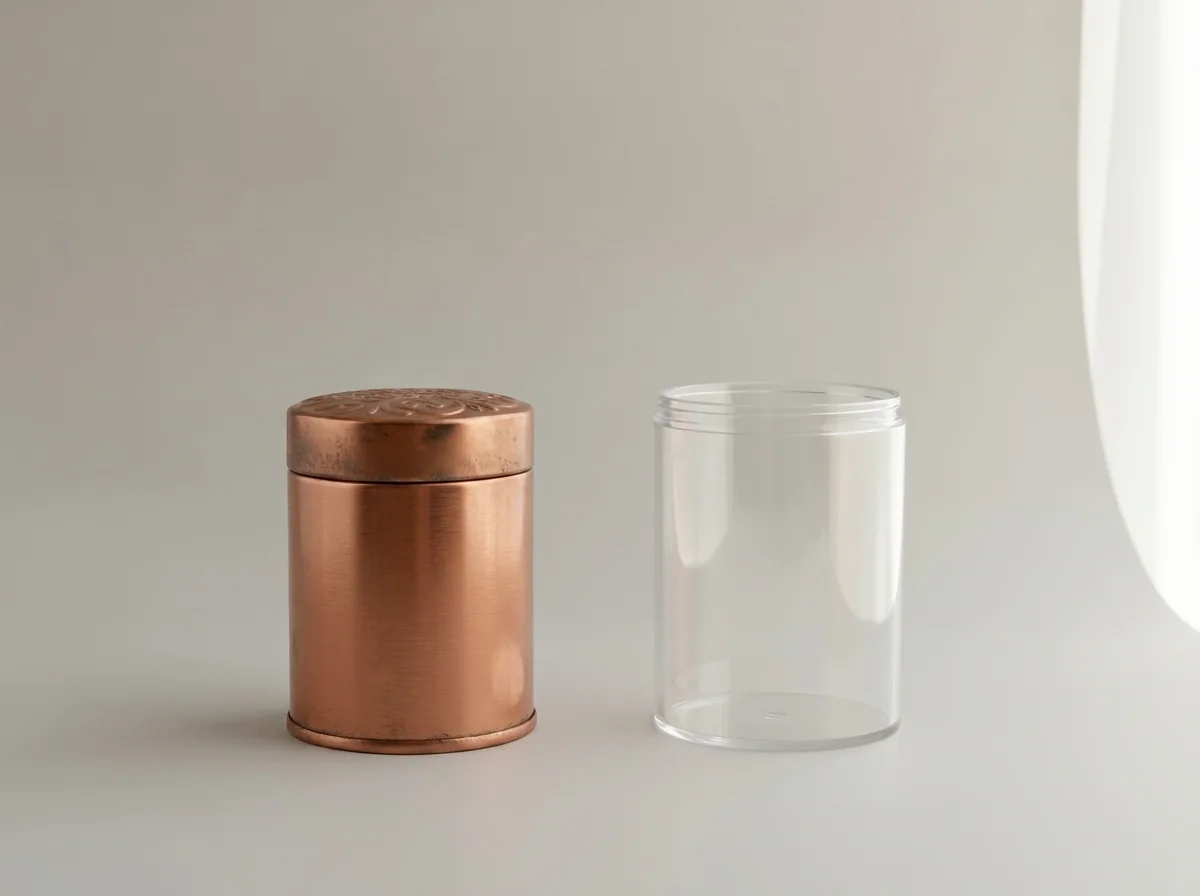
The Recycling Gap Is Bigger Than It Sounds
"Recyclable" and "recycled" are not the same claim. Almost all modern packaging is technically recyclable given ideal sorting and facility conditions. What matters is the real-world recycling rate — how much of the material actually gets recovered and reused.
Tin achieved 84% recycling in the EU in 2024[1] and above 90% in Germany[2], the most rigorously measured market. This is primarily because tinplate is valuable scrap metal with a mature end-of-life infrastructure — every municipal recycling program in the developed world accepts it, and it can be remelted indefinitely with no quality loss.
Plastic sits near 9% globally per OECD figures[3]. The reasons are structural: resin codes 3 through 7 are rarely accepted curbside, contaminated or multi-layer plastics are functionally unrecyclable, and even recovered plastics degrade with each cycle, limiting reuse to down-cycled applications. When a brand advertises "100% recyclable" plastic, it is almost always a technical claim, not a lifecycle one.
Brand Perception Is Doing More Work Than People Realize
Consumers read packaging materials as signals of product quality, even when they cannot articulate why. Weight, sound, tactile finish, and surface detail all shape the initial impression before anyone has opened the lid. Tin carries a premium signal plastic rarely matches: it feels substantial, it keeps printed detail crisply, and it gets kept rather than discarded.
For gifting, heritage brands, and premium confectionery or beverage categories, this matters enormously. A tin stays on a shelf or in a kitchen for months or years after the product is consumed. The brand exposure compounds. Plastic packaging gets thrown away within days or weeks of purchase.
Shipping Weight Is Plastic's Real Argument
Tin is heavier than plastic. For large retailers shipping millions of units, that weight difference shows up in freight costs and transport-related emissions. We acknowledge this directly — any honest analysis has to.
The tradeoff usually works out in favour of tin across the full lifecycle, because tin is often reused, whereas plastic packaging is almost always single-use. Reuse cycles amortize the manufacturing and shipping footprint across many product lifespans. But for high-volume commodity SKUs with no premium positioning, the weight penalty can outweigh the lifecycle benefit, and flexible plastic pouches are the more sustainable choice per unit shipped.
EPR and Regulation Are Changing the Cost Math
Extended Producer Responsibility (EPR) regulations assign the end-of-life cost of packaging to the brand that put it on the market. California SB 343, the EU Packaging and Packaging Waste Regulation (PPWR), Canadian provincial programs, and similar frameworks across the UK and Australia are reshaping the economics of packaging decisions.
Plastic packaging, especially multi-layer and flexible formats, increasingly carries the highest EPR fees and the strictest labelling requirements. Tin packaging, with mature recycling infrastructure and verifiable recycled content, tends to clear EPR requirements cleanly and at lower fee rates. For brands evaluating packaging in 2026 and beyond, EPR exposure is no longer a hypothetical concern — it is a line item.
Food Packaging: What Tin Delivers
Tin blocks light completely, resists moisture, and prevents crushing — three things that matter enormously for premium food packaging. The surface is chemically inert (with food-grade interior lacquer) and contributes no microplastics, which avoids an entire category of concern associated with flexible plastic formats.
Stannum Can uses food-grade paints and coatings and holds BRC certification for indirect food contact. Different product categories — coffee, tea, spices, confectionery, candles, cosmetics — carry different barrier requirements. We scope the right construction for each project based on the customer's product, shelf-life target, and volumes, which is why we prefer to quote after a short conversation rather than from a generic spec.