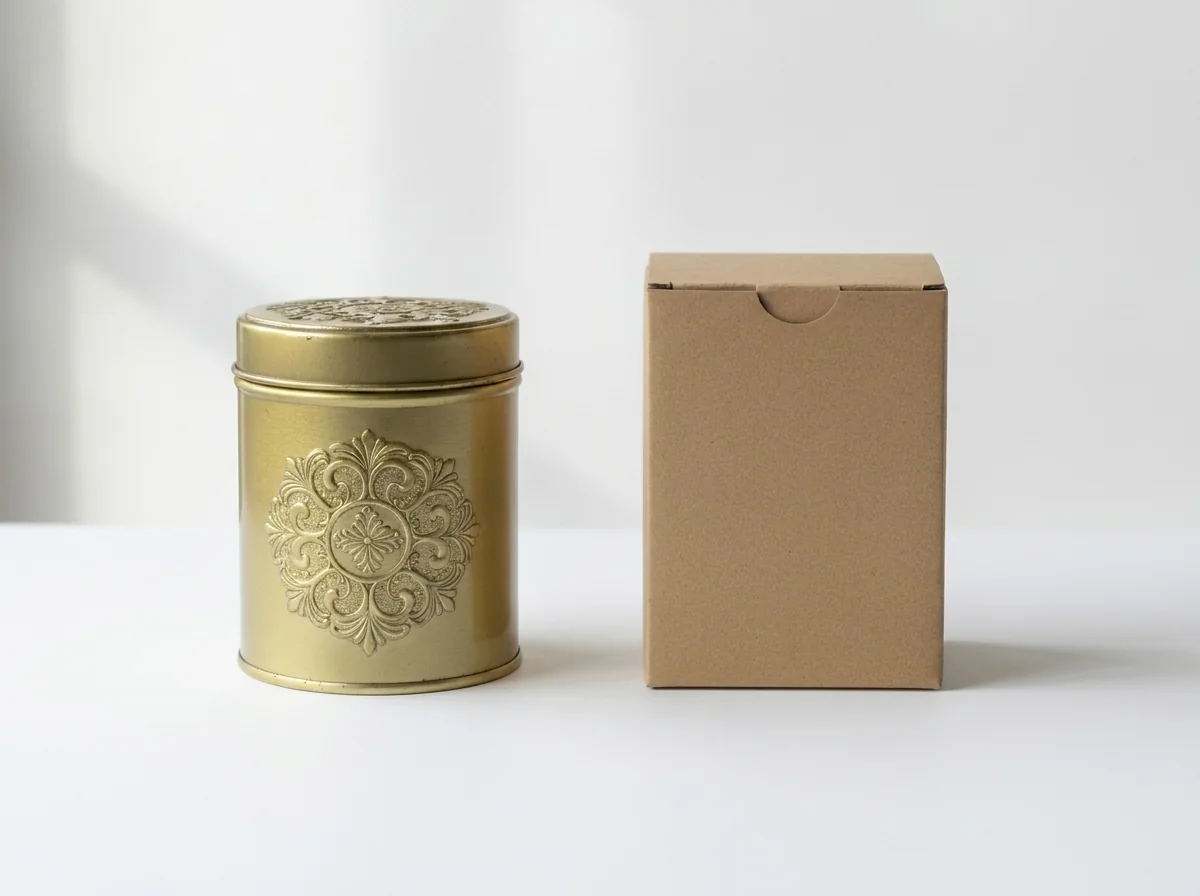
Crush Resistance Is the Argument Cardboard Cannot Win
The most common failure mode for premium product packaging is stacking damage in transit and on the shelf. Cardboard crumples under weight — a single box beneath a heavy case can deform the ones below it, resulting in scuffed corners, creased panels, and rejected retailer deliveries.
Tin holds its shape. A tin can dent on serious impact but does not collapse under sustained pressure, which matters enormously for biscuits, chocolates, ceramics, and any product that is itself fragile. Brands that ship long distances, through multiple retail DCs, or into humid regions consistently report lower damage rates with tin than with cardboard.
Moisture Is Cardboard's Other Weakness
Cardboard absorbs ambient moisture even without direct contact with water. Panels soften, corners round, and printed surfaces blemish. Humid storage, refrigerated distribution, and tropical retail environments all shorten the useful life of a cardboard package significantly.
Tin resists moisture ingress entirely. Tinplate does not warp, swell, or weaken in humid conditions — a meaningful advantage for anything that will spend time in warehouses, in transit across climate zones, or on shelves in non-climate-controlled retail.
Cost Is Cardboard's Real Argument
Cardboard is substantially cheaper than tin per unit, and for very high volumes it is the only material that produces an economic retail package at the required price point. We acknowledge this directly — any honest analysis has to.
The tradeoff becomes interesting when you account for product lifecycle. A cardboard box typically reaches the consumer once and is recycled or discarded within days. A tin is often kept, displayed, reused, and sometimes gifted onward. For categories where the packaging carries meaningful brand weight — premium food, confectionery, candles, cosmetics, gift sets — the effective cost per impression favours tin even at higher unit prices.
Brand Perception Compounds Over Time
Packaging material is one of the first signals consumers read about a product. Weight, sound, texture, and finish all shape the impression before a lid is opened. Cardboard, even high-end rigid set-up boxes with matte lamination, rarely achieves the same premium signal as a tin.
For gifting, heritage brands, seasonal limited editions, and categories where the unboxing moment matters, the tactile and visual impression of tin carries weight cardboard cannot match. Tins also photograph well and get shared — which compounds brand exposure beyond the initial purchase.
Recyclability: Both Win, Differently
Cardboard is renewable and widely recycled through well-established fibre streams. Tin is infinitely recyclable — melted down and reformed with no degradation of material quality. Both materials have legitimate sustainability narratives, and both beat plastic on end-of-life recovery.
The difference is reusability. A cardboard box is almost always recycled after a single use cycle. A tin is often reused directly by the consumer, displacing the need for other storage and gifting containers entirely. Over a lifecycle, tin's reusability often produces a lower environmental footprint than cardboard's recyclability alone.