Sustainability
Recyclable tin packaging and eco-friendly metal packaging solutions for a greener future. At Stannum Can, we lead with sustainable packaging materials, circular packaging solutions, and green packaging manufacturing — because recyclable metal cans are better for your brand and the planet.

Convert Your Packaging to a More Eco Friendly Material
Stannum Can is committed to a sustainable future across every stage of our operations. Our team has achieved the EcoVadis Bronze Certification, a globally recognized standard that evaluates sustainable manufacturing practices, ethical business conduct, labour conditions, and environmental impact — not just what a company claims, but what it can verify.
Our factory generates approximately 7.5 million kWh of electricity per year through a rooftop solar photovoltaic installation — one of the largest renewable energy systems in our manufacturing region. This investment directly lowers our carbon emissions and operational costs, and allows us to pass real sustainability benefits on to every brand we work with.
We are targeting zero manufacturing waste by 2030, with programmes already in place to reduce material scrap, improve energy efficiency across production lines, and eliminate single-use plastics from our internal operations. Choosing Stannum Can means your packaging partner is actively reducing its footprint — not just offsetting it.
Start Your Eco Switch
Our Certifications
Why Tin Beats Plastic
A Permanent Material
Unlike plastic, which persists in the environment for generations and degrades in quality with every recycling cycle, tin is a permanent material. It can be melted down and reformed indefinitely without losing material quality — which is why tinplate is one of the most valuable scrap streams in the recycling economy.
Lower Manufacturing Footprint
Tinplate production uses less energy per unit than typical plastic manufacturing, and our factory runs on approximately 7.5 million kWh of solar photovoltaic generation per year. Combined with scalable renewable inputs, tin packaging carries a substantially lower manufacturing footprint than petroleum-derived alternatives.
No Microplastic Contribution
Microplastics have been detected in food, drinking water, and human tissue. They shed from plastic packaging through normal handling, abrasion, and temperature change. Tin packaging contributes none — the material is stable and inert when paired with a food-grade interior lacquer.
Mature Recycling Infrastructure
Steel packaging recycling reached 84% across the EU in 2024[1] and above 90% in Germany, the most rigorously measured market, where the rate has held steady for nearly two decades[2]. Every municipal recycling program in the developed world accepts it, and it can be remelted indefinitely with no quality loss.
The Circular Economy
We use high-quality tinplate produced directly in our own factory. This durable material is endlessly recyclable, aligning with our commitment to sustainability and quality manufacturing.
We start with clean energy. Our factory runs on solar power and uses energy-saving machines that cut emissions from day one. This reduces our footprint — before the first tin even ships.
Our tins go to work. Built to last, designed to be reused, and styled to be kept. Customers often re-gift them, store keepsakes, or simply display them on shelves. Nothing goes to waste.
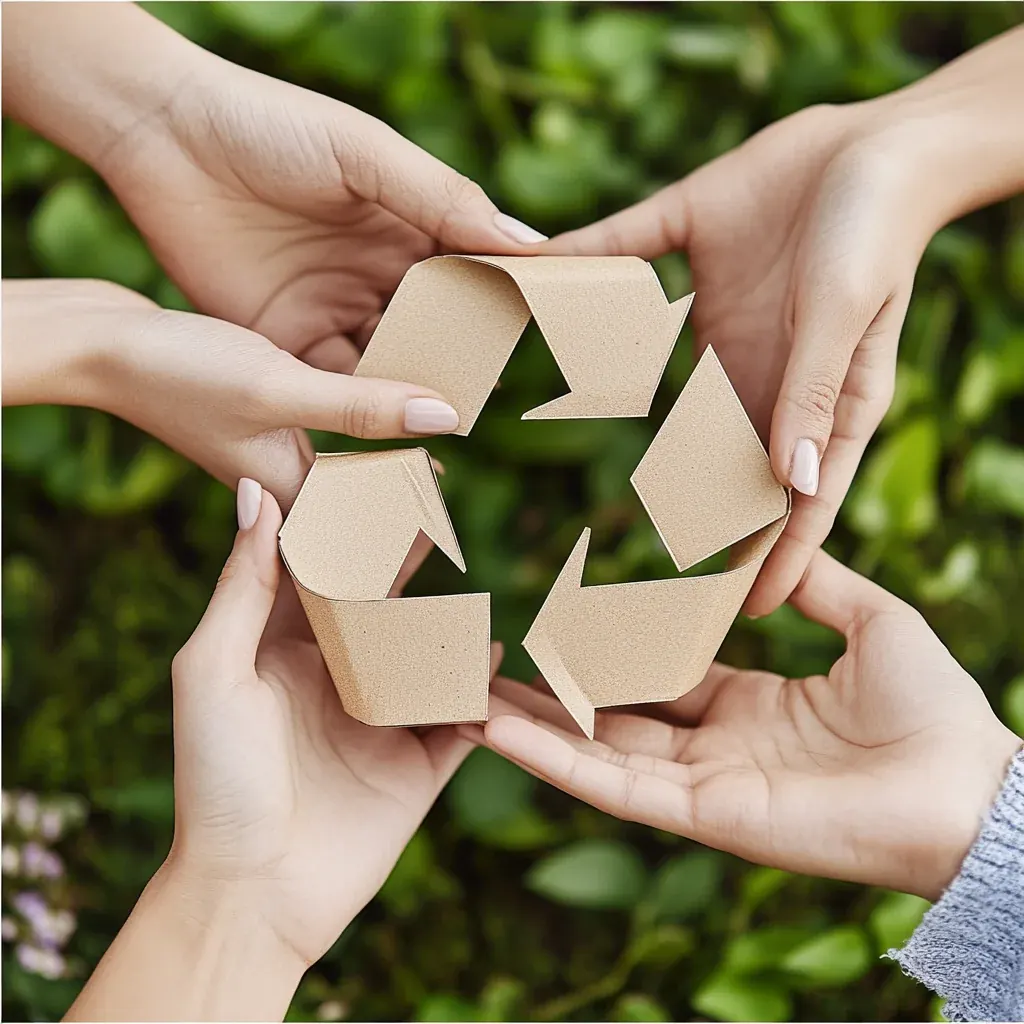
Every tin comes full circle. Instead of ending up in landfills, tins are recycled, melted down, and shaped into something new — again and again. That's true circular design.
Solar-Powered Manufacturing
Our factory generates approximately 7.5 million kWh of electricity per year using a rooftop solar photovoltaic installation — one of the largest renewable energy systems in our manufacturing region. The system was designed to offset the majority of our production energy demand, reducing our dependence on grid power and cutting carbon emissions at the source rather than through offsetting schemes.
This investment into clean energy directly lowers our carbon footprint, reduces operational costs, and enables us to pass real sustainability benefits on to every brand that partners with Stannum Can. We are on track to meet our zero-waste manufacturing target by 2030, with active waste reduction programmes running across all production lines.
Sources
- Steel for Packaging Europe. "Steel packaging recycling rate reaches record high" (12 May 2026) — 84% EU rate for 2024. steelforpackagingeurope.eu
- Gesellschaft für Verpackungsmarktforschung (gvm). "Recycling rates for tinplate packaging in Germany, 2024" — 94.3% of tinplate from private end consumption, 92.5% of total consumption; published 12 January 2026. thyssenkrupp-steel.com. Context in our EPR compliance guide.
Choosing Stannum Can Means Choosing
Let's protect the planet — one tin at a time.