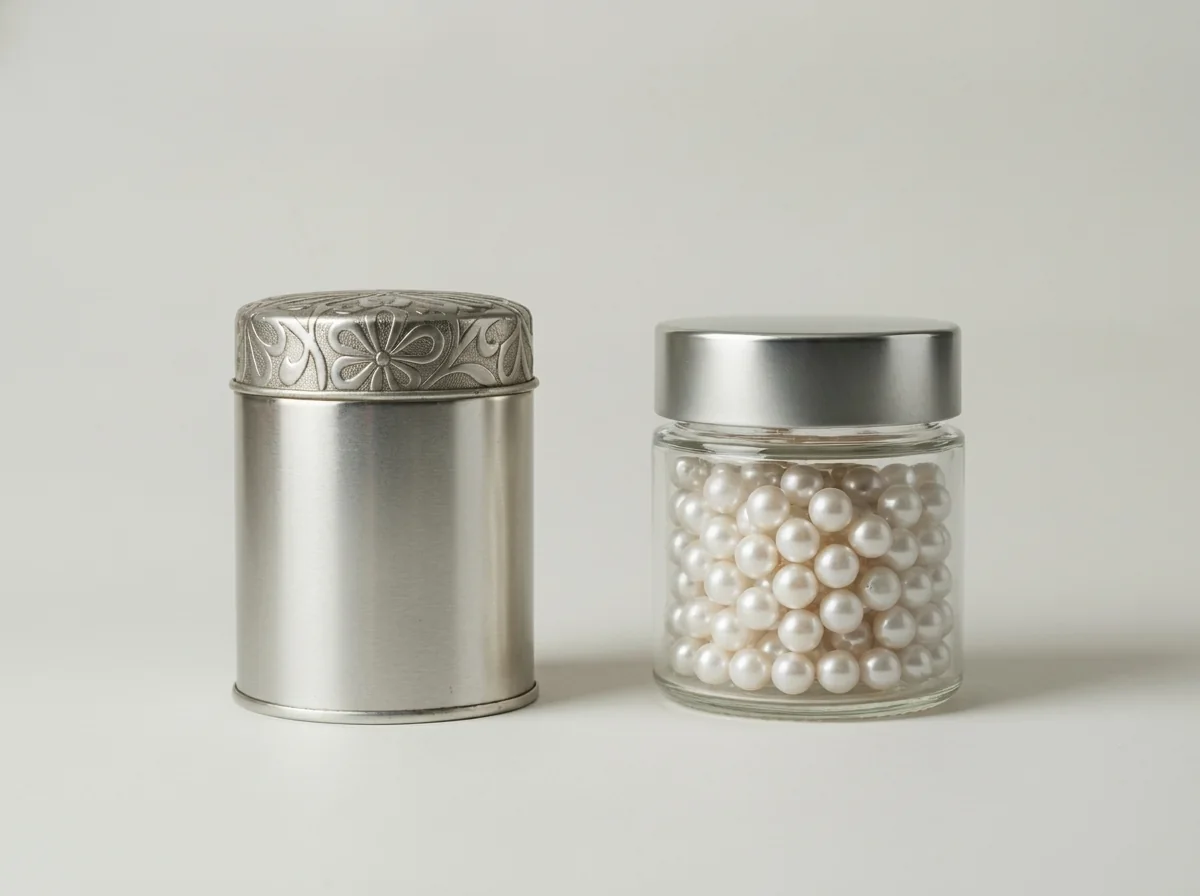
Breakage Is the Hidden Cost of Glass
Glass shatters. In a perfect distribution system that would not matter, but real-world logistics include dropped pallets, handling mistakes, retail stacking errors, and customer drops. For glass-packaged brands, the damage return rate is a persistent line item — not a rare incident.
Tin is virtually unbreakable in normal handling. It dents on extreme impact but does not collapse, does not shatter, and does not create the cleanup and safety problems a broken glass package creates in a store or warehouse. For any product distributed at scale, that difference compounds into measurable savings.
Shipping Weight Is Where Tin Quietly Wins
A tin of comparable volume to a glass jar or bottle weighs a fraction as much. The reason is structural: glass must be thick enough to resist shattering, while tinplate only needs to hold its shape. Typical tinplate is 0.18 to 0.36 mm thick; structural glass is several millimetres thick with significantly more mass.
The result shows up on pallet weights, container loads, and freight bills. For brands shipping high volumes or exporting across oceans, tin meaningfully lowers per-unit freight cost and shipping-related emissions compared to glass equivalents.
Light Protection Matters More Than People Assume
Light degrades tea, coffee, certain oils, botanicals, and many cosmetic actives. Tin is completely opaque — UV and visible light do not penetrate the material. Glass, even amber or green variants, transmits some light, and clear glass transmits nearly all of it.
For light-sensitive categories, tin packaging extends product shelf life without the need for tinted bottles, secondary cartons, or added UV coatings. For brands where freshness is a marketing pillar — premium tea, specialty coffee, skincare serums — tin\'s opacity is a meaningful advantage.
Transparency Is Glass\'s Real Argument
When a brand needs the product itself to be visible — wine, spirits, clear cosmetics, preserves, honey, infused oils — glass is the right material. Tin cannot replicate the "see what you\'re buying" shelf signal that glass delivers, and in categories where visual inspection drives purchase, that signal matters enormously.
We routinely recommend glass over tin for any project where product visibility is central to the brand promise. The honest answer in those cases is that tin is not a substitute.
Design Flexibility Works Differently for Each Material
Tin offers full-surface lithographic printing with tight registration across CMYK and Pantone, 1 mm precision embossing on the metal surface, and a library of thousands of existing shape molds across round, square, rectangle, oval, polygon, and novelty formats. Custom shapes run at accessible tooling costs.
Glass excels at bottle and jar shapes with well-established tooling, but highly custom glass moulds carry higher costs and MOQs than tin equivalents. For brands that want distinctive packaging shapes without bespoke-tooling economics, tin is usually the more flexible material.