
If you've been following packaging news lately, you've probably noticed that "EPR" keeps coming up in conversations about compliance, sustainability, and packaging costs. Extended Producer Responsibility — the policy framework that shifts the financial burden of end-of-life packaging management from municipalities onto the companies that produce and sell packaged goods — is no longer something brands can treat as a distant concern. It's here, it's expanding fast, and the deadlines are real. If you sell into California or the EU, tin packaging EPR compliance is moving to the top of many packaging reviews — and for good reason.
This post explains what these regulations actually require, why so many brands are scrambling right now, and why tinplate packaging is genuinely well-positioned in this new environment — not because of greenwashing language, but because of how metal actually performs within existing recycling systems.

What's Happening, and When
The regulatory picture has become significantly more complex in the past 12 months. Here are the key developments brands selling into North American and European markets need to understand.
California's SB 343 — Truth in Recycling
California's Senate Bill 343, often called the "Truth in Recycling" law, has a compliance deadline of October 4, 2026. From that date, any product or packaging manufactured and sold in California cannot display a recycling symbol — including the familiar "chasing arrows" — or make any recyclability claim whatsoever, unless the material genuinely meets the state's criteria. Specifically, the material must be collected by curbside programs serving at least 60% of California's population, sorted by at least 60% of that state's recycling facilities, and routinely processed into feedstock for new products.
The key word here is "routinely." This isn't about theoretical recyclability. It's about what actually gets recycled within California's existing infrastructure. Brands that have been using the chasing arrows as a default label will need documented proof that the claim holds up, or they'll need to remove it. Penalties are assessed per unit, per day, so the math gets uncomfortable quickly at any meaningful production volume.
The EU's Packaging and Packaging Waste Regulation (PPWR)
Across the Atlantic, the European Union's Packaging and Packaging Waste Regulation (Regulation 2025/40) entered into force in February 2025 and begins applying across all EU member states on August 12, 2026. Unlike the previous Packaging Waste Directive, this is a directly applicable regulation — meaning every member state is working from the same rulebook rather than each country interpreting and implementing its own version.
The PPWR sets a target of making all EU-marketed packaging recyclable by 2030. Starting in January 2030, only packaging that achieves a recyclability grade of A, C, or B under the EU's grading system will be permitted on the market. The regulation also establishes mandatory recycled content targets for plastic packaging specifically, ranging from 30% to 65% depending on the category, with those obligations kicking in from 2030 onwards. EPR obligations are embedded throughout, requiring producers to register, report, and contribute financially to end-of-life packaging systems across member states.
North America More Broadly
SB 343 is part of a much larger wave. Seven US states — California, Oregon, Colorado, Maine, Maryland, Minnesota, and Washington — now have active packaging EPR laws on the books, with Oregon and Colorado already collecting fees from producers. Nine Canadian provinces have implemented EPR programs for packaging, with Ontario completing its full transition to the producer-funded "Blue Box" model in January 2026. The patchwork is getting denser, and the direction of travel is clear: producers everywhere are increasingly responsible for funding the systems that collect, sort, and recycle the materials they bring to market.
Why This Creates Problems for Many Packaging Materials
The challenge for brands isn't just compliance cost — it's that many packaging materials that have historically marketed themselves as sustainable or recyclable simply don't hold up under these newer, more rigorous standards.
Plastics are the most obvious example. Flexible plastics, multi-layer laminates, and many rigid plastic formats struggle to meet the 60% collection and processing thresholds required under SB 343 within California's current infrastructure. The PPWR's mandatory recycled content targets for plastic packaging put additional pressure on the supply chain. Some of these materials are technically recyclable but practically aren't being recycled at scale, which is precisely the distinction these new laws are designed to expose. (We've covered this in more depth in our earlier post on why decorative tin boxes outperform plastic.)
Paper-based packaging has its own complications — coated papers and composite materials can be difficult to sort reliably, and any non-paper component can compromise recyclability claims.
This is where metal, and tinplate in particular, occupies a different position entirely.
How Tin Packaging Meets EPR Requirements
Steel is accepted in curbside programs in virtually every municipality in North America and Europe. It's magnetic, which means automated sorting at materials recovery facilities (MRFs) is straightforward — a magnet pulls it out of the stream reliably, without requiring specialized infrastructure or consumer education. That magnetic sortability is worth appreciating: it means tinplate doesn't depend on consumers making the right call about which bin to use. The system catches it even when they don't.
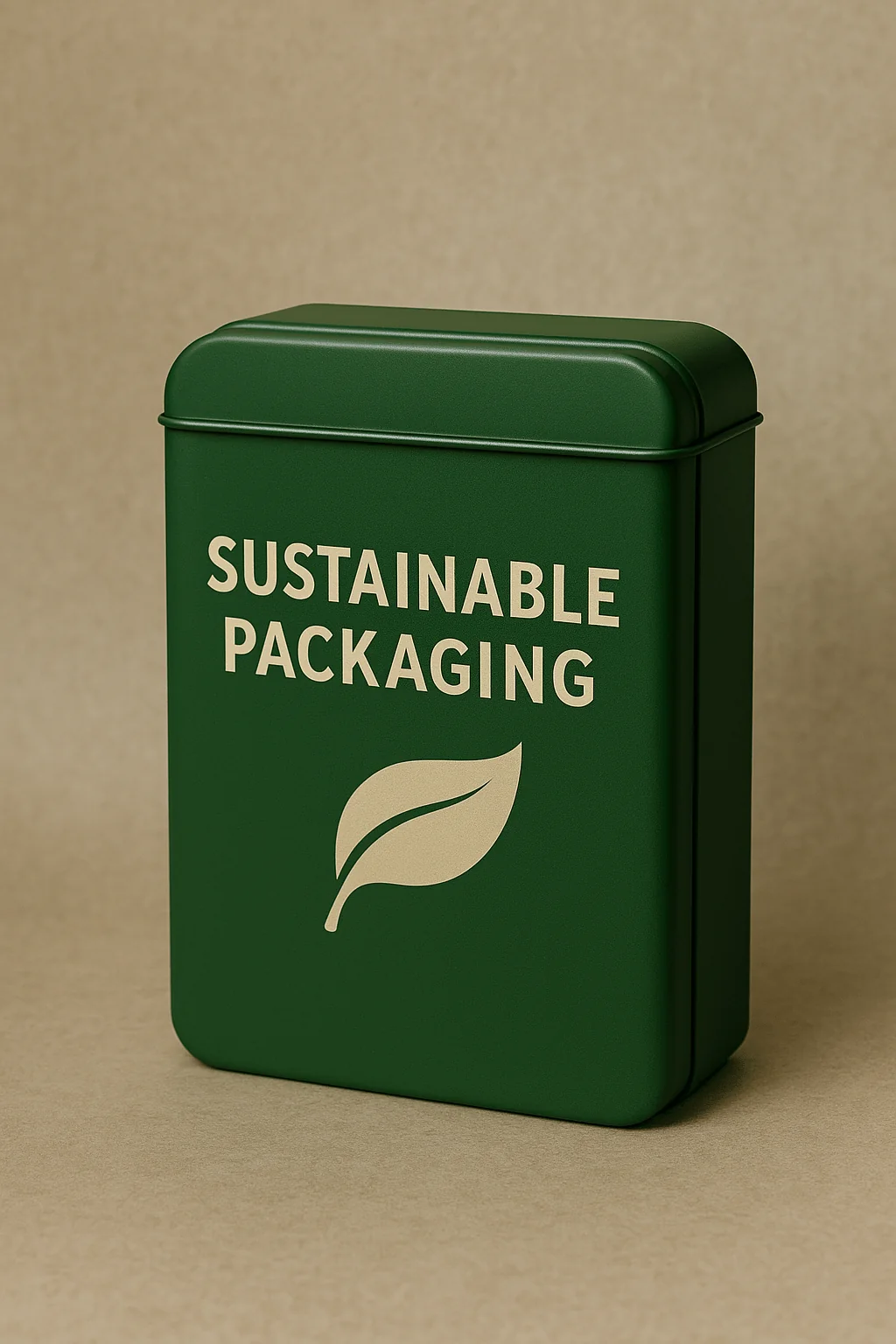


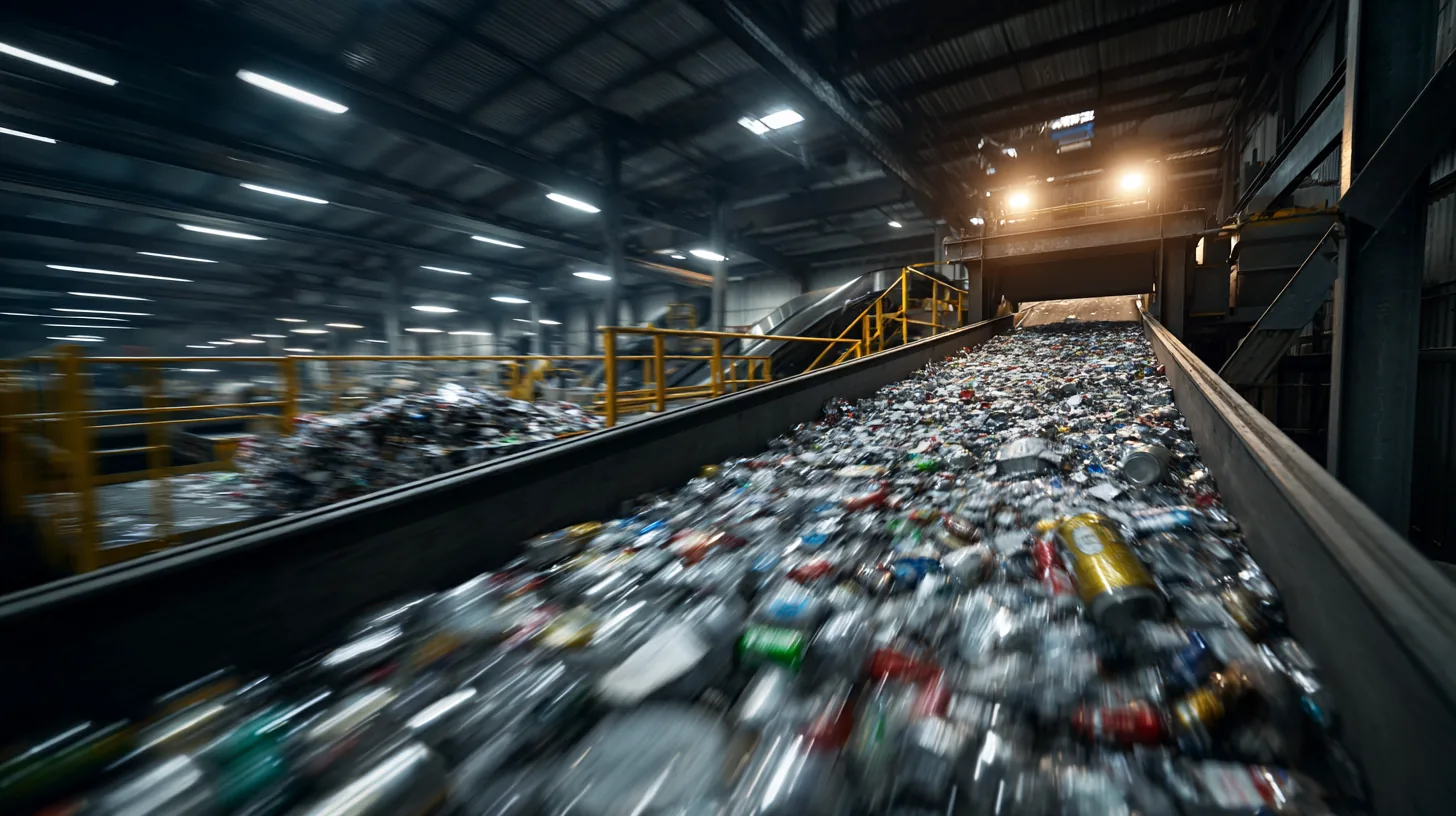
The recycling rates for tinplate back this up. In Germany — one of the most rigorous benchmarks available — 94.3% of tinplate from private consumer use was recycled in 2024, according to research published by Gesellschaft für Verpackungsmarktforschung (gvm). The overall recycling rate for total tinplate consumption was 92.5% — a new peak, and part of a track record that has held steady at around 90% since 2006. These are the kinds of numbers that hold up under regulatory scrutiny.
Critically, this matters for SB 343's 60% threshold. The question under California's law isn't whether a material can be recycled — it's whether it is being recycled at scale within the state's infrastructure. Metal clears that bar comfortably. Steel cans are a standard item in California's curbside collection programs, consistently collected, sorted, and sold as scrap for reuse in steel production.
For the EU PPWR, the picture is similarly strong. The regulation's recyclability grading system rewards materials that can be processed within established infrastructure without contaminating other recycling streams. Tinplate has always performed well on both counts. And while the PPWR's specific mandatory recycled content targets apply to plastic packaging, the broader design-for-recyclability requirements apply to all materials — tinplate's existing performance puts it in a strong starting position.
The EPR Fee Angle
Something worth understanding about EPR frameworks is that they're increasingly using "eco-modulation" to set fee levels — meaning packaging materials that are harder or more expensive to recycle attract higher fees, while materials that flow efficiently through existing recycling systems can attract lower ones. As these fee structures become more granular, choosing a packaging material with strong recycling infrastructure backing isn't just an environmental decision. It has a direct bearing on compliance costs.
For brands currently paying EPR fees or preparing for programs coming into effect in 2026 and 2027, the recyclability of their chosen packaging material is going to matter to their bottom line in a way it hasn't historically. A material that genuinely gets recycled at scale within existing systems isn't just "better for the environment" — it's likely to cost less to comply with under an eco-modulated EPR fee structure.
What This Means Practically for Brands Considering Tin
None of this means tin packaging is the right answer for every product category. But for brands in food, cosmetics, gifts, candles, and collectibles — categories where tinplate has always been a realistic option — the regulatory environment of 2026 and beyond makes the calculus more interesting than it was even two or three years ago. For brands reviewing their tin packaging sourcing options, the compliance case now adds to an already-strong aesthetic one. (We've also covered why tin packaging is dominating boutique FMCG brands for context on where the market is heading.)

Brands that have been evaluating tin primarily on aesthetics and shelf presence now have an additional structural argument for it: tinplate packaging is unlikely to require significant labeling changes to comply with SB 343. It doesn't face mandatory recycled content mandates under the PPWR the way plastic packaging does. And it enters the EPR era with a genuine recycling track record that doesn't need to be constructed or argued for — it's supported by decades of sustainable tin packaging infrastructure and data.
The regulatory pressure that's bearing down on packaging markets right now is designed to make greenwashing more expensive and genuine circularity more valuable. That's a shift worth understanding, because it changes which packaging decisions look smart in 2026 versus which ones looked smart in 2016.
If you're assessing packaging options for a new product line, or reviewing your current packaging strategy in light of EPR and recyclability requirements, we're happy to talk through what those considerations look like in practice. Browse our tin gallery to explore shapes and finishes, or get in touch for a free consultation on your packaging strategy.