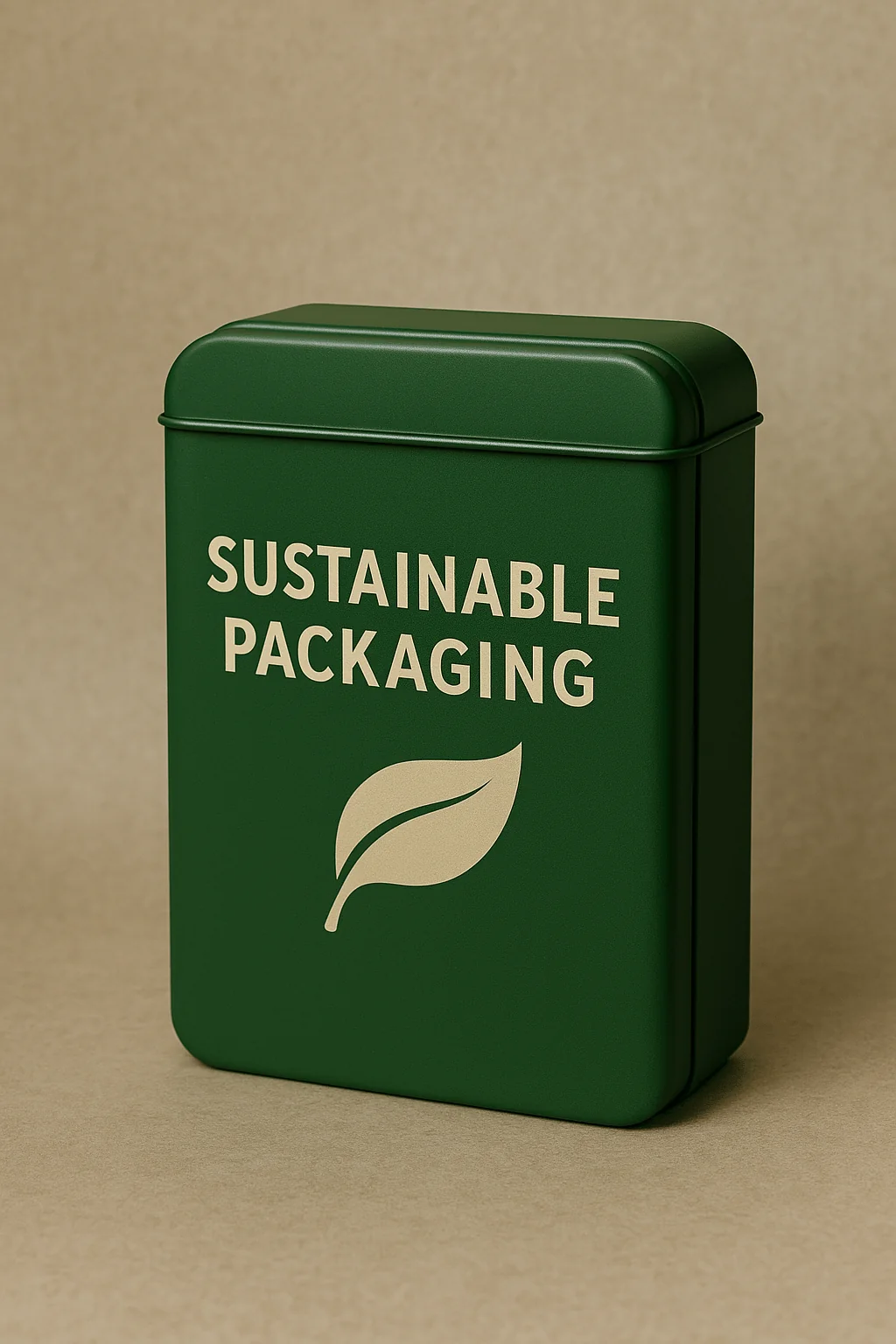
Single-use plastic has become a reputational liability for premium brands. Regulators in California, the EU, the UK, and across Canada are writing new rules for what can be sold in plastic. Consumers increasingly read packaging material as a direct signal of brand values. For brands that want to hold a premium price point and a credible sustainability story at the same time, decorative tin has emerged as the strongest alternative in most categories.
This guide walks through why — covering the real environmental case, where tin outperforms plastic, where plastic still has a legitimate role, and how to design tin packaging for reuse rather than just recyclability.
The Environmental Case for Tin
Tin's sustainability case rests on three pillars: recyclability, reusability, and the absence of microplastic shedding.
Infinite recyclability. Unlike plastic, which degrades in quality each time it is recycled, tinplate can be melted down and reformed without loss. That matters because it means tin scrap is genuinely valuable in the recycling stream — processors actively want it. In Germany, one of the most rigorously measured markets for this, tinplate recycling rates have held above 90% for nearly two decades.
Real-world reuse. Plastic packaging is almost never reused by the consumer. Tin is different — decorative tins get kept on shelves, in pantries, and in drawers long after the product inside is consumed. That reuse displaces other single-use containers a household would otherwise buy, and it keeps your brand physically present in the home well beyond the initial purchase.
No microplastic contribution. Microplastics have been detected in food, drinking water, and human tissue. They shed from plastic packaging through normal handling, abrasion, and temperature change. Tin contributes none — the material is a stable, inert surface when paired with a food-grade interior lacquer.
For the regulatory landscape shaping these choices — California SB 343, the EU Packaging and Packaging Waste Regulation (PPWR), and the expanding patchwork of Extended Producer Responsibility (EPR) laws across North America — see our separate article on how tin packaging helps brands stay ahead of EPR and recyclability regulations.
Where Tin Outperforms Plastic
- Brand perception. Weight, sound, tactile finish, and print detail all signal quality to the shopper. Tin reads as premium; plastic rarely does without heavy design investment.
- Light and crush protection. Tin is opaque and structurally rigid, which matters for light-sensitive products like tea and coffee, and for anything fragile in transit — biscuits, chocolate, ceramics.
- Reuse value. A tin has a second life. A plastic tray rarely does.
- Regulatory posture. Tin's mature recycling infrastructure makes it EPR-friendly, which matters as fees on hard-to-recycle plastics rise.
Where Plastic Still Has a Role
We are not interested in pretending tin is the right answer for every SKU. For flexible pouches, single-serve commodity products, ultra-low-margin formats, and packaging that needs thermoformed complex geometry, plastic is often still the right material. Our side-by-side breakdown lives at tin vs plastic — it calls out the specific categories where plastic wins on unit cost and shipping weight.
Designing for Reuse
Reuse rates are the single biggest lever for lowering whole-lifecycle packaging impact. A tin that ends up in a customer's pantry or desk drawer for five years does more for sustainability than a tin that ends up in the recycling bin after one use. A few design choices that drive reuse:
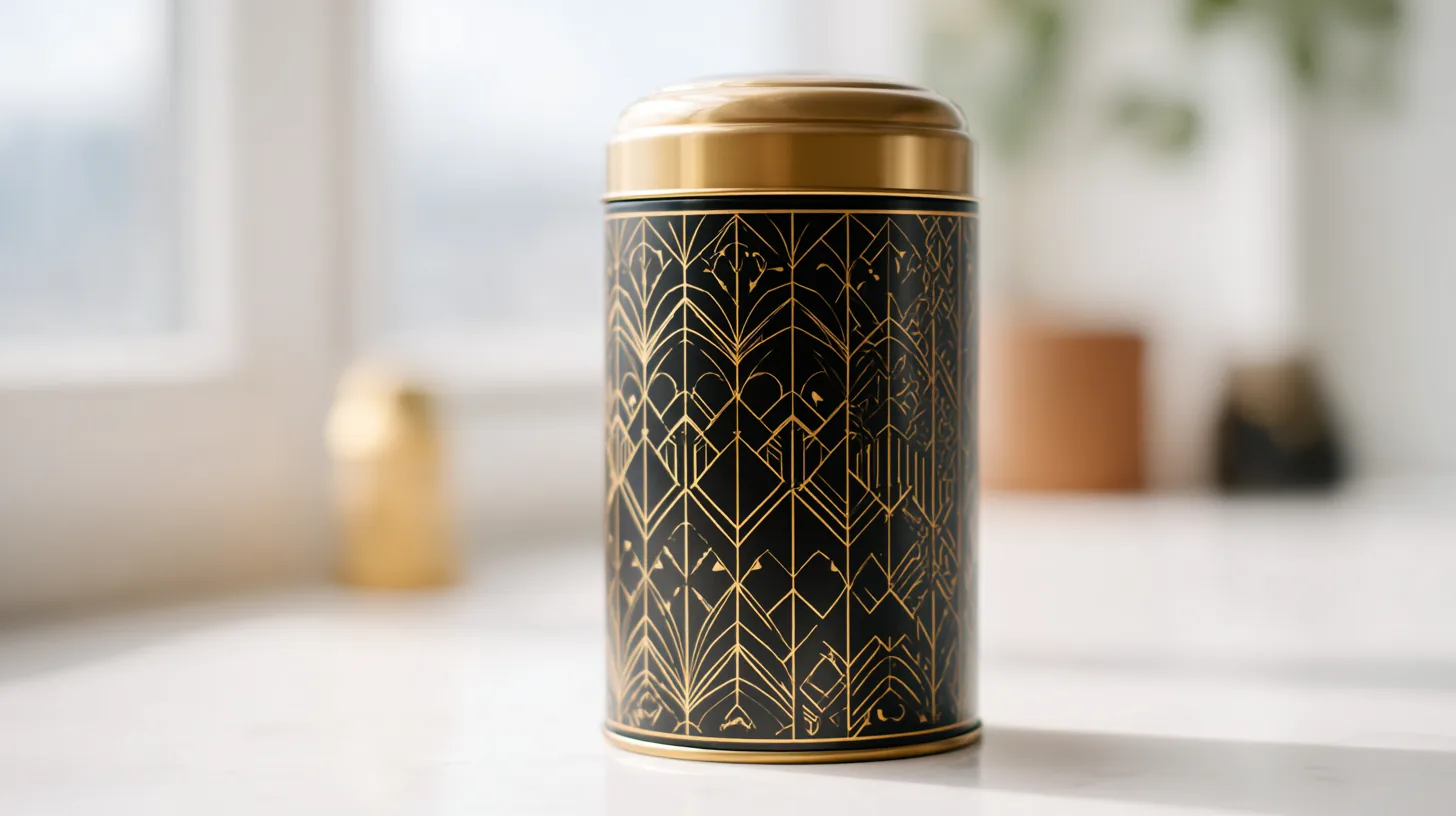
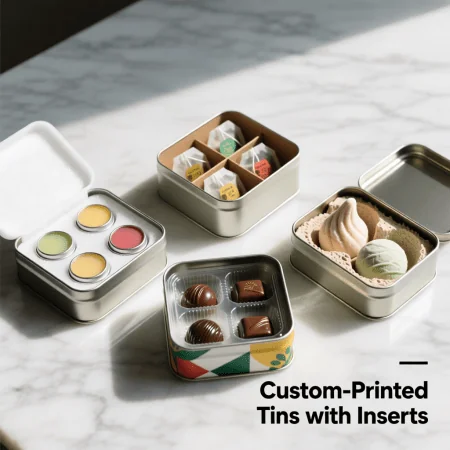
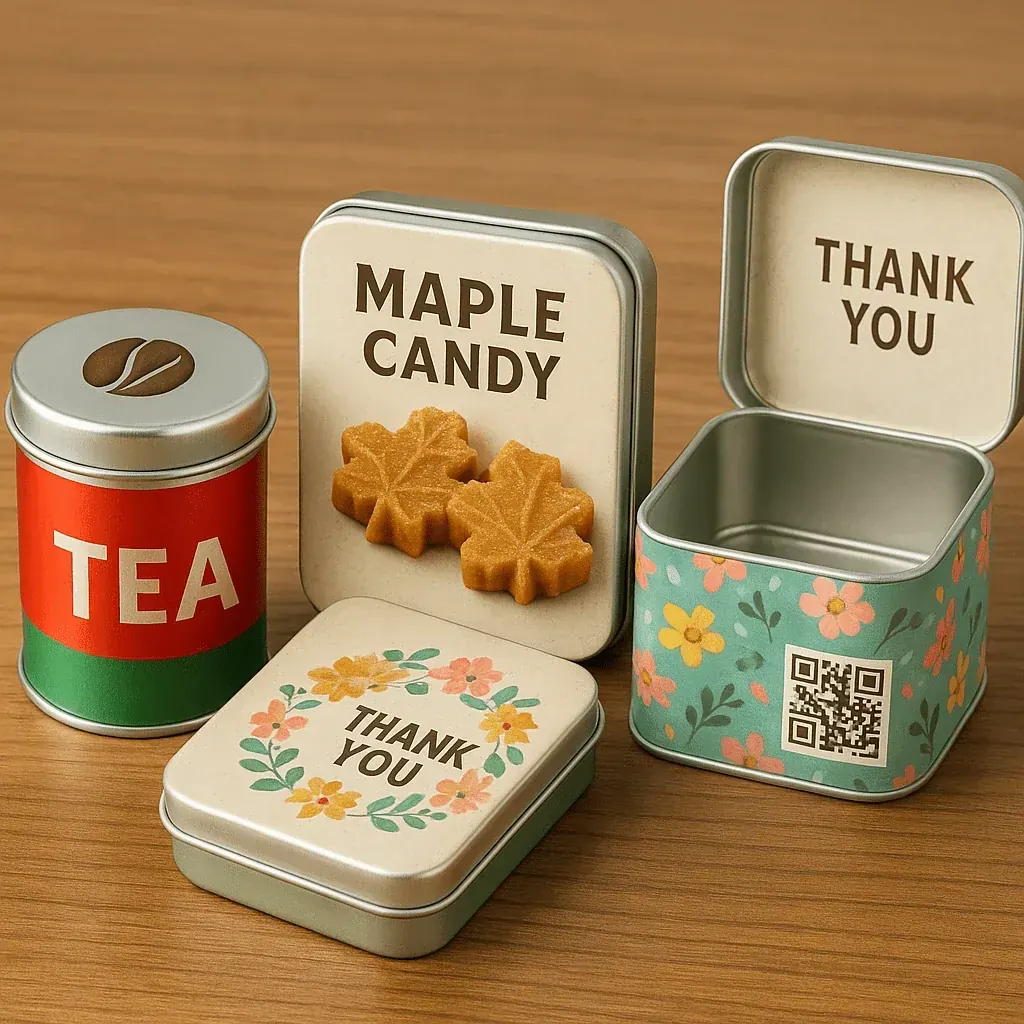
- Make the format functional beyond the product. A shallow rectangular tin doubles as a stationery tray. A tall cylindrical canister works as a coffee, tea, or loose-goods container. A heart-, star-, or book-shaped tin becomes a keepsake.
- Soften the product branding on the outer surface. Customers keep tins that don't shout commercial identity; they discard tins that do. A debossed mark reads as heritage; a screaming logo reads as disposable.
- Add a tactile or decorative reason to keep it. Embossing, foil stamping, and premium lacquers carry reuse value that flat printing does not.
- Consider refillable formats. For cosmetics, candles, and food products that support it, offering refills turns the tin into a long-cycle container rather than a single-use one.
Spec Guide: Minimise Impact Without Killing Budget
- Gauge: work with your supplier to specify the thinnest tinplate that reliably holds shape for your chosen format — lighter metal means lower shipping emissions and lower material cost.
- Print: CMYK offset lithography with water-based finishes where possible reduces solvent load compared to older lacquer systems.
- Packing: nested stacking on pallet materially increases freight density and lowers per-unit shipping impact.
- Run size: offset printing rewards higher volumes with lower per-unit cost. The 3,000-piece minimum can be split across three or four designs on the same tin, so a pilot can test several designs in one run.
- End-of-life: print the universal steel recycling symbol on the base so customers know it belongs in the kerbside stream rather than the landfill.
FAQ
Is tin packaging recyclable?
Yes — infinitely recyclable without loss of material quality. Tinplate is one of the most recovered packaging materials globally; actual rates vary by market but sit above 80% across most developed economies.
Does tin add weight to shipping?
Tin is heavier per unit than plastic. The tradeoff is reuse — a tin that gets kept and reused amortises its manufacturing and shipping footprint across many product lifespans, where a plastic tray is almost always single-use.
Is tin food-safe?
All paints and coatings are food-grade, suitable for cookies, chocolate, coffee, tea, candy, and other food products. Please contact us for more details on the BRC certification covering indirect food contact.
Will tin make my packaging more expensive?
Per unit, usually yes. The comparison shifts once you factor in perceived value, shelf standout, retention, and reuse — for premium categories, tin often lifts price point and repurchase enough to lower effective packaging cost.
Stannum Can is a tin packaging manufacturer serving food, beverage, confectionery, cosmetics, and gifting brands globally. Contact us to discuss a sustainable tin format for your next launch, or browse the tin catalog for shape references.