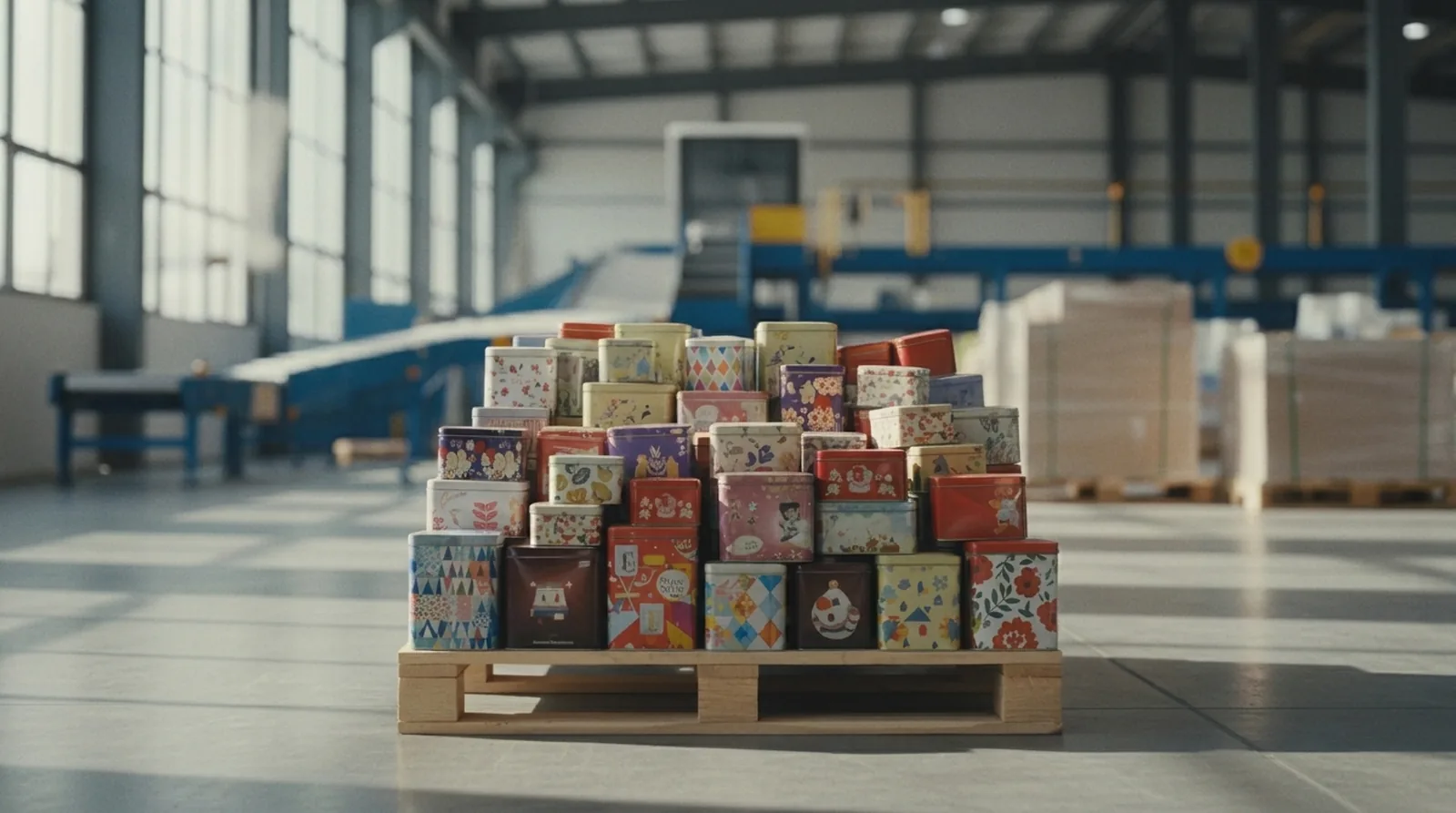
If you order custom tin packaging for a living, the past eighteen months have probably rearranged your week more than once. A tariff that existed on Monday was vacated by a court on Friday. A shipping lane you'd never thought twice about closed, and suddenly your freight quote came back 40% higher with no clear explanation. Brands that spent a decade building lean, single-source supply chains found themselves doing the one thing lean supply chains are designed to avoid — scrambling.
The instinct in moments like this is to either panic or tune it out entirely. Neither helps. What helps is understanding what actually changed, what it means for the specific job of getting custom tins from a factory to your shelf, and which of the scary headlines apply to you and which don't. So that's what this is — a working buyer's map of the 2026 landscape, written from the perspective of a manufacturer that ships metal packaging across the Pacific every week and has spent the year fielding these exact questions.
The tin packaging tariff picture is messier than the headlines suggest
Start with the part everyone has heard about. On April 2, 2025, the US administration announced a sweeping package of import duties, framed as "Liberation Day," a set of import duties signed under Executive Order 14257. For most of 2025, those tariffs sat over global trade like weather.
Then, on February 20, 2026, the Supreme Court changed the forecast. In a 6-3 decision in Learning Resources Inc. v. Trump, the Court ruled that the International Emergency Economic Powers Act does not authorize the President to impose tariffs — which meant the "Liberation Day" duties built on that authority were unlawful. If you only read that headline, you'd be forgiven for thinking the tariff problem was solved.
It wasn't, and here's the distinction that matters for anyone buying metal packaging. The ruling struck down the IEEPA tariffs but did not affect the industry-specific Section 232 tariffs — and Section 232 is precisely where metal lives. Steel, aluminum, and the products made from them sit under a separate legal authority that the Court left completely intact.
So while the broad reciprocal tariffs came down, the metal tariffs stayed up. And in April 2026 they were restructured in a way that, for packaging, is worth understanding in detail rather than skimming.
What the Section 232 restructure actually did to metal goods
On April 2, 2026, a new proclamation changed how the metal tariffs are calculated. The old system taxed the metal content of a finished product. The new one taxes the full customs value of the whole product. As of April 6, 2026, articles made entirely or almost entirely of steel, aluminum, or copper are subject to a 50% tariff on their full customs value, while most derivative products — finished goods that combine metal with other materials — now face a 25% tariff on the full value of the imported product.
That second number is the one packaging buyers tend to misread. A decorative tin is not a raw steel coil; it's a finished, printed, often inserted product. Where exactly a given tin lands — the 50% "almost entirely metal" tier or the 25% derivative tier — depends on its construction and classification, and CBP applies a content test to decide. Products containing 15% or less steel, aluminum, or copper by value are no longer subject to the Section 232 metals tariffs at all. This is not a number to guess at. It's a number to confirm with your customs broker against your specific product's HTS classification before you build it into a price.
One more wrinkle that's easy to miss: the April proclamation provides no exception for goods already in transit. A container that left the factory under one rule can arrive under another. That single fact is why lead-time planning and tariff planning are now the same conversation.
Why a Canadian-headquartered manufacturer changes the math
Here's where the buyer's geography starts to matter more than it used to. The metal tariffs above apply to goods entering the United States. But the question of who is importing, and under what trade agreement, shapes what you actually pay.
Stannum Can is headquartered in Toronto, with manufacturing in Asia and a North American base in Canada. That's not a marketing detail in 2026 — it's a structural one. USMCA-compliant Canadian and Mexican goods are exempt from the global tariff, and the entire North American trade framework — CUSMA in Canada, USMCA in the US — is the live mechanism governing cross-border flows. The agreement's first joint review is coming up in July 2026, so the rules here are themselves in motion and worth watching.
We're not going to pretend a Canadian address makes tariffs disappear — it doesn't, and any supplier who tells you otherwise is selling something. What a Toronto headquarters with in-house customs support does is give you a partner who navigates the classification, the country-of-origin documentation, and the entry paperwork as part of the job rather than handing you a box and a problem. When the rule for "goods in transit" can change mid-voyage, having someone who tracks that on your behalf is the difference between a surprise and a plan.

The shipping disruption is real — but it's not hitting every lane equally
The other half of the 2026 anxiety is the shipping news, and this is where careful reading genuinely pays off, because the disruption is severe in some places and almost invisible in others.
The headline event: on February 28, 2026, US and Israeli forces struck Iran, and within 48 hours the Strait of Hormuz — which carries roughly 20% of the world's daily oil supply — had effectively closed. Houthi forces resumed attacks on Red Sea shipping, reversing the fragile gains made since the October 2025 ceasefire, which pushed carriers back onto the long way around. The Cape of Good Hope detour adds roughly 3,500 to 4,000 nautical miles and 10 to 14 days to Asia–Europe and Asia–Middle East voyages. Freight rates on affected lanes climbed accordingly.
If you ship metal packaging from Asia to North America, read the next sentence twice, because it's the one that should lower your blood pressure. Asia–US West Coast rates are less directly affected by Red Sea diversions; trans-Pacific Pacific routing remains uninterrupted. The closures are in the Middle East and the Suez approach. A container moving from a Chinese port across the open Pacific to Los Angeles, Vancouver, or Long Beach simply doesn't pass through Hormuz or the Red Sea. The route is geographically clear of the conflict zones — one of several reasons tin packaging has long held up well across global shipping conditions.
That's the good news. The honest caveat is that "uninterrupted route" does not mean "unaffected market." No trans-Pacific services are directly impacted by the conflict, but vessel, equipment, and crew rotation effects may indirectly affect them — when carriers pull ships and crews to cover safer rotations elsewhere, the ripple reaches every lane eventually. So the Pacific isn't blocked, but it isn't sealed off from the global capacity squeeze either.

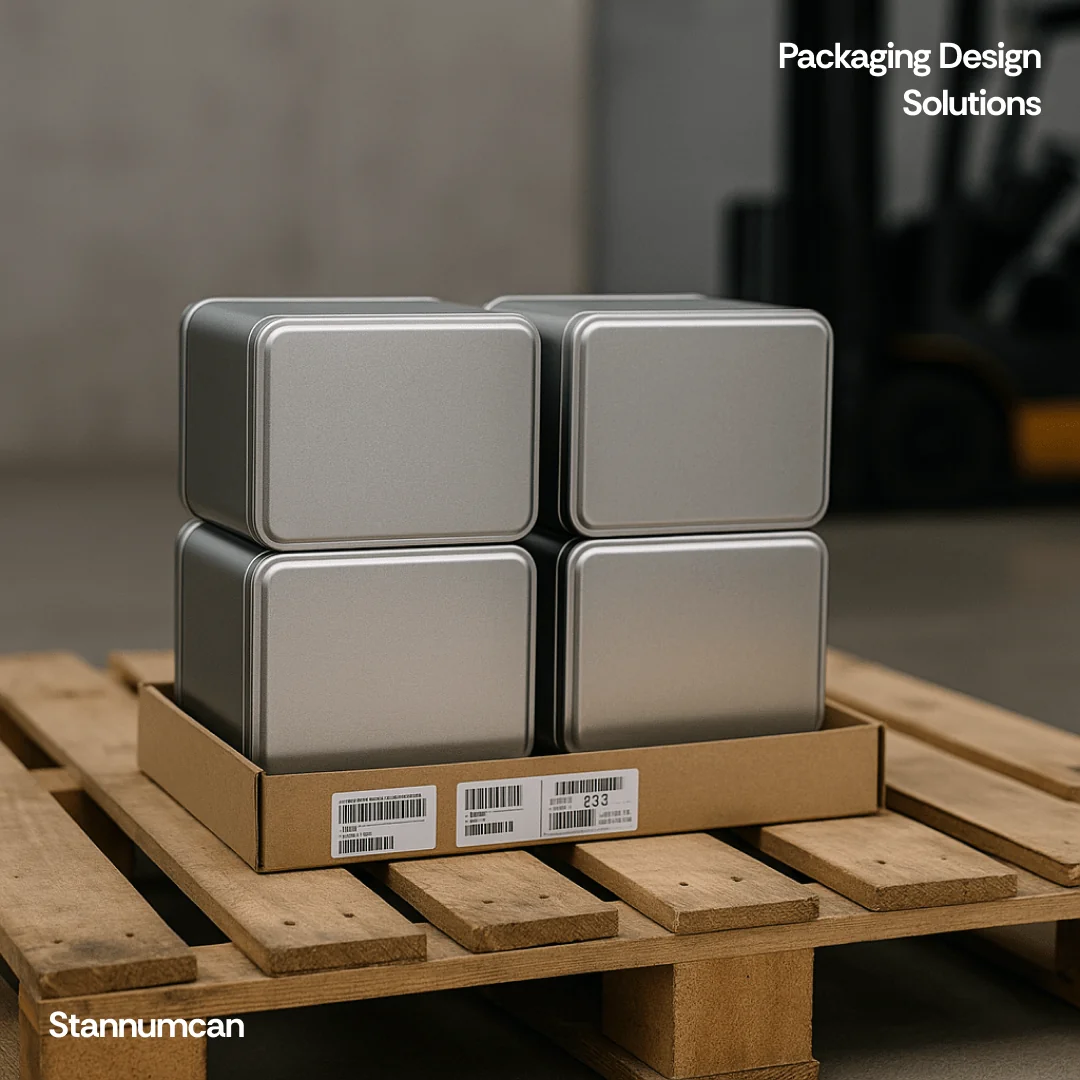

The counterintuitive part: trans-Pacific rates have actually been soft
Here's the detail that runs against the doom narrative. For much of early 2026, trans-Pacific rates weren't spiking — they were falling. Far East–to–US West Coast spot rates dropped to $1,889 per forty-foot container by the third week of February, down from $2,052 a week earlier, and 2026 has been widely expected to be a year defined by overcapacity in container shipping. Tariff uncertainty pushed a lot of US import demand down, carriers had ordered a lot of new ships, and the result was, for a while, more vessels than cargo on the Pacific.
The practical takeaway for a buyer: the freight environment in 2026 is volatile in both directions. It is not a simple "everything is more expensive now" story. It's a "your specific lane, on your specific week, under your specific tariff classification" story — which is exactly the kind of granularity that rewards working with someone who watches the rates daily instead of quoting you a number from last quarter.
What a 10,000-ton tinplate reserve actually buys you
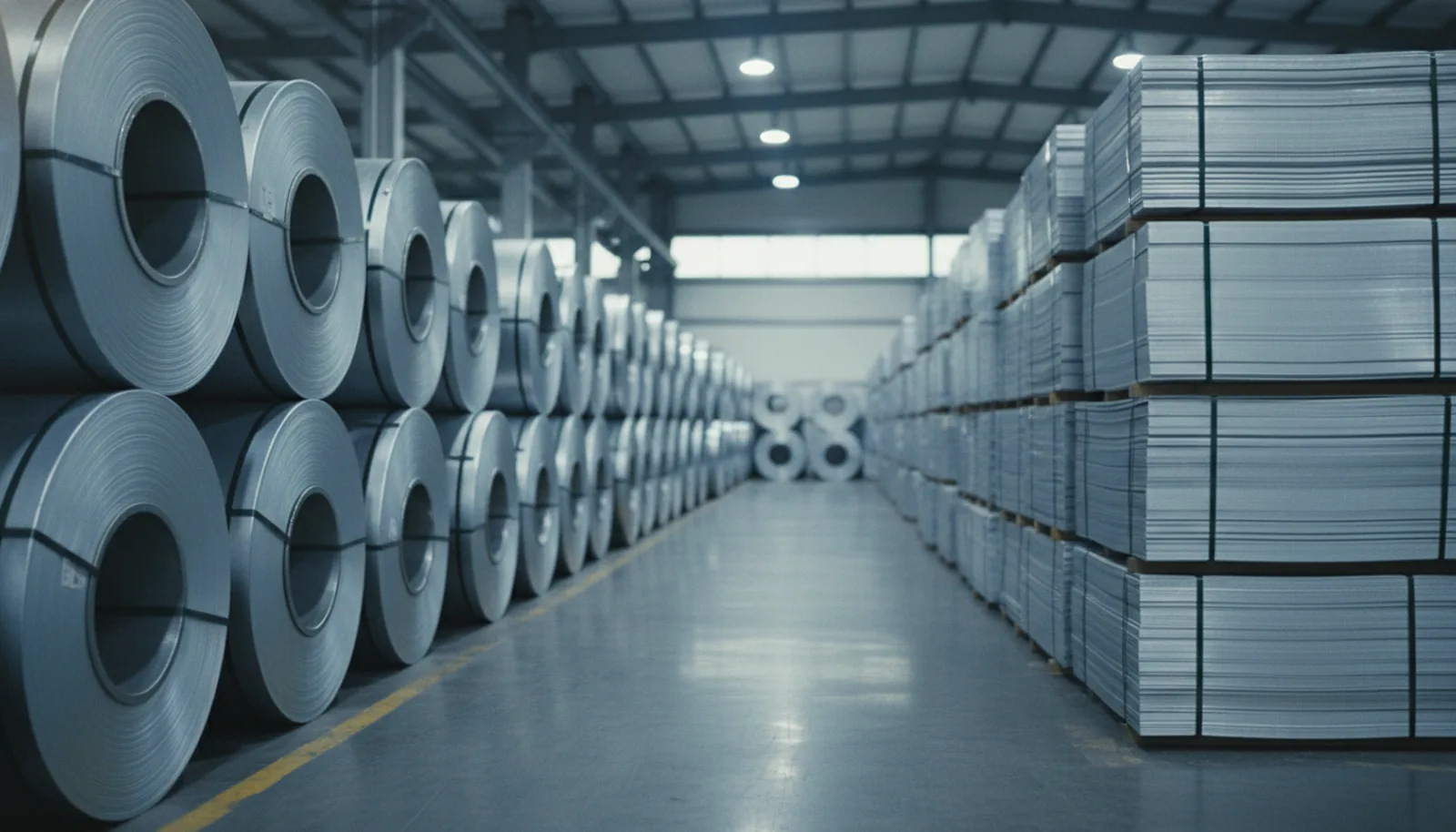
There's one more piece of the supply-chain puzzle that sits upstream of both tariffs and freight: the raw material itself. Tin and tinplate prices have been their own story. Tin spent a prolonged stretch above $33,000 per tonne in 2025, reaching as high as $38,000 in April, driven partly by a 7.7-magnitude earthquake in Myanmar and a mine suspension in the Democratic Republic of Congo. When your input material swings that hard, the timing of when you buy it matters as much as the price.
This is where on-site reserves stop being a line on a capabilities page and start being a hedge. Stannum's flagship factory holds a tinplate reserve of more than 10,000 tons. In practice, that means production for a given order isn't necessarily exposed to whatever the spot price did the week the order landed — there's material on hand, which buffers both availability and price stability. It's the manufacturing equivalent of having filled the pantry before the storm. It doesn't make the storm go away, but it changes what you can cook through it.
We'd rather be straight about the limits of this too. A reserve smooths volatility; it doesn't repeal economics. But in a year where the raw material, the tariff, and the freight rate are all moving at once, taking one of those three variables and making it more predictable is genuinely valuable — and it's the kind of stability that's hard to see on a quote and easy to feel when a project actually ships on time.
A practical checklist for buying packaging in a volatile year

None of this requires a trade-law degree. It requires asking better questions earlier. If you're sourcing custom tins in 2026, here's what to nail down before you commit:
- Confirm the tariff classification, not the tariff headline. Ask your supplier or broker which Section 232 tier your specific tin falls into — 50%, 25%, or exempt under the 15%-content threshold — based on its actual construction and HTS code. The headline rate is rarely your rate.
- Treat lead time and tariff exposure as one plan. Because the rules can change for goods already in transit, the production schedule and the customs strategy can't be planned separately. Ask how your supplier handles a mid-voyage rule change.
- Know your lane, not just "shipping." A trans-Pacific route to the West Coast is a different risk profile than an all-water East Coast service routed near the Suez. Ask which lane your freight actually uses.
- Ask about raw-material buffering. A supplier holding tinplate reserves can offer more price stability than one buying spot for every order. It's a fair question to ask directly.
- Favor partners with in-house customs support. When the regulatory picture is this fluid, end-to-end logistics — ocean and air freight, door-to-door delivery, and customs clearance under one roof — turns a recurring headache into someone else's job. The same logic applies to other moving regulatory targets — see how tin packaging compares against tightening EPR and recyclability rules for a parallel example.
FAQ
What is the current US tariff on imported tin packaging?
It depends on construction. Tins that classify as "almost entirely" steel, aluminum, or copper fall under a 50% Section 232 duty on full customs value as of April 2026. Most derivative tins — finished, printed, often inserted — land in the 25% tier, and products with 15% or less qualifying metal content by value are exempt from Section 232 entirely. Your HTS code and content test decide the bracket, not the headline rate.
Are trans-Pacific shipping routes affected by the 2026 Red Sea disruption?
Not directly. The closures are concentrated around the Strait of Hormuz and the Suez approach, which Asia-to-North America Pacific sailings don't use. Capacity can still tighten indirectly as carriers rebalance fleets, but the route itself remains open.
How does USMCA affect tin packaging tariffs?
USMCA-compliant Canadian and Mexican goods are exempt from the broad reciprocal tariff regime, which is one structural reason a Canadian-headquartered manufacturer can simplify cross-border flows. Section 232 metal tariffs are a separate authority and still apply where relevant — so country-of-origin documentation matters as much as the agreement itself.
What happens if tariff rules change while my container is in transit?
Under the April 2026 Section 232 proclamation, there is no exception for goods already on the water — a container can leave under one rule and arrive under another. That's why lead-time planning and tariff planning have to be handled as the same conversation, not two separate ones.
The reassuring through-line
Strip away the headlines and the 2026 picture, for a North American buyer sourcing custom tin packaging, comes down to a few stable facts. The metal tariffs are real and specific, but they're knowable in advance if you classify correctly. The shipping crisis is severe — but it's concentrated in lanes that trans-Pacific metal shipments don't use. The raw-material market is volatile, but reserves can buffer it. And a Canadian-headquartered manufacturer with end-to-end logistics is, in a year like this one, structurally well-placed to absorb the complexity on your behalf rather than passing it down the line.
Disruption rewards the prepared and punishes the surprised. The buyers having the calmest 2026 aren't the ones who found a way to make tariffs and conflict disappear — there isn't one. They're the ones who asked the specific questions early, built a few weeks of slack into their timelines, and partnered with a manufacturer that treats the supply chain as part of the product, not an afterthought.
If you're planning a tin program and want to map out the tariff, lead-time, and freight picture for your specific project before you commit, that's the kind of conversation our team has every week right now. We can walk through classification, routing, and timing together — and help you build a plan that fits the year you're actually shipping into.