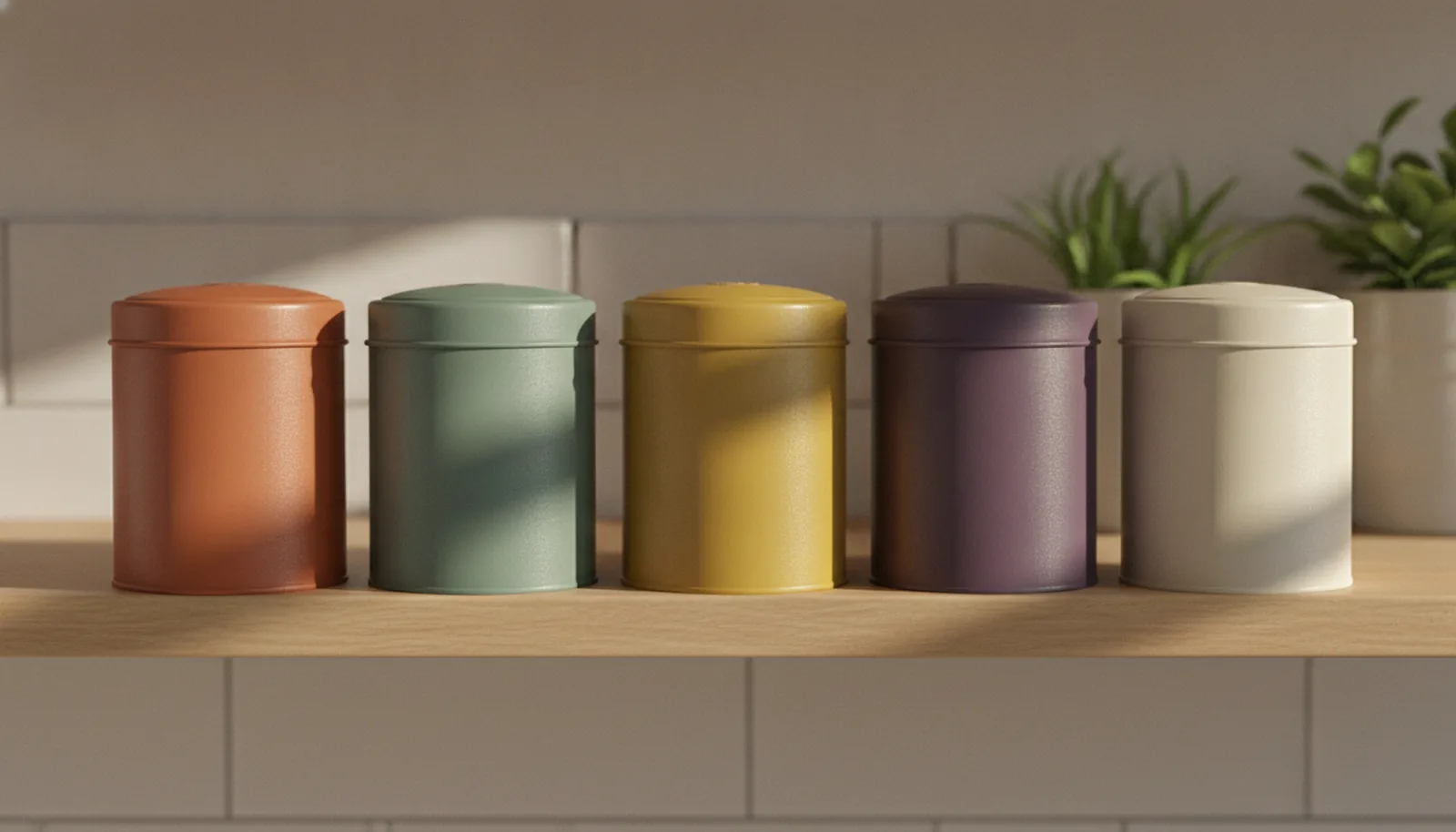
Every subscription box on earth arrives more or less the same way. A brown corrugated mailer, a strip of branded tape if the brand is trying, some crinkle paper, and inside it the thing the subscriber actually paid for. Within ten minutes the mailer is flattened and in the recycling bin, and the brand's entire physical presence in that person's home has been reduced to whatever the product itself came in — usually a foil pouch, a shrink-wrapped bar, or a plastic jar that follows the box out the door once it's empty.
That is a strange outcome for a business model whose whole economics depend on being remembered thirty days from now — and it points to a blind spot in how most subscription box packaging is designed.
The category has spent a decade optimizing the unboxing moment and almost no time on what happens after it. The conversation is dominated by corrugated — mailer dimensions, void fill, tape, the rip strip. All good work, all of it aimed at a package designed to be destroyed. Meanwhile there's a format sitting in plain sight that subscribers already keep on their shelves for years, and most subscription brands have never seriously priced it.
The subscription problem is not acquisition. It's being forgotten.
Start with what the retention data actually says, because it reframes the packaging question entirely.
Recurly's 2026 State of Subscriptions, built on data from 76 million unique subscribers across 2,200 merchants, describes an industry that has matured out of easy growth. Overall subscription growth has slowed to 12.6%, and acquisition rates have flattened at around 3%. The lever has moved from getting people in to keeping them there.
Then there is the number that matters most for anyone who makes packaging decisions: 52% of consumers cancelled at least one subscription in the past year because they weren't using it. Not because it was too expensive. Not because the product was bad. Because it faded.
And the flip side is just as telling — nearly one in four new sign-ups are former subscribers coming back, which means the brands winning right now are the ones people remember well enough to return to.
Put those together and the packaging brief changes shape. If disuse is the primary churn mechanism and recall is the primary recovery mechanism, then a package that stays visible in the subscriber's home is not a cosmetic upgrade. It is a retention asset that happens to also hold the product.
Sizing the opportunity is harder than the trade press makes it sound. Estimates for the global subscription box market vary enormously depending on how the category is defined — The Business Research Company puts it near $49.7 billion in 2026 growing at roughly 19.6% annually, while IMARC Group values it at $42.5 billion in 2025 with a more conservative 12.6% growth rate. The honest summary is that this is a large market growing at a healthy double-digit clip, and that anyone quoting a single precise figure is quoting one firm's methodology rather than a settled fact.
What corrugated does well — and what it was never meant to do
None of this is an argument against cardboard, and it would be dishonest to pretend otherwise. Corrugated is cheap, light, protective, and genuinely well recovered. The American Forest & Paper Association reported a 2024 cardboard recycling rate of 69–74% in the United States, which is a strong number for any material.
It's worth knowing that this figure looks lower than the ones brands may remember quoting. AF&PA revised its calculation methodology after criticism that the older approach — which produced rates above 90% — overstated what was really happening. The new number is more conservative and more credible. Corrugated still recycles well.
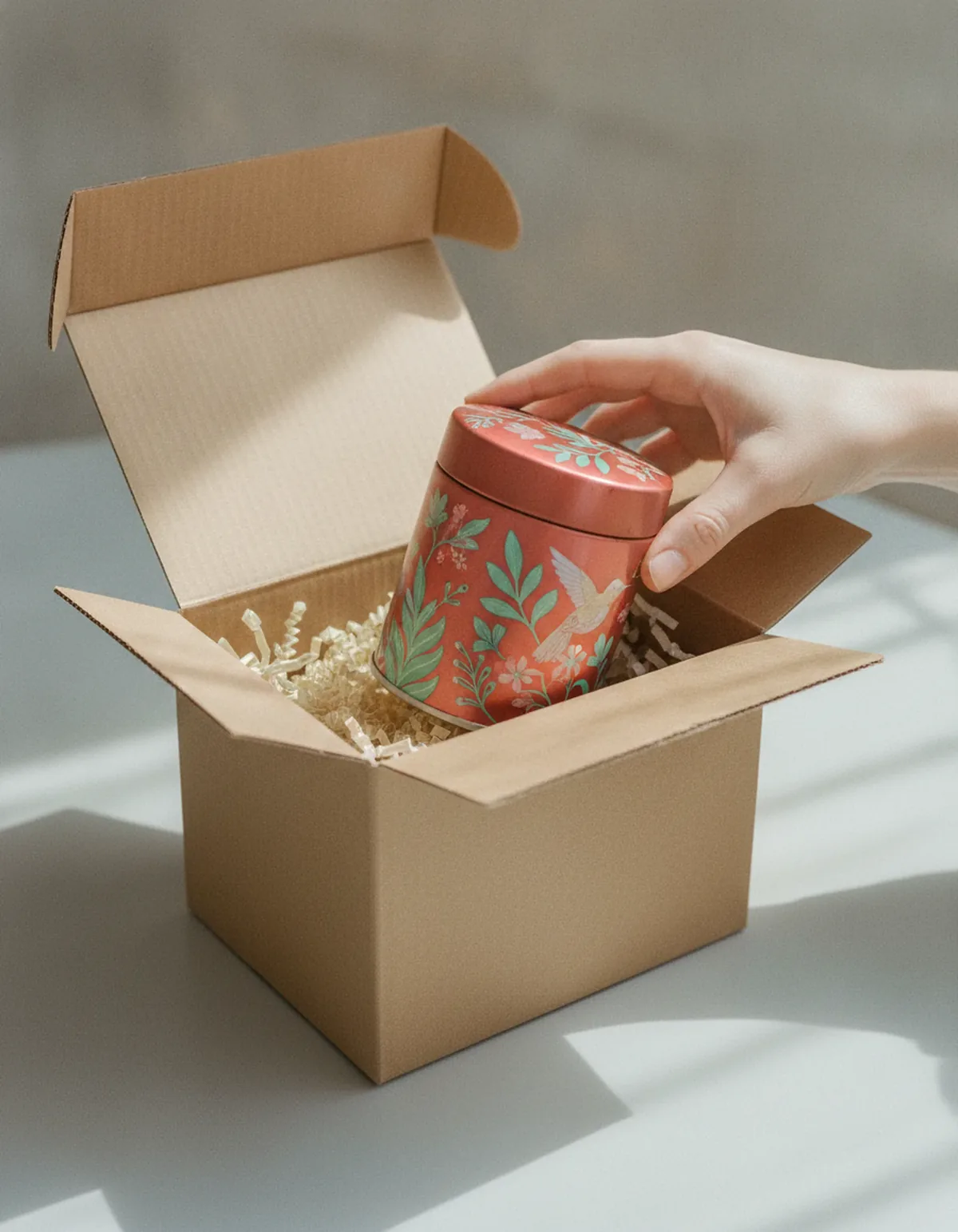
The point isn't that cardboard fails. It's that a shipper and a vessel are two different products, and the subscription category has been asking one object to do both jobs.
A shipper exists to survive a truck and then disappear. It should be as light and as recyclable as possible, and its highest virtue is that it leaves no trace. A vessel exists to hold the product during use and to sit somewhere the customer sees it. Those are opposite design goals. When a brand tries to make a mailer feel like a keepsake — heavier board, soft-touch lamination, foil — it's spending money making a disposable object slightly less disposable, which is a losing trade. We've made a version of this argument before in our tin versus cardboard comparison, and subscription is where the distinction bites hardest.
The tin doesn't replace the mailer. It replaces the pouch, the jar, and the inner box. The corrugated shipper still does its job and still gets recycled. What changes is what's left over when the box goes out.
What actually changes when the vessel is metal
It outlives the billing cycle
A tea tin, a coffee tin, a candle tin — these stay. Everyone reading this can picture a biscuit tin in a relative's house holding sewing supplies, or a mint tin full of guitar picks. That behaviour is the most ordinary thing in the world, and it is exactly what a subscription brand needs: a branded object that remains in view during the twenty-nine days when the subscriber is not receiving anything. We've explored that keep-forever instinct in more depth in tins as time capsules.
We've written separately about how tins get a second life through refill programs, and subscription is the natural home for that model. The subscriber already has a standing relationship and a recurring delivery. Sending a refill rather than a whole new container is a small operational change with a real material saving behind it.
The collection mechanic
Here is where subscription differs from every other packaging brief we see, and where it gets interesting.
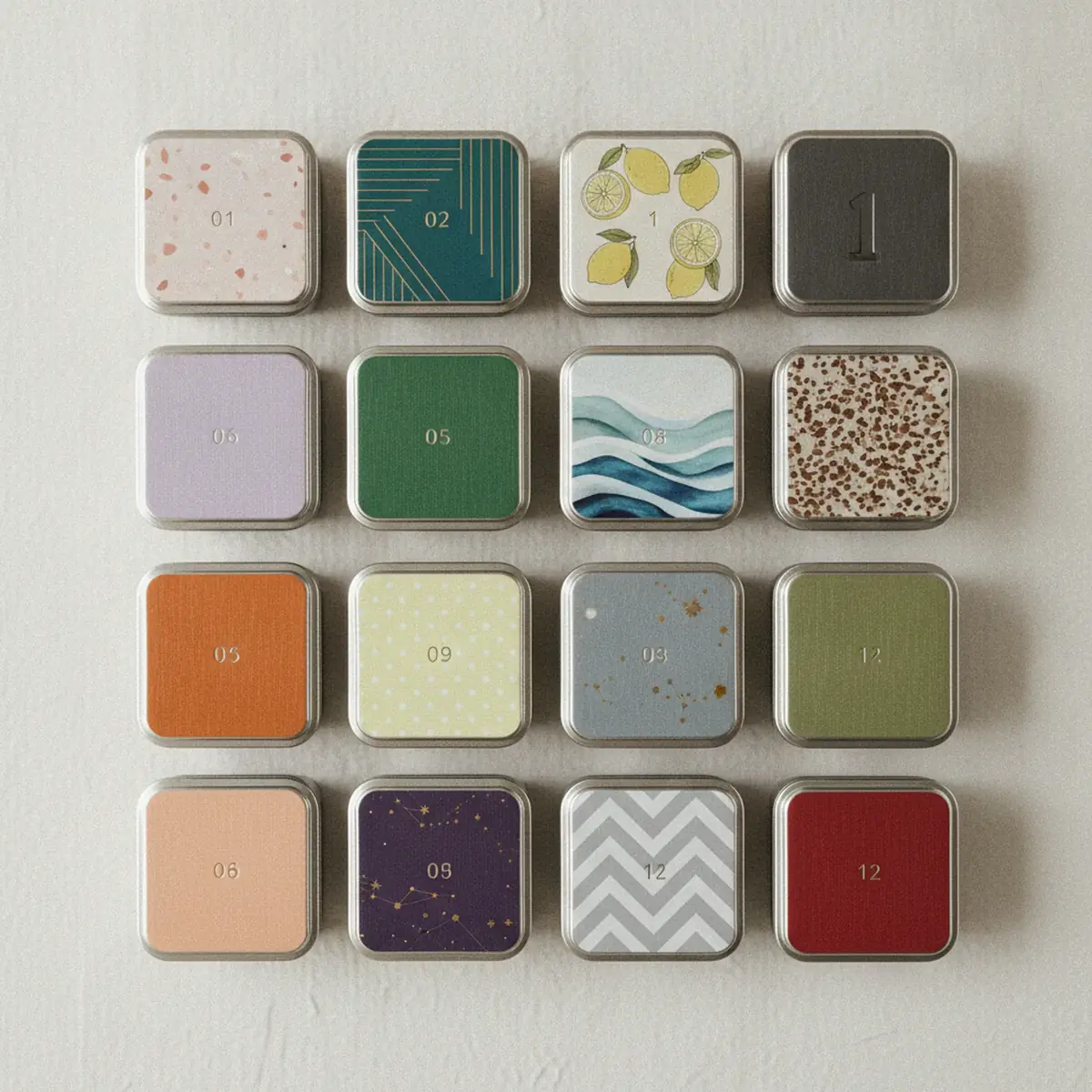
A subscription is inherently serial. Twelve months, four quarters, six drops. Serial products invite collection, and collection is a retention mechanic that works on a level below price sensitivity — an incomplete set is a psychological open loop, and people don't like open loops. If a subscriber has eight of twelve numbered tins on a shelf, cancelling in month nine has a visible cost that cancelling a foil pouch subscription does not.
This is adjacent to something we've covered in our piece on limited-edition tin drops, but the mechanics are different. A drop is a one-off scarcity event. A subscription series is a slow build, and the object accumulates rather than appreciating. The design implication follows from that: for a series, consistency of shape matters more than novelty, because a shelf of twelve matching tins reads as a collection while a shelf of twelve different shapes reads as clutter.
It photographs
The unboxing economy runs on images, and metal simply behaves better in front of a camera than board does. Embossing catches light, spot finishes create contrast, and the object has enough presence to be the subject of a photograph rather than the wrapping around one — a point we've unpacked separately in designing packaging that photographs well.
The consumer research here should be read with some care, because packaging survey figures get quoted loosely across the industry and drift as they travel. One of the more traceable data points comes from Dotcom Distribution's eighth annual e-commerce consumer study, based on responses from 1,150 U.S. online shoppers and summarized by Packaging World: when presented with premium packaging, 51% of respondents said they were inclined to think the brand was more upscale, 41% said they were more excited to open the package, and 34% said they were compelled to shop with the brand again. Those are stated intentions rather than measured behaviour, which is worth holding in mind — but the direction is consistent across years of similar work.
The categories where this already makes sense
Not every subscription should be in metal. The ones where it fits share a specific profile: a dry or solid product, a customer paying a premium, and a container that has a job to do after opening.
Loose-leaf tea is the obvious case, and the one with the longest history — the tin caddy predates the subscription model by centuries, and it persists because metal blocks light and resists moisture in ways a pouch can't. DAVIDsTEA, who we've produced for, built real visual brand equity on exactly that shelf presence. Specialty coffee follows the same logic, with the added benefit of a rigid vessel that customers actually keep on the counter rather than sliding into a drawer. Candles are practically native to the format, since the tin is the burn vessel. And curated snack boxes work when the tin is the hero item rather than the whole shipment — the tin holds the good thing, the box holds the tin and everything else.
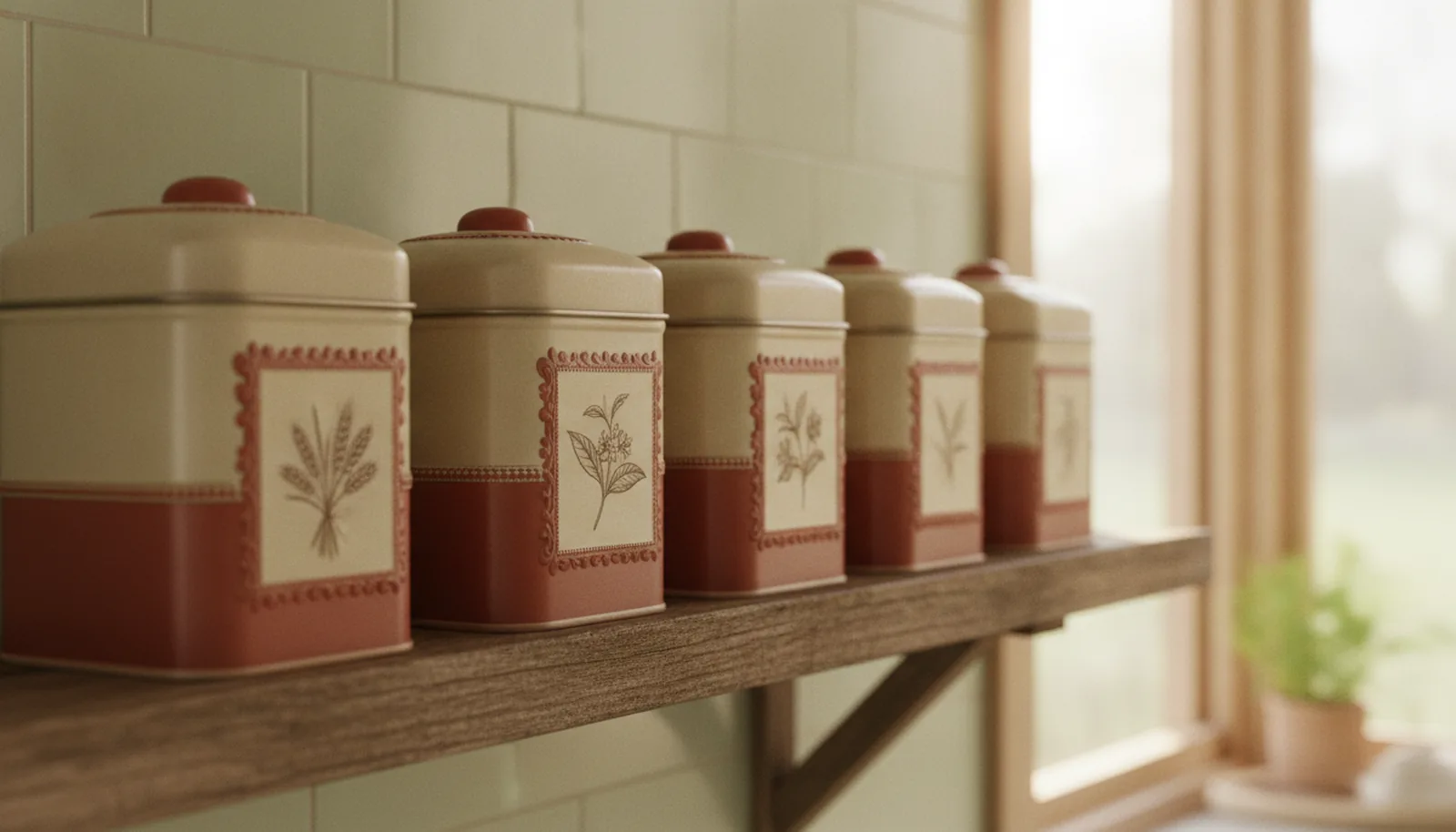
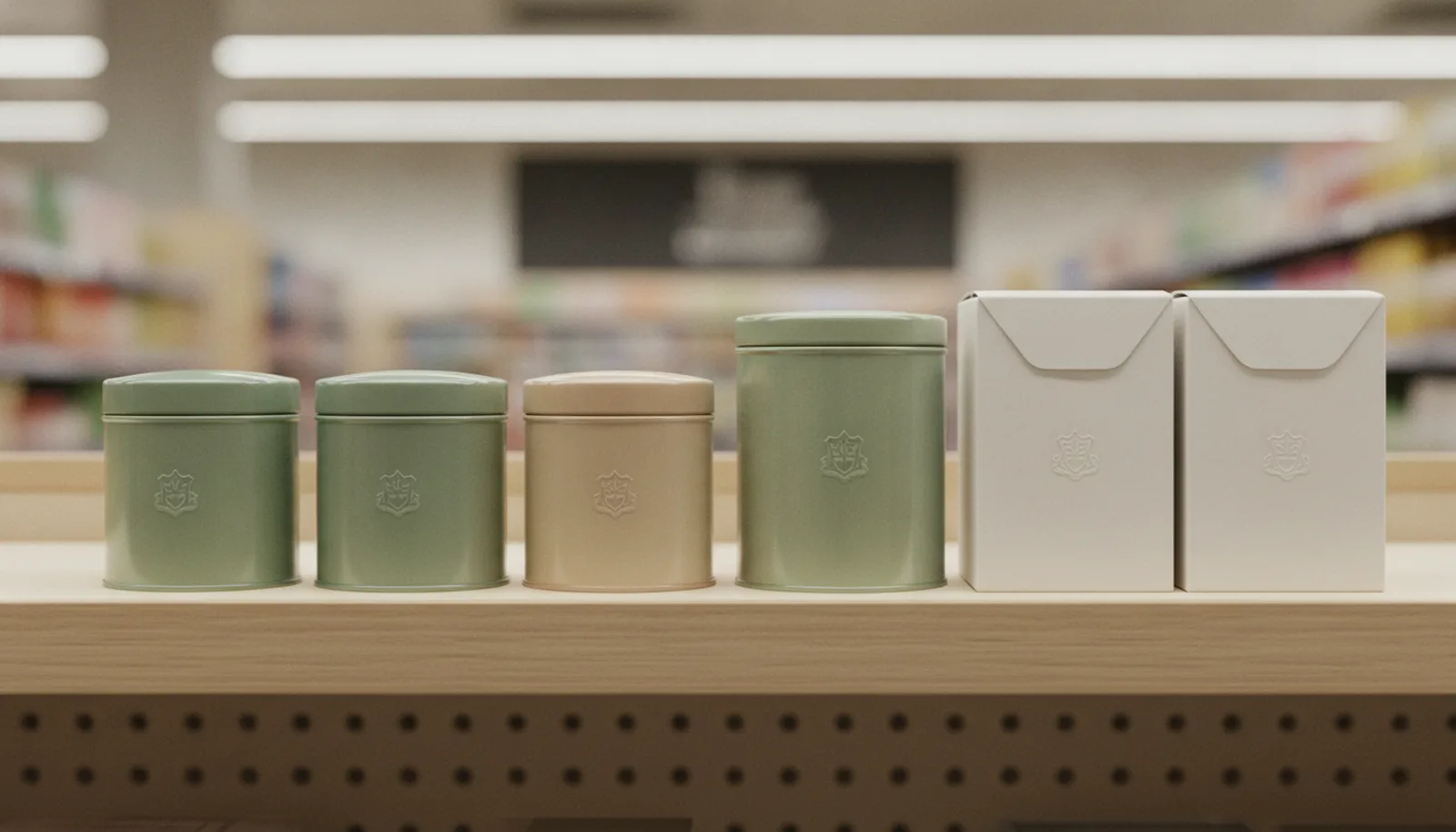
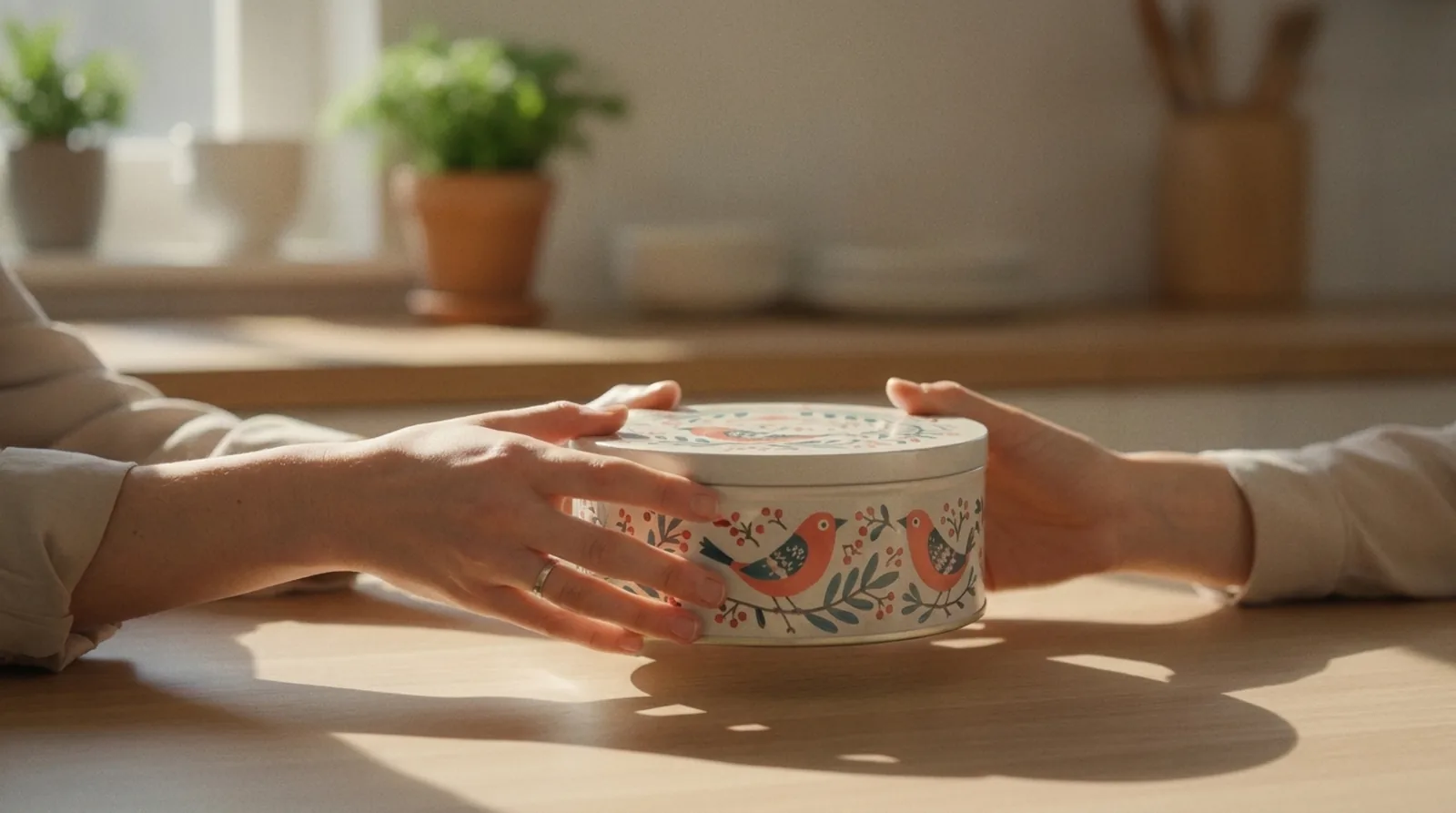
Our coffee and tea tin and candle tin pages cover the format specifics for each.
The production reality, honestly
This is where good ideas usually meet the factory floor and lose, so it's worth being direct about the constraints.
A monthly cadence and custom tooling are incompatible. A new mold adds four to six weeks before anything is produced, and typical production runs 30 to 60 days depending on complexity and volume. No brand is designing, tooling, and shipping a bespoke tin shape every month. Anyone who tells you otherwise is describing something other than manufacturing.
Metal is heavier than board. A tin adds real weight to a parcel, and in a business where shipping is often the largest variable cost after the product itself, that matters. The offset is that tin's structural strength usually lets you cut void fill and drop down a board grade on the outer mailer, which recovers some of it — but not all. Our logistics team will model the actual landed cost rather than guess at it, because guesses in freight rarely survive contact with a rate card.
Minimums are real. Our MOQ is 3,000 pieces per project, splittable across three or four designs, and a subscription brand with 400 members is a different conversation from one with 40,000.
One shape, twelve artworks
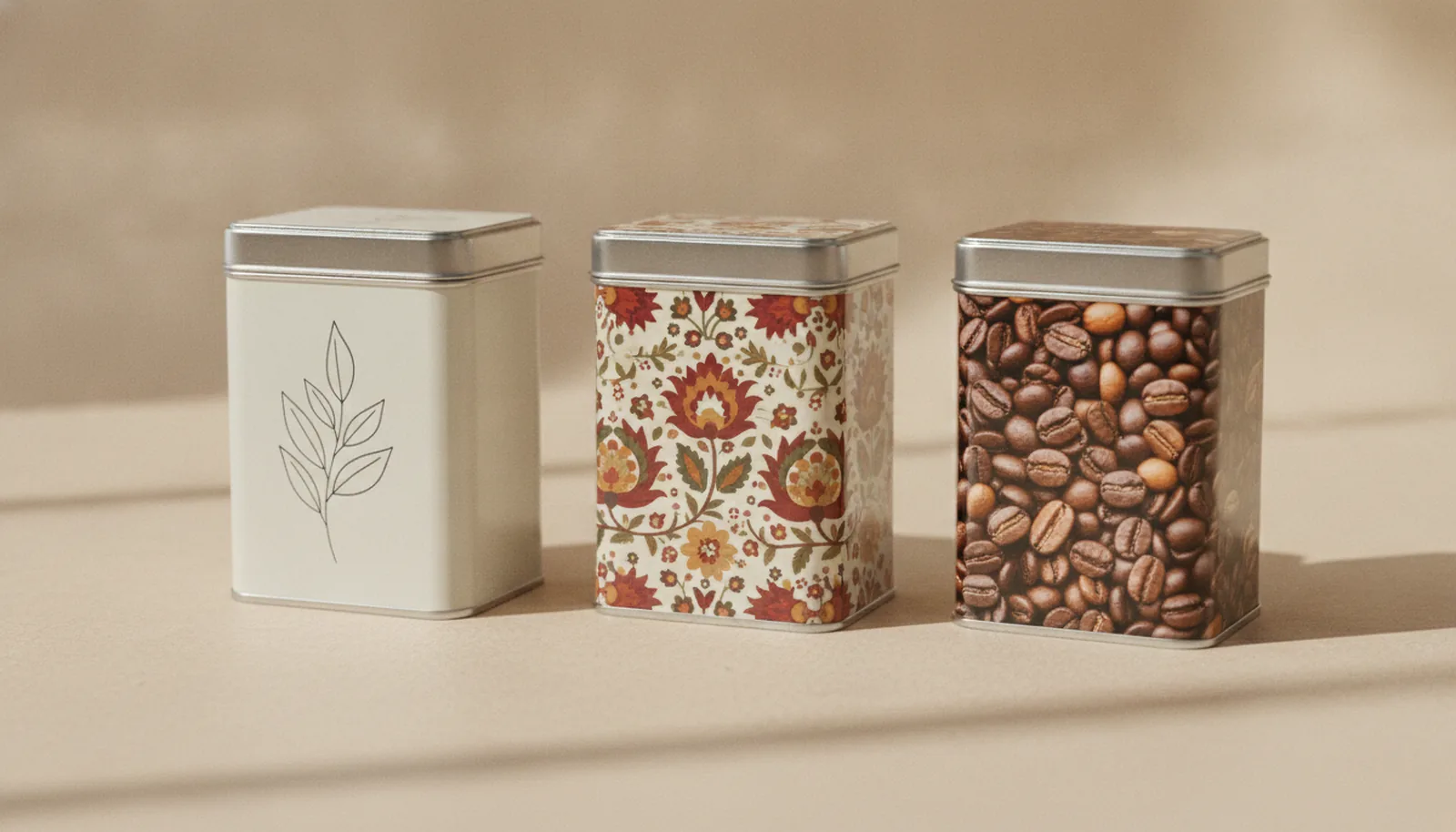
The way around most of this is to separate the two things brands tend to bundle together: the tooling and the print.
The mold is the slow, expensive, capital-intensive part. The artwork is not. Full-surface CMYK offset lithography with Pantone matching means the same physical tin can carry a completely different design every month at a fraction of the cost of a new shape. Choose one structure, commit to it, and let the printing carry the variety.
That's also what makes our 5,000+ existing molds relevant to a subscription brand rather than just a large one. Starting from an existing shape removes the four-to-six-week tooling window entirely and brings sample turnaround down to 10 to 14 days, which is the difference between a program you can actually launch this quarter and one that slips a season.
The other structural answer is to stop thinking every box needs a tin. Put the tin on the annual tier, the quarterly premium box, the welcome shipment, or the December edition. Use it where the margin supports it and where the object earns its place. A subscriber who receives one exceptional tin a quarter and eleven ordinary deliveries has something to keep, and the program stays affordable.
The sustainability case, without the hand-waving
Steel packaging is the most recycled packaging material in Europe, and the figure keeps climbing — Steel for Packaging Europe reports an 84% EU recycling rate for 2024, calculated under the EU's new harmonised methodology that measures what actually enters recycling operations rather than what gets collected. Steel is also infinitely recyclable without any loss of quality, which is not true of fibre, where each cycle shortens the strand.
But the honest sustainability argument for a subscription tin is not really about recycling. It's about the thing not being thrown away in the first place. A container that stays in use for five years is doing more good than one that gets efficiently recycled after twenty minutes, and reuse sits above recycling in every waste hierarchy that exists for good reason. Our own factory runs on 7.5 million kWh of solar per year and is targeting zero-waste manufacturing by 2030, and you can read the detail on our sustainability page — but the strongest environmental claim any tin makes is simply that people keep it.
Where to start with subscription box packaging
If you run a subscription program and this is the first time you've priced metal, the useful first step is narrow: pick one tier or one seasonal edition, look at an existing mold rather than a custom shape, and get a physical sample in hand before committing to a series. Ten to fourteen days from an existing mold is fast enough to test the idea inside a single quarter.
We've been making decorative tins since 1993, and we handle design and tooling through printing and logistics in-house, which matters when you're building a program that has to repeat on schedule. Have a look at our work to see the range of what's been produced, or get in touch with your volumes and cadence and we'll tell you honestly whether tin makes sense for your program — including if it doesn't.
Frequently asked questions
Can a tin replace the shipping box for a subscription entirely?
Usually not, and we'd generally advise against it. A tin can be shipped on its own with a label applied directly, and some brands do exactly that for a striking arrival, but the lid can pop in transit and the surface will pick up scuffs from conveyor handling. The more reliable approach is a tin inside a right-sized mailer, using the tin's structural rigidity to justify a lighter board grade and less void fill than you'd otherwise need.
What's the realistic minimum order quantity for a subscription tin?
Our MOQ is 3,000 pieces per project, whether you use an existing mold or commission a new one, and it can be split across three or four designs on the same tin in equal quantities. What the mold choice changes is cost and timing: existing molds carry no tooling charge, while new custom shapes need enough volume to amortize the mold, which is why most subscription programs start with an existing shape and differentiate through print.
How far ahead do we need to plan for a seasonal edition?
Work backwards from 30 to 60 days of production, plus 4 to 6 weeks of ocean freight, plus 4 to 6 weeks of tooling if the shape is new. For a December edition using an existing mold, that means artwork should be locked by roughly midsummer. Air freight at 5 to 10 days exists as a fallback, but it's an expensive way to recover a slipped schedule.
Are the tins food-safe for tea, coffee, and confectionery?
Yes. All paints and coatings used are food-grade, and the factory holds BRC certification for indirect food contact alongside ISO 9001, ISO 14001, and ISO 45001. For food products we'll confirm the appropriate internal coating during the design stage, since requirements differ between dry goods, oily products, and confectionery.
Does a tin actually improve retention, or is that just a nice theory?
It's a mechanism argument rather than a controlled result, and we'd rather say that plainly than overclaim. What the industry data establishes is that disuse is the leading stated reason subscribers cancel, and that returning subscribers make up a large share of new sign-ups. A durable branded object that stays visible in the home addresses both of those conditions directly. Whether it moves your specific churn number is something only your own cohort data will tell you, and it's worth measuring rather than assuming.
References
1. Recurly — The 2026 State of Subscriptions
2. The Business Research Company — Subscription Box Global Market Report 2026
3. IMARC Group — Subscription Box Market Size, Trends and Report
4. American Forest & Paper Association — Paper Industry Announces 2024 U.S. Paper Recycling Rates
5. Packaging Dive — Cardboard recycling rate plunges following AF&PA's calculation revamp
6. Steel for Packaging Europe — Recycling
7. Packaging World — Dotcom Distribution: Consumer Attitudes on E-comm Packaging