If you've ever opened a customer complaint with a photo of crushed chocolates or a caved-in gift box attached, you already know the part of e-commerce that nobody puts in the product listing. The product was fine when it left. Something happened between the fulfillment centre and the front step — and now you're paying for a replacement, a return label, and a customer who won't be back. Tin packaging for e-commerce exists to take that middle part of the journey off your list of worries, and the reason it works is structural, not cosmetic.
This is the piece of the packaging conversation that gets skipped. Most of what's written about e-commerce packaging is about corrugated boxes, right-sizing, and how much void fill to throw in. Those are real questions. But they all start from the same assumption — that the product itself can't survive the trip, so the box has to. A tin changes the assumption.
The scale of the problem
Returns are not a rounding error. The National Retail Federation and Happy Returns estimate that 19.3% of online sales were returned in 2025 — roughly one online order in five coming back. Not all of those are damage. A lot are fit, preference, and people who ordered two sizes on purpose. But "arrived damaged" is the one reason on the list that has nothing to do with the customer and everything to do with what the product was sitting in when a sorting arm flicked it off a belt.
You'll see figures floating around the trade press claiming 30% of online orders are returned and that a fifth of those are due to damage. We looked for the source and couldn't find a primary dataset behind either number, so we've left them out. The NRF number is the one that has a survey behind it.
What actually happens to a parcel
The part most brand teams never see is what happens inside a carrier network. ISTA — the International Safe Transit Association — publishes the test procedure that packaging engineers use to simulate that environment. Its parcel-delivery procedure, ISTA 3A, was built by measuring what real packages go through on their way from a shipper to a doorstep. For a standard-sized package it calls for 9 free-fall drops, a random-vibration sequence with and without a top load, then 8 more drops — one of them onto a hazard block. That's 17 drops, most of them on edges and corners, plus the vibration of a truck bed, plus the weight of other parcels stacked on top. Drop heights vary with the package's weight, but the count doesn't.
That sequence is a simulation, and ISTA is explicit that no single carrier's network matches it exactly. But it's the best public description of the hazards a parcel meets, and ISTA publishes a sister procedure, ISTA 6-Amazon.com, that Amazon uses for its own packaging program. Amazon's Ships in Product Packaging program requires a product to pass a general simulation test before it can be shipped in its own packaging with no outer box — and Amazon keeps monitoring afterwards. If it has 90% confidence that a product's damage rate is 0.5% worse in its own packaging than it would be with Amazon-added packaging, the certification is pulled. Amazon watches damage rates down to half a percent. That's how much money is riding on this.
Why tin packaging for e-commerce handles the trip differently
A folding carton works by absorbing energy. When it takes a corner drop, the board crushes, the corner rounds off, and the energy that would have gone into the product gets spent deforming the paper instead. That's a good design — for one drop. By the sixth corner hit, the carton's corners are soft, the flaps have loosened, and the structure that was supposed to keep the contents from sliding around has quietly stopped doing its job. This is why corrugated shippers need void fill: the box is the sacrificial layer, and the fill is there to stop the product from meeting the box.
A tin works by resisting energy instead of absorbing it. Tinplate — a thin sheet of steel with a tin coating, a fraction of a millimetre thick — is drawn or stamped into a shape that holds its geometry under load. A rolled rim on the body and a fitted lid turn the whole container into a rigid shell. When the corner of a tin hits a chute, the impact is spread across the rim and the wall rather than concentrated at a single fold. The tin might pick up a small dent. The chocolates inside don't know anything happened.
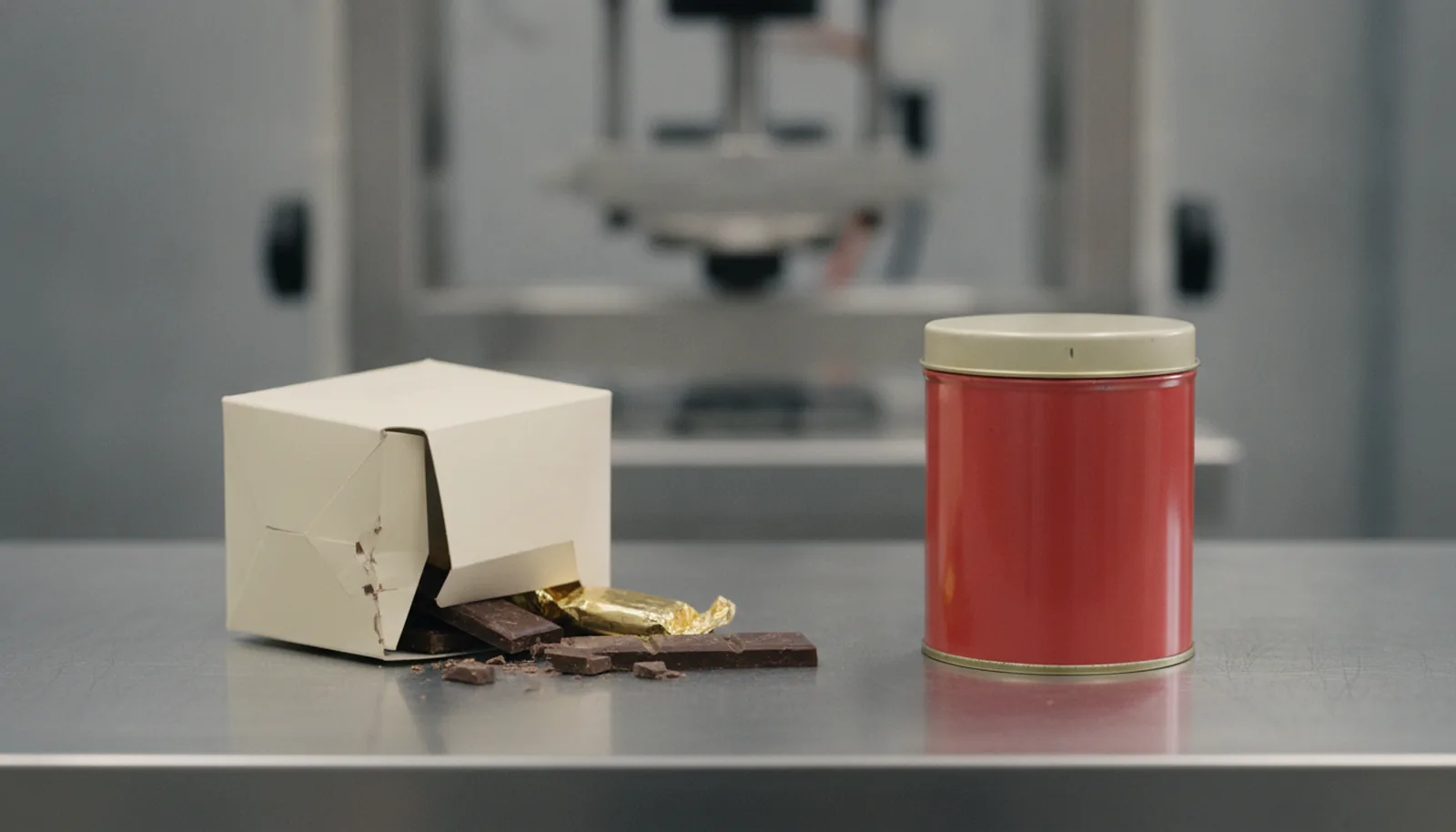
The difference shows up in three specific hazards:
Conveyor drops. An edge drop off a belt or chute is a routine event in a sortation facility. A carton takes that on a corner and creases. A drawn tin body with a seamed base takes it on a curved rim and either shrugs it off or accepts a shallow dent in the lid. The contents stay where they were.
Stacking. ISTA's vibration test runs with a top load precisely because parcels don't travel alone — they travel under other parcels. A folding carton's compression strength drops sharply once its corners are compromised. A tin's compression strength comes from its wall geometry, so it holds up far better after earlier knocks. A cookie tin can carry the weight of the parcels above it all the way to the truck.
The doorstep. The last few metres are the roughest. Parcels get tossed onto porches, dropped at gates, left in rain, and stacked against doors. A tin that's already survived the network doesn't need anything special here — and if it arrives with a small dent on the base, the customer sees a tin with a small dent, not a product that's been crushed.
What that means for the box around the tin
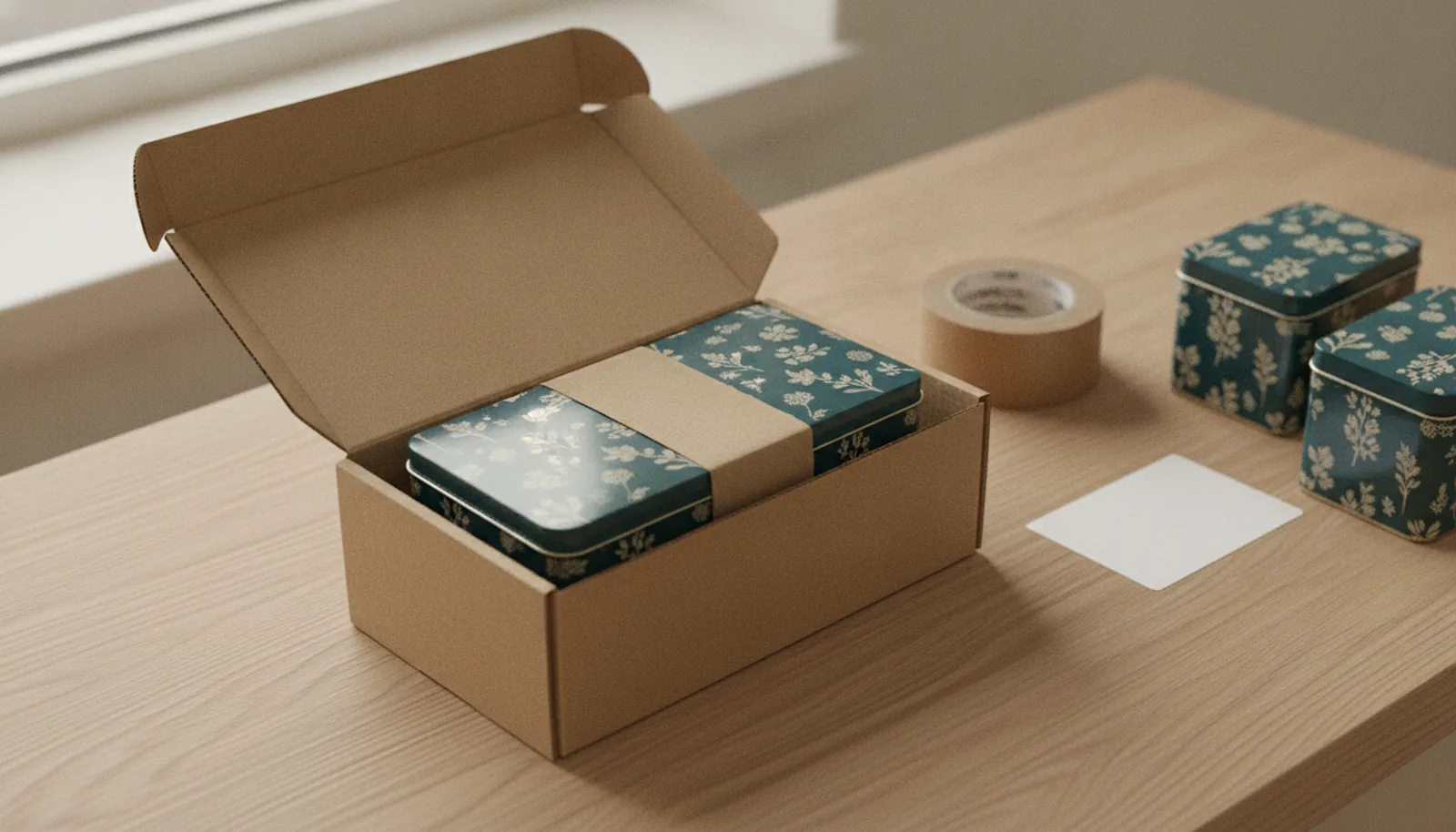
The practical upshot is that a tin doesn't need to be cushioned from the box. It needs to be prevented from rattling — and that's a much easier problem. For the brands we ship for, the outer carton is usually a plain corrugated mailer sized to the tin with a few millimetres of clearance, sometimes with a single paper band or a kraft sleeve to stop it sliding. No air pillows, no bubble wrap, no loose fill. The product's own packaging is the protective packaging.
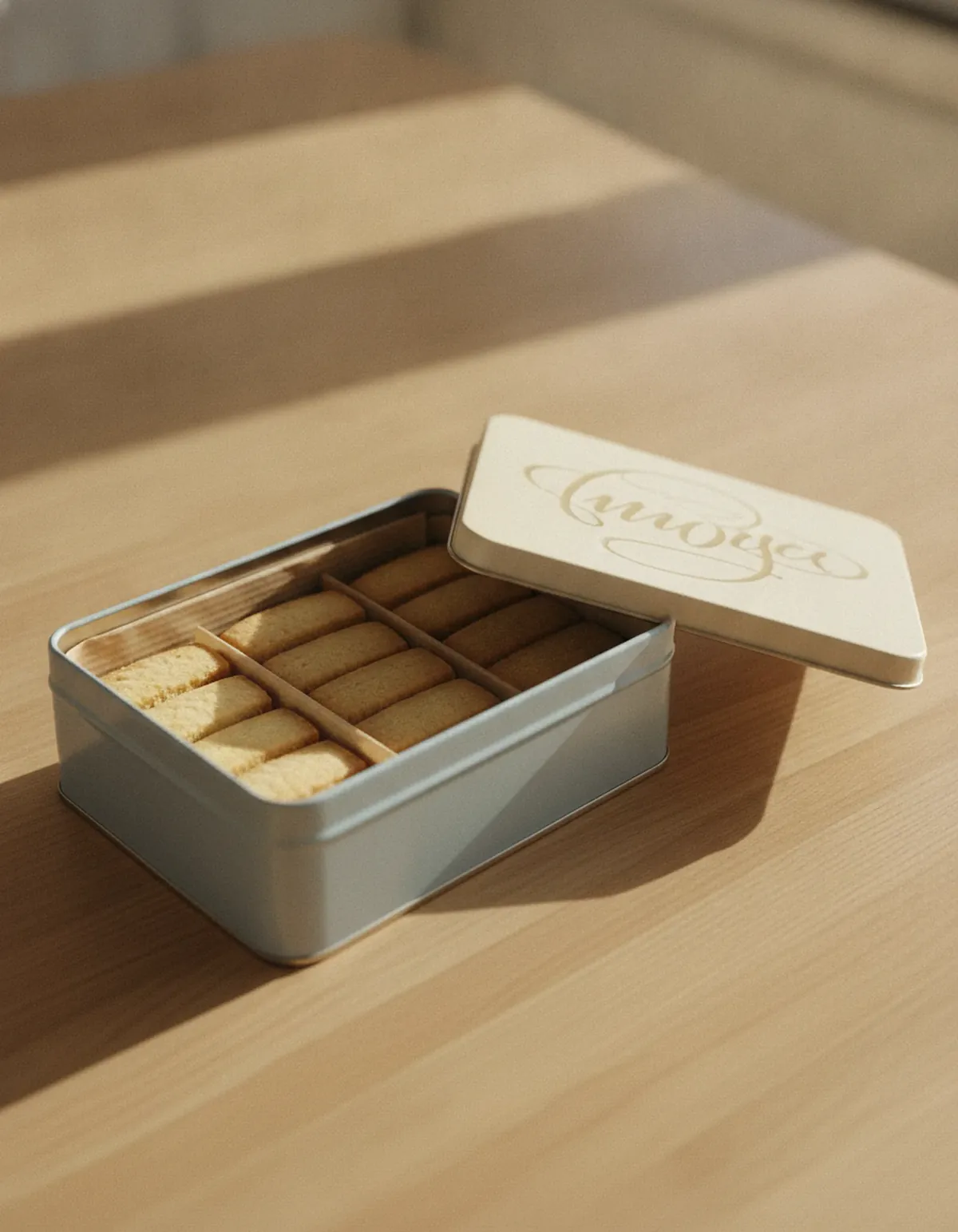
That's also what makes tin a good candidate for Amazon's Ships in Own Container tier. A tin with a paper label on it is already a container. A well-designed printed tin with a fitted insert — the kind we cover in custom printed tins with inserts — is a container that also happens to be the unboxing experience. There's no second box to open and no packaging to throw away before the customer reaches the thing they bought.
Two honest caveats. First, a tin protects the product from impact; it doesn't protect the printed surface of the tin from cosmetic scuffing. If the tin is the product — a keepsake or a collectible — a thin paper sleeve or tissue wrap inside the mailer is still worth the cost, and the finish choice matters (matte finishes hide handling marks better than high gloss, which we go into in how to choose the right tin finish for your brand). Second, a tin isn't a cushion for what's inside it. Chocolates in a tin without an insert will slide, and sliding is how corners chip. The tin solves the crush problem; a fitted insert solves the movement problem. You want both.
The return-rate math
Here's the calculation a brand manager can actually do. Take a product where a folding carton costs less than a tin — that's almost always the case per unit. Now add to the carton's cost the void fill, the labour to pack it, the oversized shipper it needs to accommodate the void fill, and the dimensional-weight surcharge the carrier applies to that larger box. Then add the cost of every unit that comes back damaged: the replacement product, the outbound reship, the return label if you issue one, and the customer-service time.
For a lot of D2C food and gift brands, the tin can come out ahead before you count the fact that the customer keeps it on a shelf. That last part isn't a rounding error either — it's the argument in tin packaging for the subscription economy, and it's the reason the first-order economics understate what a tin is worth.
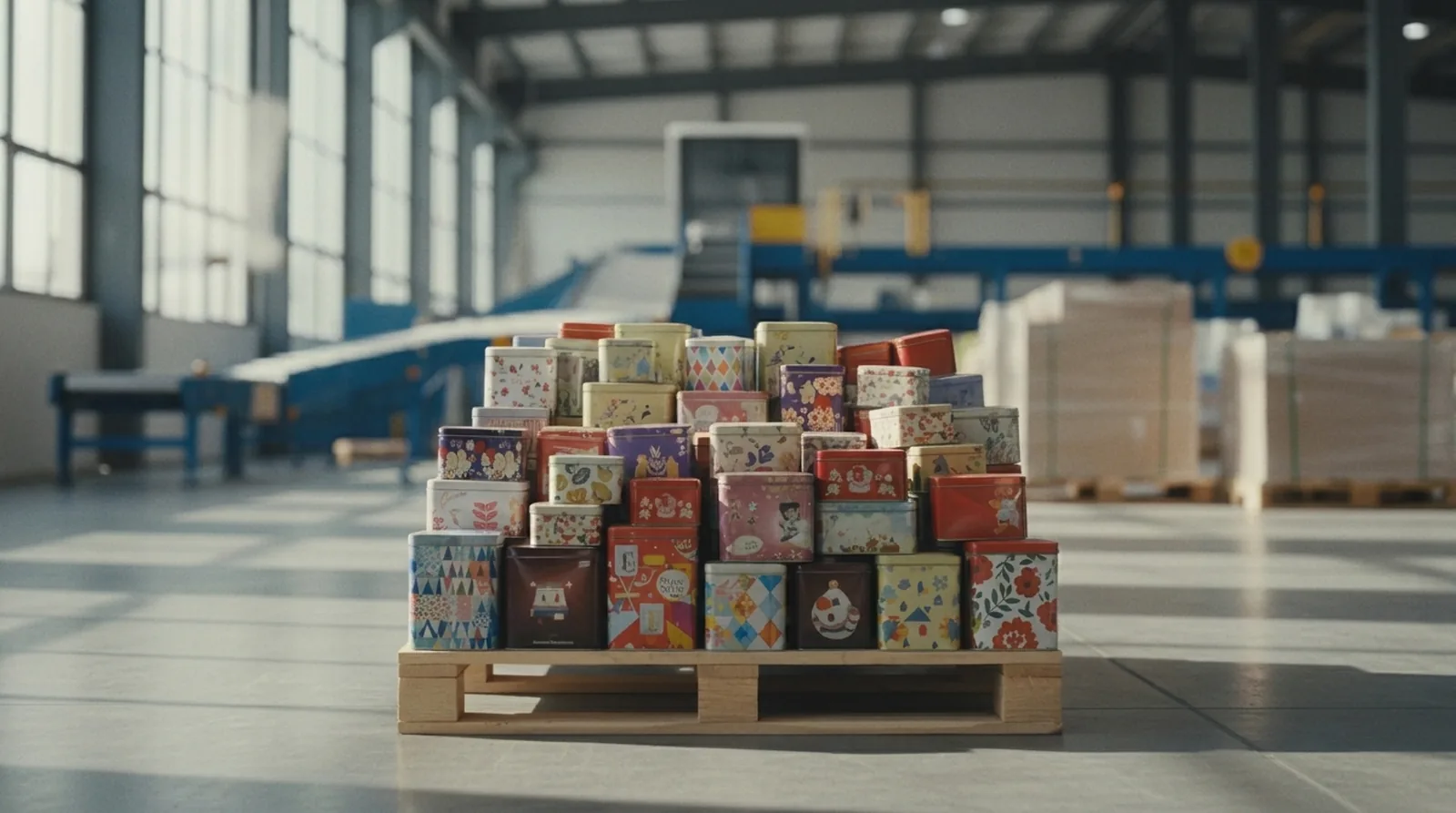
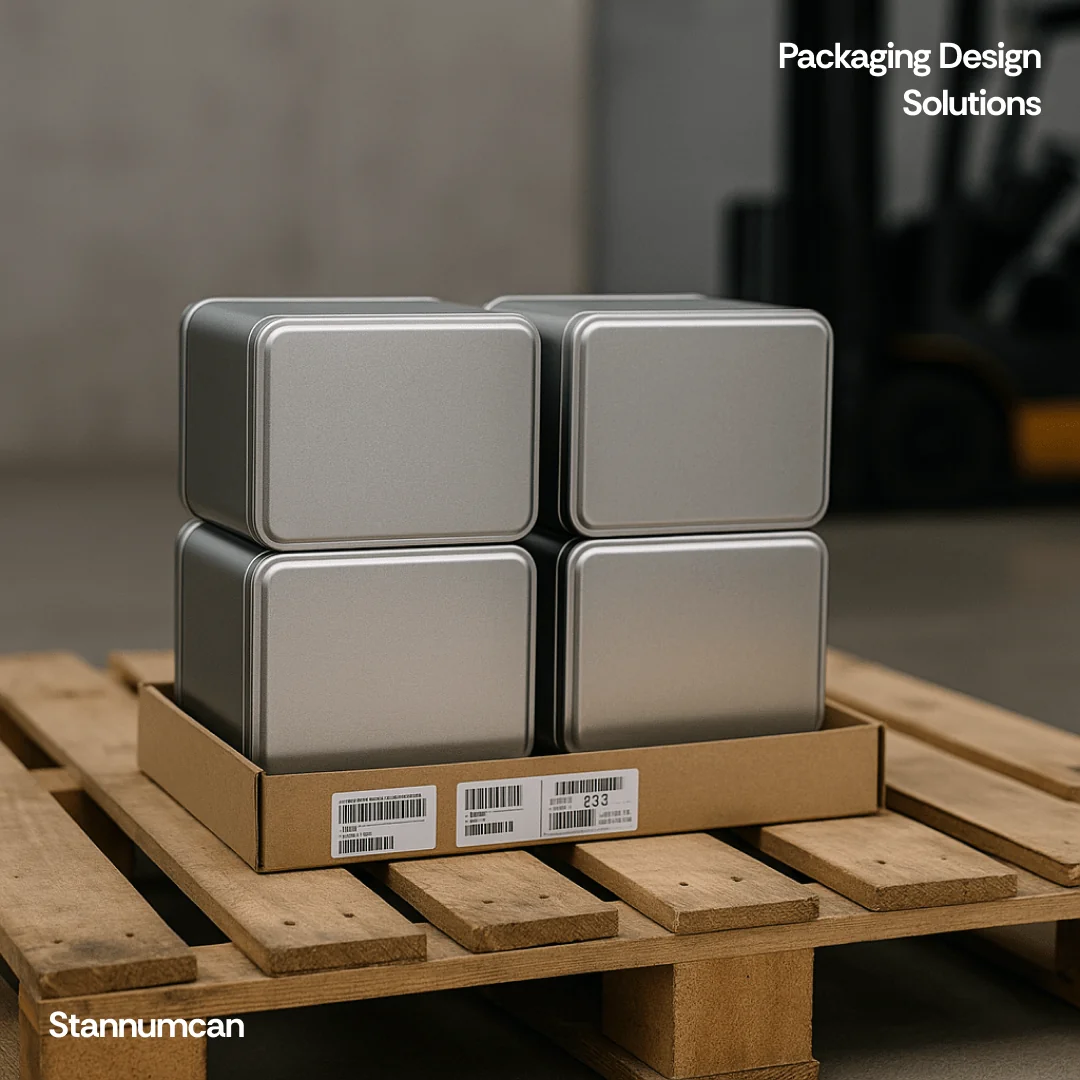
Where the carton wins: very low-value products where any damage is cheaper than the packaging upgrade, products that are already structurally robust (a bag of coffee beans doesn't need a tin to survive a drop, though it may want one for other reasons), and very large formats where tinplate weight starts to eat into freight economics. We'd say so in a quote. If you're comparing materials, tin vs cardboard lays out where each one is the right answer.
The sustainability footnote that isn't a footnote
There's a second-order benefit that's easy to miss. Every unit that arrives intact is a unit that isn't shipped twice. A damaged return means the original outbound trip, the return trip (or, more often for food, the disposal), and the replacement trip — three journeys for one sale. Packaging that lowers the damage rate lowers freight emissions by the same mechanism, before you get to the material itself.
And the material itself holds up. Tinplate is steel, and steel can be recycled again and again without losing its properties. Steel packaging reached an 84% recycling rate in the EU in 2024, according to Steel for Packaging Europe, and in Germany 94.3% of tinplate packaging from private end consumption was recycled in 2024 (92.5% overall), per gvm, with rates around 90% since 2006. A tin that survives the last mile also survives the customer's kitchen for years — and when it finally does go, it goes into a recycling stream that already works. There's more on how we approach this on our sustainability page.
Specifying a tin for parcel shipping
A few things we've seen often enough that they're worth calling out before a project starts.
Start with the tin's own drop performance, not the mailer's. If you're moving a product from a carton to a tin specifically to fix a damage problem, ask for samples and drop them yourself. A few edge and corner drops onto concrete will tell you a lot before you pay for formal ISTA testing. Samples from an existing mold ship in 10 to 14 days, so this isn't a schedule risk.
Choose the lid for the network, not the shelf. A slip lid that looks elegant on a retail display can pop under a hard corner drop. A hinged lid, a lid with a deeper skirt, or a plug-in lid holds through handling. If the shelf look matters, a deeper skirt is usually the compromise that keeps both.
Design the insert as part of the structure. A fitted paper or moulded-pulp insert turns loose contents into a single mass that moves with the tin instead of against it. This is a design and innovation question at the mold stage, not something to solve with tissue paper at the packing bench.
Size the mailer to the tin. Clearance of 3 to 5 mm per side, a corrugated grade matched to the tin's weight, and one paper band if the fit is loose. Anything more is cost without protection.
Let the tin ship as the container where the channel allows it. For marketplace fulfillment, that means checking whether the tin qualifies for the retailer's own-container tier; for your own fulfillment, it means a plain mailer and a label. Our assembly and logistics team sources the carton to the tin's spec and handles the door-to-door leg, so the tin arrives packed the way it's meant to ship.
Where Stannum fits in
We've been making decorative tins since 1993, and for most of that time the tin's job was to look good on a shelf. Increasingly the shelf is a doorstep. We design tins with the parcel journey in mind — lid engagement, wall thickness, rim geometry — and we source the matching cartons for our customers, specified to the tin's dimensions and weight, so the outer packaging is built around the tin rather than bought off a rack. If you're moving a product into e-commerce and your current packaging isn't surviving the trip, browse the existing molds or talk to us about the project. Samples from an existing mold are 10 to 14 days away.
Frequently asked questions
Does a tin need bubble wrap or void fill inside the shipping box?
Usually not. The tin is the protective layer, so the outer mailer only needs to stop it moving — a snug corrugated box with a few millimetres of clearance and, if needed, a paper band. What matters more is a fitted insert inside the tin so the contents don't slide.
Will a tin arrive dented?
It can. A hard edge drop can leave a shallow dent in the lid or base, which is cosmetic — the contents stay protected. If the tin's surface is part of the product's appeal, a thin paper sleeve inside the mailer and a matte finish reduce visible handling marks.
Can tin packaging qualify for Amazon's Ships in Own Container program?
A tin is a strong candidate because it's already a rigid container. Amazon requires the packaged product to pass a general simulation test and then monitors damage rates after certification, so the tin's lid design and internal insert need to be up to the job. We'd recommend testing before applying.
What's the difference between a tin and a rigid setup box for shipping?
A rigid box is stiff paperboard wrapped in paper; it resists crushing better than a folding carton but still creases at the corners and can delaminate when wet. A tin's structure comes from drawn or stamped metal, so its geometry holds through repeated impacts and it resists moisture from rain on a doorstep.
How long does it take to get a tin sample to drop-test?
Samples from one of our 5,000+ existing molds ship in 10 to 14 days. A new mold adds 4 to 6 weeks of tooling before samples, so if the timeline is tight, an existing shape is the faster route.
References
1. National Retail Federation & Happy Returns — 2025 Retail Returns Landscape
2. International Safe Transit Association — Test Procedures overview
5. Steel for Packaging Europe — Steel packaging recycling rate reaches record high (12 May 2026)