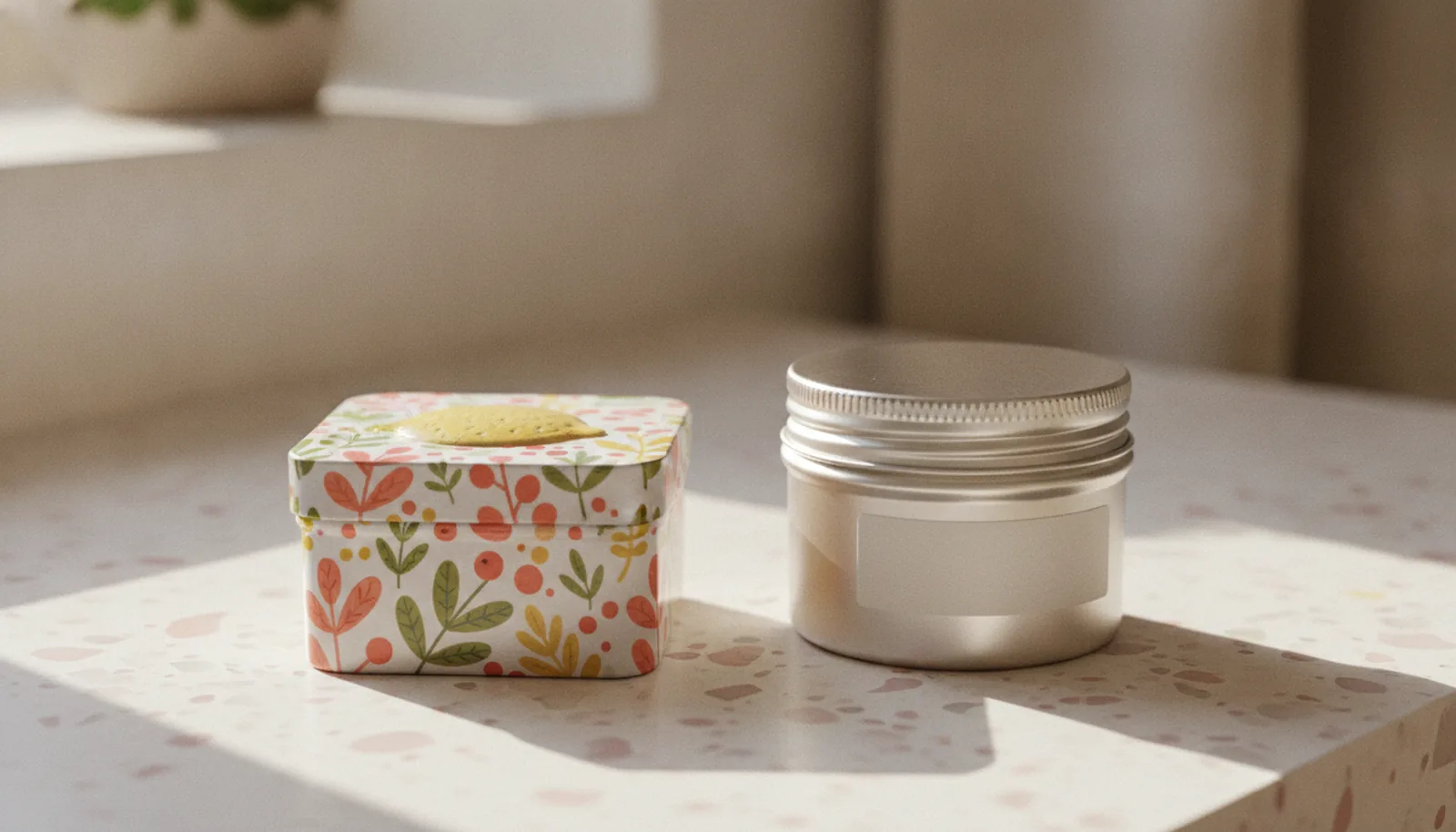
Not long ago, a supplement brand sent us a quote request for a "round aluminum tin with a screw-on lid," printed with full 360-degree artwork. It was a clear brief, and it contained a small contradiction that buyers often don't notice. Tin vs aluminum is one of the most common points of confusion in metal packaging, and it isn't just buyers: designers, agency creatives and even some procurement teams use the two words interchangeably. They're different materials, and the difference shapes what your packaging can do, how it feels in the hand, and how it gets recycled.
The confusion is understandable, because the English language has been mislabelling both metals for about a century. The "tin can" in your pantry is mostly steel. The "tin foil" in your kitchen drawer is aluminum — aluminum foil began displacing true tin foil from 1910 and had supplanted it by the mid-20th century, but the old name stuck. So before comparing anything, it helps to be precise about what each word actually means.
What "tin" actually means: tinplate is steel
When a manufacturer like us talks about a tin, we mean a container made of tinplate — low-carbon steel sheet with a very thin coating of tin on each side. The steel does the structural work; the tin coating protects the steel from corrosion and gives the surface a bright, clean base for lacquers and inks.
How thin is thin? A major European producer, thyssenkrupp Rasselstein, rolls packaging steel from 0.100 to 0.499 mm thick and offers tin coatings from 0.60 to 11.20 g/m² per side. For decorative tins, the tinplate gauges we source typically sit between 0.18 and 0.36 mm, as we note on our tin vs glass comparison. Run the arithmetic on a 0.23 mm sheet with a common 2.8 g/m² coating on both faces and the tin works out to roughly a third of one percent of the sheet's weight. "Tin" is the name on the label; steel is what's holding your product.
What aluminum packaging is
Aluminum packaging is made from aluminum alloy sheet or foil — no steel involved. It's the material behind beverage cans, foil trays, blister lids, aerosol cans and many of the small seamless screw-top jars you see in cosmetics and balms — though beauty brands are increasingly turning to tinplate too. Aluminum is very ductile, which makes it well suited to being deep-drawn into seamless shapes, and it forms a thin oxide layer almost instantly on contact with air that repairs itself when scratched. That's why bare aluminum resists corrosion without needing a protective coating on the outside.
So when someone asks for an "aluminum tin," they've usually seen a small, seamless, screw-top jar and assumed the category word applies. It's worth pausing at that point in a project, because the two metals behave quite differently once you start asking them to do decorative work.
Tin vs aluminum: the differences that matter
The table below is the short version. The sections that follow explain the reasoning — and where the "winner" depends on what you're packaging.
| Property | Tinplate (steel) | Aluminum |
|---|---|---|
| Stiffness | About three times stiffer | About one third of steel |
| Weight for the same volume of metal | Heavier | About one third the density |
| Holding sharp shapes, corners and hinges | Strong | Weaker at thin gauges |
| Embossing crispness | Holds detail well | Softer relief, dents more easily |
| Magnetic | Yes | No |
| Corrosion resistance (unlacquered) | Relies on tin coat and lacquer | Self-healing oxide layer |
| Seamless deep-drawn shapes | Possible, more limited | Excellent |
| Recycling stream | Pulled out by magnets | Separated by eddy current |
Strength and rigidity
The single biggest difference is stiffness. Aluminum's modulus of elasticity is 69 to 72 GPa — roughly one third that of steel. In plain terms, a sheet of aluminum flexes about three times as much as a steel sheet of the same thickness under the same load.
For a beverage can, that hardly matters — the shape is a simple cylinder, and the pressurised contents help hold it rigid. For a decorative tin, it matters a great deal. Hinged lids, square and rectangular bodies with crisp corners, heart and oval shapes, stacking tins that have to bear the weight of a pallet above them — these all depend on the metal holding its geometry. Tinplate does that at a gauge that's still comfortable to hold. That's a large part of why custom decorative tins for coffee and tea, cookies and gifting are almost always tinplate.
Embossing detail
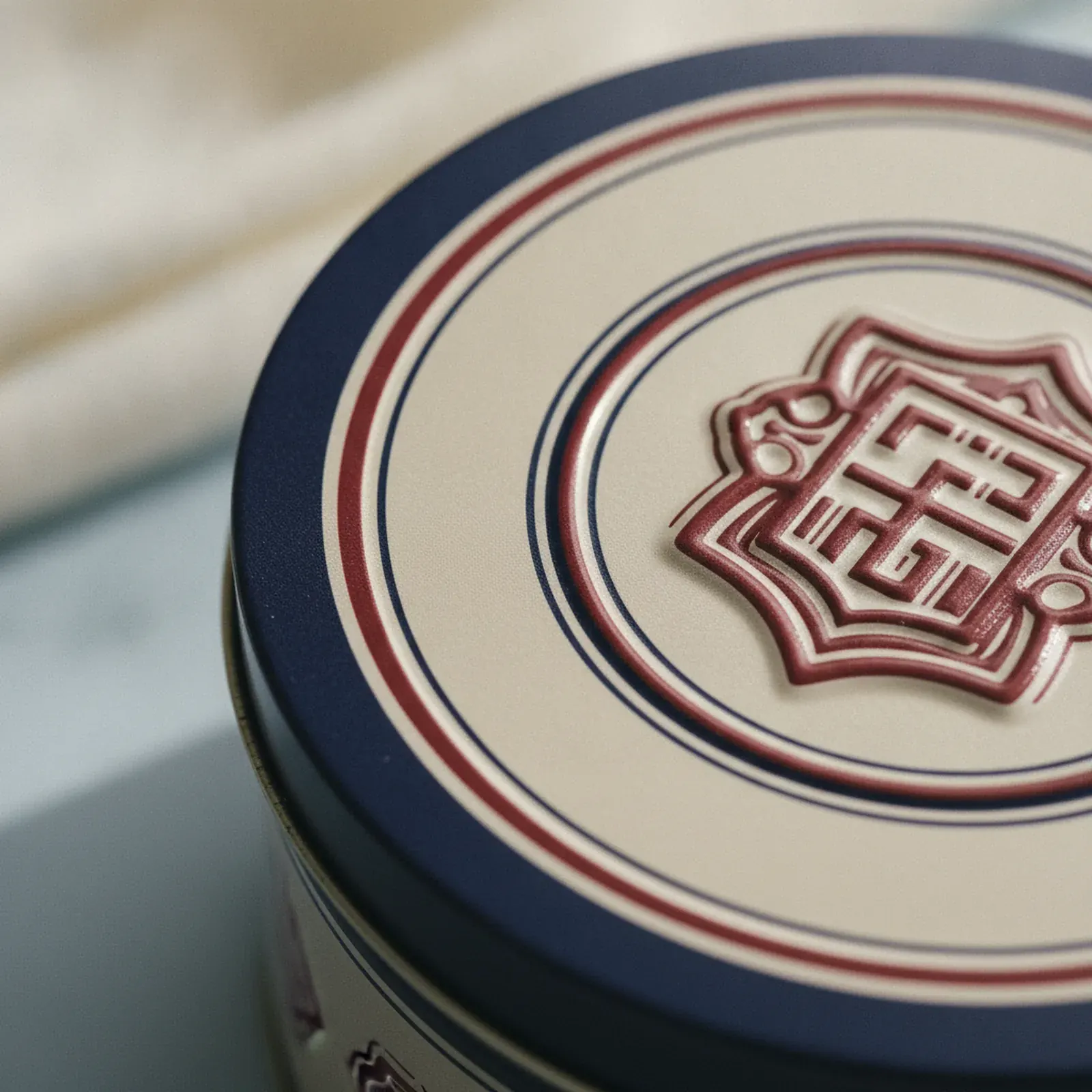
Embossing pushes the metal into a raised relief, and the result is only as good as the metal's ability to hold that new shape. Stiffer sheet keeps a crisp edge on a raised logo and resists being pressed flat by a thumb, a stacked carton or a careless courier. In our experience, the multi-level embossing and fine lettering that make a lid feel considered are far easier to hold consistently on tinplate than on thin aluminum — we cover the techniques in more depth in our guide to embossing vs debossing on tin.
Weight
Aluminum's clearest advantage is weight. It is roughly one third the density of steel, and for products where every gram counts — beverages, air-freighted goods, travel-size cosmetics — that's a real benefit. The trade-off is that aluminum often needs a thicker wall to match steel's rigidity, which narrows the gap in practice. For decorative tins, the extra heft of steel is frequently a feature rather than a cost; we've written about why the psychology of weight makes a tin feel more valuable than its price.
Magnetism
Tinplate is steel, so it's magnetic. Aluminum isn't. This sounds like trivia until you see how often it matters.

On the retail side, a magnetic tin can sit on magnetic display strips, accept magnetic closures and inserts, or double as a fridge-friendly keepsake after the product is gone. On the recycling side, it shapes the whole sorting process. At a typical sorting facility, an overband magnet lifts steel cans out of the stream early, and aluminum is separated later by an eddy current separator — a spinning magnetic rotor that induces currents in non-ferrous metal and pushes it off the conveyor. Both metals get recovered, but steel is the easier one to catch: a magnet is about the simplest sorting tool there is.
Corrosion and food contact
Here aluminum has a natural edge. Its self-repairing oxide layer means bare aluminum doesn't rust. Tinplate relies on its tin coating and, in decorative packaging, on lacquers inside and out; a deep scratch or an unprotected cut edge left in a humid environment can eventually show rust. In practice, that's managed through coating choice and good design — all of our paints and coatings are food-grade, our factory is BRC-certified for indirect food contact, and interior lacquers are specified to suit the product, whether that's loose-leaf tea, chocolate or supplement capsules. If your product is wet, acidic or headed somewhere very humid, raise it at the briefing stage; it's a question to answer early, not a reason to avoid tinplate.
Printing and decoration
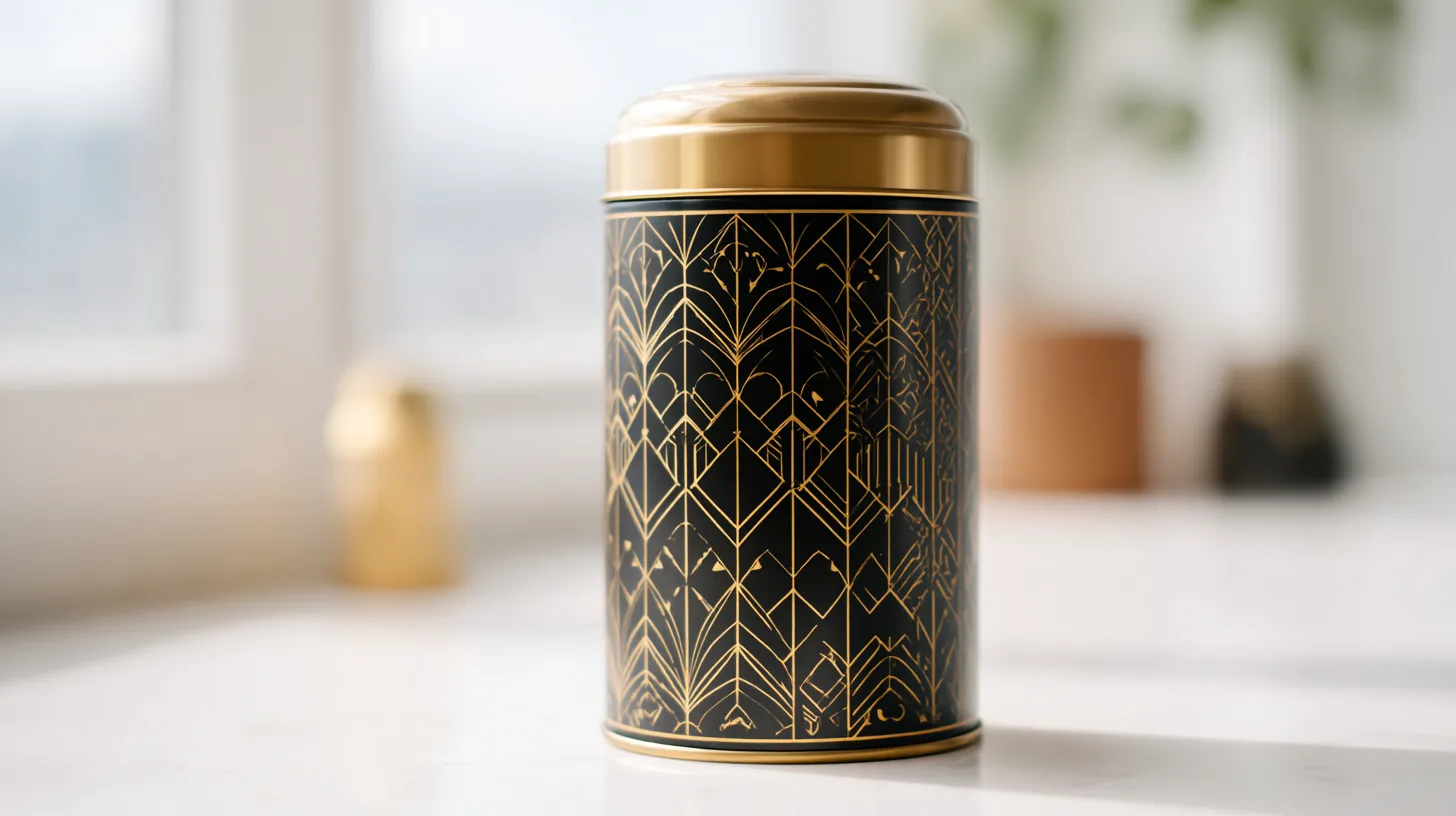
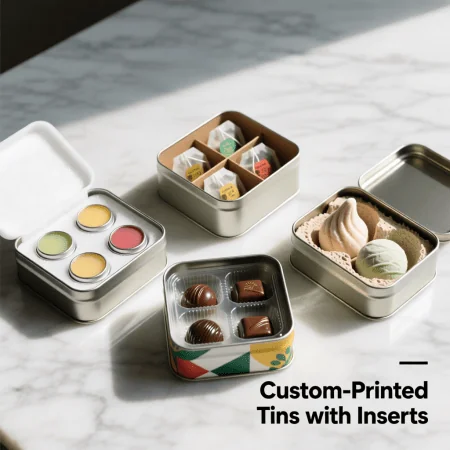
Our tins are printed while the tinplate is still flat, using offset lithography with CMYK and Pantone matching, and only then formed into shape. That's what makes full-surface artwork, wrap-around designs and registered embossing possible on square, oval and novelty shapes. Aluminum can be lithographed too, but seamless drawn aluminum containers are a different manufacturing route, and the decoration options depend heavily on the format — so if 360-degree artwork is central to your brief, check how it will be achieved before you commit to a material.
Cost
There's no single per-unit answer, because cost depends on size, shape, gauge, finish and quantity. What's broadly true is that the two metals reach you through very different manufacturing routes: many aluminum formats are high-volume, standardised shapes built for beverage or cosmetic lines, while decorative tinplate is built around printed sheet, custom tooling and shape variety. For custom decorative work — a specific shape, a printed design, embossing, a hinge — tinplate is the material the tooling, printing lines and supply chains are built around, and that's usually where it earns its place.
Recyclability
Both metals can be recycled again and again without losing their properties, and both are recovered at high rates in Europe. Steel packaging reached an 84% recycling rate across the EU in 2024, according to Steel for Packaging Europe's figures under the EU harmonised methodology. In Germany, the Gesellschaft für Verpackungsmarktforschung (gvm) found that 92.5% of all tinplate packaging was recycled in 2024, rising to 94.3% for packaging from private end consumption. Aluminum packaging, particularly beverage cans, is also recovered at high rates in Europe.
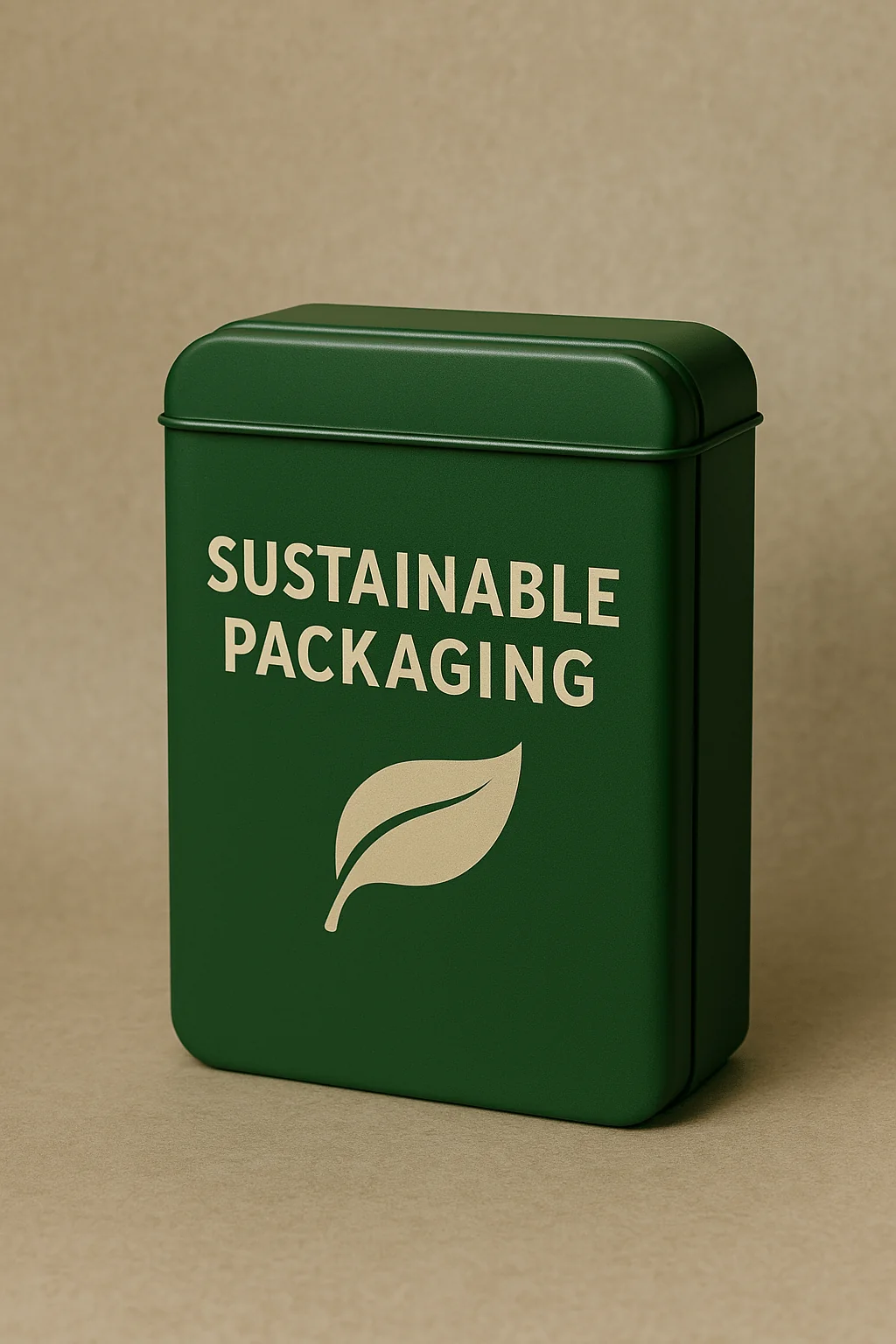
We wouldn't use recycling rates to declare a winner between the two metals. The fair conclusion is that both are strong recycling stories, and that steel's magnetism gives it a structural advantage in sorting. For brands facing new packaging rules, our article on EPR and recyclability regulations goes further, and our sustainability page covers how our own factory runs.
When aluminum is the right choice
We make tinplate packaging, but we'd rather you choose the right metal than the one we happen to make. Aluminum is genuinely the better fit when weight is the deciding factor — beverages, aerosols, air-freighted products, anything where shipping cost per gram dominates. It's also the natural choice for small, seamless, deep-drawn shapes like screw-top balm and cosmetic jars, where its ductility lets a single piece of metal become the whole container. And if your product will live in persistently wet conditions without the protection of a lacquer system, aluminum's self-healing oxide layer is a real advantage.
When tinplate is the right choice
Tinplate wins when the packaging has to hold a shape, carry a design and survive handling. Decorative tins with hinged or slip lids, square and rectangular formats, novelty and seasonal shapes, stacked retail displays, gift tins that will be kept and reused, and any lid where embossing is part of the brand — these are tinplate's home ground. It also suits brands that want the reassuring heft of a substantial container, or that want to point to a material sorted by nothing more complicated than a magnet. If you're weighing tin against other materials altogether, our comparisons of tin vs plastic and tin vs cardboard cover those decisions.
A quick way to tell them apart
If you have a sample in hand and aren't sure which metal it is, there are three checks that take under a minute:
1. The magnet test. A fridge magnet sticks to tinplate and falls off aluminum. This is the most reliable check.
2. The weight test. Two containers of similar size and wall thickness: the noticeably lighter one is almost certainly aluminum.
3. The seam and shape test. A small, seamless, round jar with a screw thread is often aluminum. A square or shaped tin with a hinge, rolled edges or a visible side seam is almost certainly tinplate.
It's worth doing before you write a brief, because naming the right material saves a round of back-and-forth — and tells your manufacturer you've already thought about how the container needs to behave.
FAQ
Is a tin can made of tin?
Not mostly. A "tin can" is made of tinplate — steel sheet with a very thin tin coating on each side. On a typical decorative tin gauge, the tin is well under one percent of the metal's weight; the steel provides the strength.
What's the main difference between tin vs aluminum packaging?
Tinplate is steel, so it's about three times stiffer and holds shapes, corners, hinges and embossing better. Aluminum is about one third the density, so it's lighter, and it resists corrosion naturally through its oxide layer. Tinplate is magnetic; aluminum isn't.
Can you get aluminum tins with embossed, fully printed designs?
Aluminum can be printed and embossed, but at thin gauges it holds raised detail less crisply and dents more easily than tinplate. For decorative work where embossing and full-surface printing are central to the design, tinplate is usually the more dependable choice.
Which is more recyclable, tin or aluminum?
Both are recyclable indefinitely without losing quality, and both are recovered at high rates in Europe — steel packaging reached 84% across the EU in 2024, and aluminum is also recovered at high rates in Europe. Steel's advantage is that it can be pulled from mixed waste with a simple magnet.
How can I tell if my packaging is tin or aluminum?
Hold a magnet to it. If it sticks, it's tinplate (steel). If it doesn't, it's aluminum or another non-ferrous material. Weight and shape are useful secondary clues.
Getting the material right from the first brief
Stannum Can has been manufacturing decorative tinplate packaging since 1993, from design and tooling through offset printing, embossing and assembly. If you're not sure whether your project calls for tinplate, describe the product, the shape you have in mind and how it will be sold — we'll tell you honestly whether tinplate is the right fit. Our guide on how to brief a custom tin packaging project is a good place to start, you can browse finished projects in our custom tin packaging gallery, or get in touch to talk it through.
References
2. Product range: packaging steel — thyssenkrupp Rasselstein (PDF)
3. Aluminum properties — Total Materia
4. Vital metal recovery from household waste — Bunting Magnetics
5. Steel packaging recycling rate reaches record high — Steel for Packaging Europe (12 May 2026)