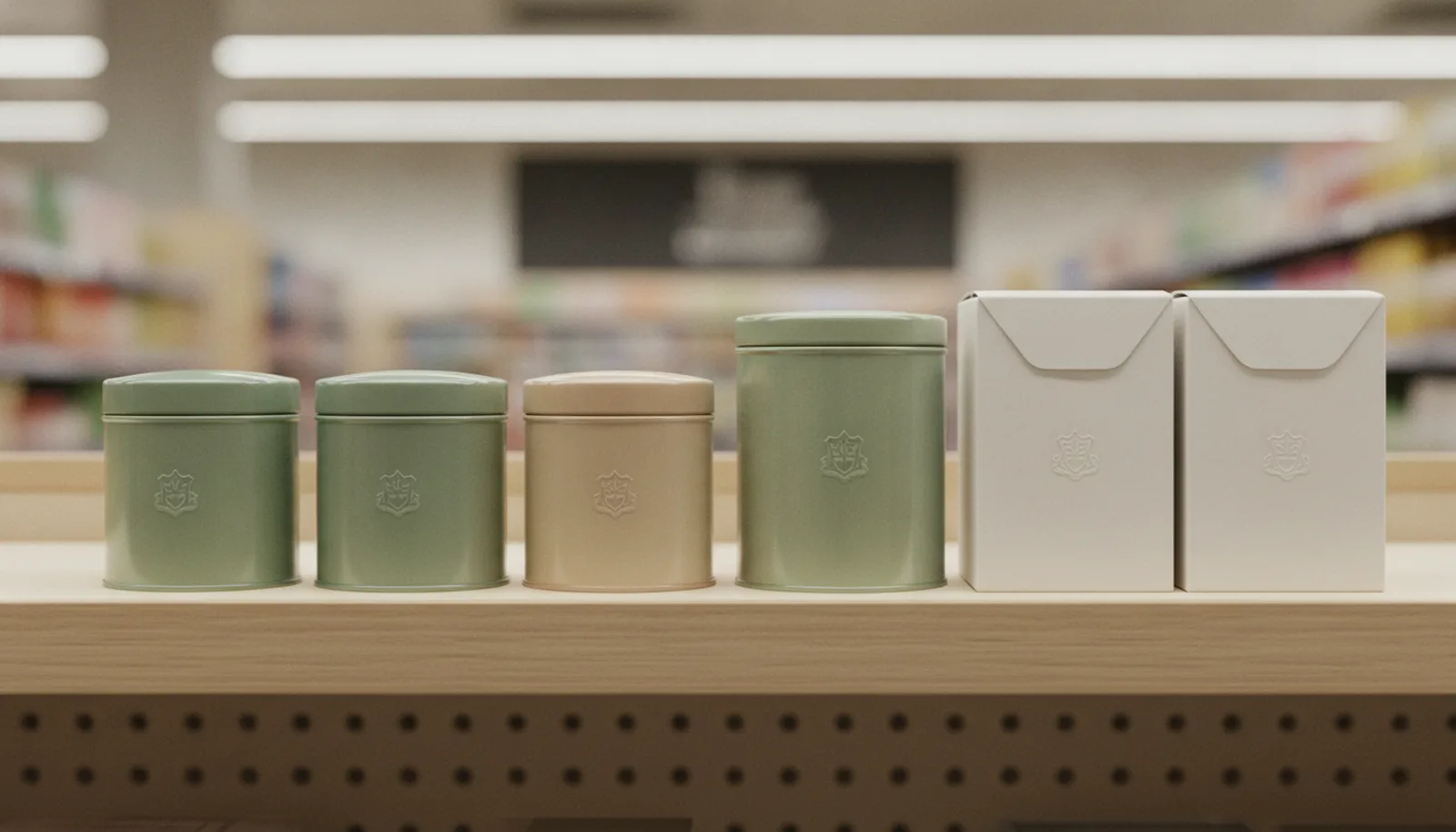
There is a moment on a grocery shelf that decides a lot of purchases, and it happens before anyone reads an ingredient panel. Two products sit side by side at roughly the same eye level. One is a national brand a shopper has known since childhood. The other is the store's own label, priced twenty percent lower, and the only question in that half-second is whether it looks like a compromise. For years the honest answer was that it usually did — and that is precisely the problem premium private label packaging now exists to solve.
Store brands have spent the last five years winning the value argument outright. What they are working on now is the quality argument, and that one is fought largely with materials and finishes rather than with recipes.
The premiumisation is real, and it has numbers attached
US store brand sales reached a record $282.8 billion in 2025, up more than $9 billion year over year. More telling than the headline figure is the spread: private label dollar sales grew 3.3% against 1.2% for national brands — close to three times the rate. Unit volume told the same story, with store brands up 0.6% while national brands slipped 0.6%.
That gap has kept widening. By midyear 2026, store brand unit share hit an all-time high of 23.8%, with store brand units up 0.2% against a 0.5% decline for national brands over the six months ending June 14.
The part that matters for packaging is what sits at the top of those ranges. Kroger's Private Selection — a $2.9-billion-plus brand carrying more than 3,600 items — passed its twenty-fifth anniversary in 2025 and has been expanding since. Across the Atlantic, Tesco Finest grew 15% to reach £3 billion in sales in the 2025/26 financial year. Aldi — a chain built entirely on the value proposition — reported that Specially Selected surpassed £1.6 billion in annual sales, up 11% year on year, with almost 16 million households buying more than 500 million products from the range.
These are not small experimental tiers. They are billion-dollar brands with dedicated design programmes, and they are being bought by exactly the shoppers who used to be least likely to touch them. Simon-Kucher's Global Shopper Study 2026, covering 14,000 consumers across 14 countries, found that 39% of US households earning $5,000 or more per month regularly buy premium private label, against 31% of lower earners. The consultancy attributes the shift directly to retailer investment in quality, product development, and packaging.
Why private label packaging carries more weight than it used to
Here is the structural reason this matters. A national brand arrives at the shelf carrying decades of advertising, sponsorship, and familiarity. A store brand arrives carrying a logo the shopper associates with a building. When the recipe is genuinely comparable — and increasingly it is — the packaging has to do the work that thirty years of brand-building did for the incumbent.
The research bears this out. FMI's Power of Private Brands 2026, a nationally representative survey of 1,495 US grocery shoppers, found that quality has risen as a stated reason for buying more store brands from 30% in 2023 to 39% in 2026, with taste climbing from 26% to 37% over the same period. Ninety-four percent said they would keep buying store brands even if grocery prices declined. The switch has already happened; what retailers are protecting now is the perception that it was an upgrade rather than a sacrifice.
Packaging is the fastest available lever on that perception. Reformulating a product takes a development cycle and a supplier negotiation. Changing what the product arrives in takes a tooling decision. We have written before about why tin packaging feels more valuable than it costs — weight, thermal coolness, and the sound of a lid closing all register as quality cues before conscious evaluation begins. Those cues do not care whose name is on the front.
What tin does that a printed carton can't
Board can be made to look premium. Retailers do it constantly — reverse kraft stock for a crafted, natural appearance, restrained foil accents to place a product at the top of a range. It works, and for a lot of SKUs it is the right answer.
What board cannot do is survive the shopper's home.
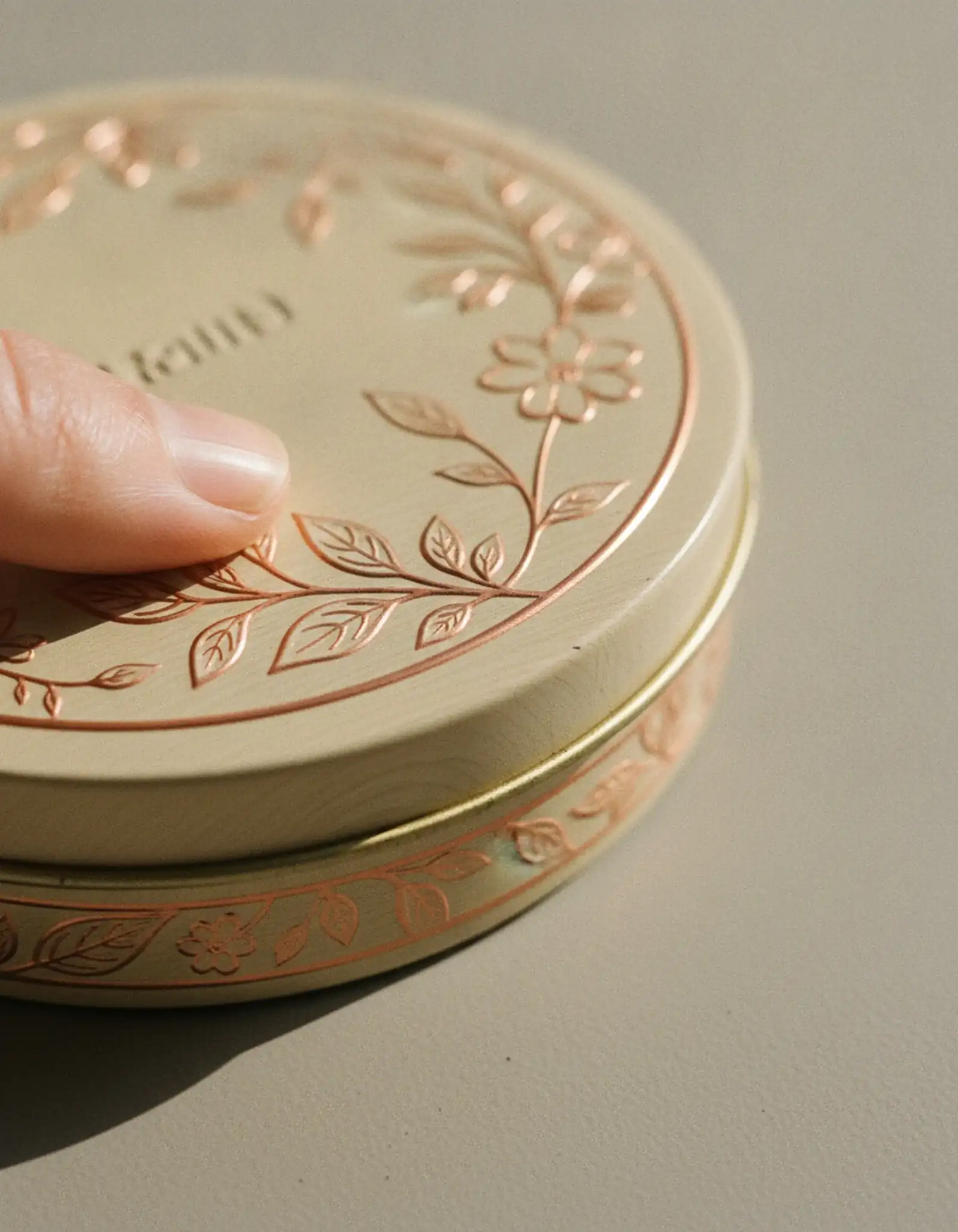
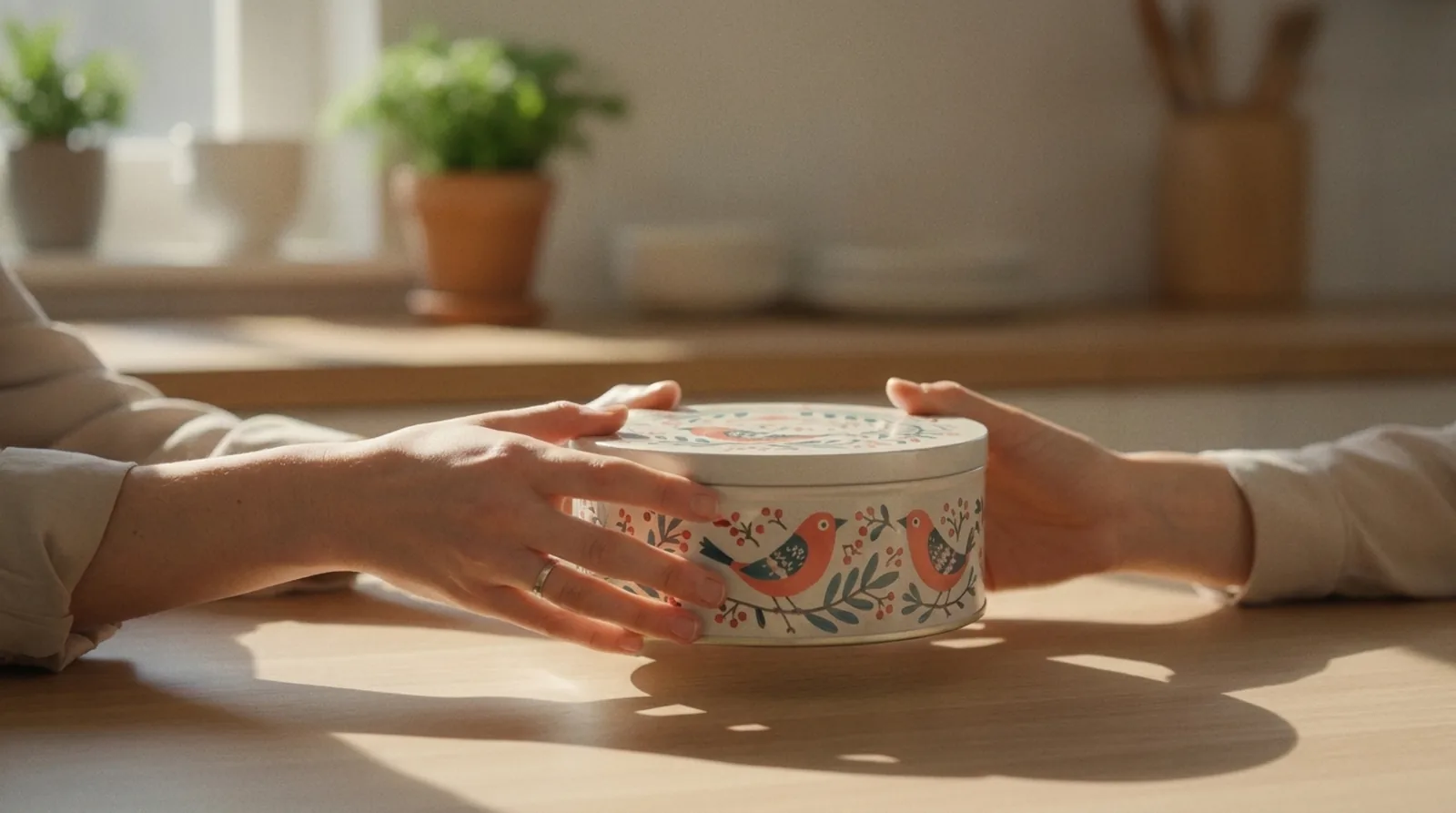
A carton has one job and roughly one week to do it. A tin holds its shape through the supply chain, through the shelf, and then through however many months the customer keeps it on a counter — which for a decorative tin is usually a long time. That is the difference between packaging as a cost line and packaging as continued brand presence. A store-brand tea tin that ends up holding paperclips is a supermarket logo sitting in a kitchen long after the tea is gone.
There are three mechanisms doing the work.
The first is structural. Tinplate holds a rigid form, which means a lid closes with resistance and a defined stop rather than a flex. That resistance is what reads as engineered rather than assembled, and it is the single most reliable premium cue available in a format this affordable.
The second is surface. Offset lithography on metal prints full-surface CMYK with Pantone matching, and because the substrate is metal rather than paper, the base colour of the material joins the palette — an unprinted area is not white, it is steel. Combined with embossing to roughly 1mm precision, a store-brand crest can be raised into the lid rather than printed onto it. Raised detail catches raking light on a shelf in a way flat printing never does, and choosing the right finish — matte, gloss, satin, or textured — changes the whole reading of the design.
The third is material honesty. Tin is infinitely recyclable without quality loss, and the collection infrastructure is already mature: steel packaging recycling reached 84% across the EU in 2024, and tinplate packaging in Germany was recycled at 92.5% overall — a rate that has stayed above 90% since 2006. For a retailer publishing sustainability targets, the recyclability story is one they can put in a press release without a hedge. This matters more for own label than for national brands, because the retailer owns both the packaging decision and the recycling messaging in-store.
Where tin actually belongs in a store-brand range
Not everywhere. This is worth saying plainly, because the failure mode for premium packaging in private label is putting it on the wrong SKU and blowing the margin.
Tin earns its place where three conditions overlap: the product has a gift or self-gift dimension, the unit price supports the packaging, and the contents benefit from an opaque, moisture-resistant, crush-resistant container. Tea and coffee hit all three, which is why coffee and tea tins are the most common private-label entry point we see. Chocolate and confectionery hit the first two and often the third. Cookie and biscuit tins have a long enough heritage in the format that the shopper's expectation is already built. Candles, spice blends, and bath products follow close behind.
In practice, most retailers are not putting an entire premium tier into metal. They are picking the seasonal edition, the top-of-range varietal, the gift-set format, and the hero SKU that anchors the shelf — the one shoppers photograph. That approach is closer to how limited-edition tin drops work in food and beauty than to a wholesale format change, and it keeps the cost concentrated where the perceived-value return is highest.
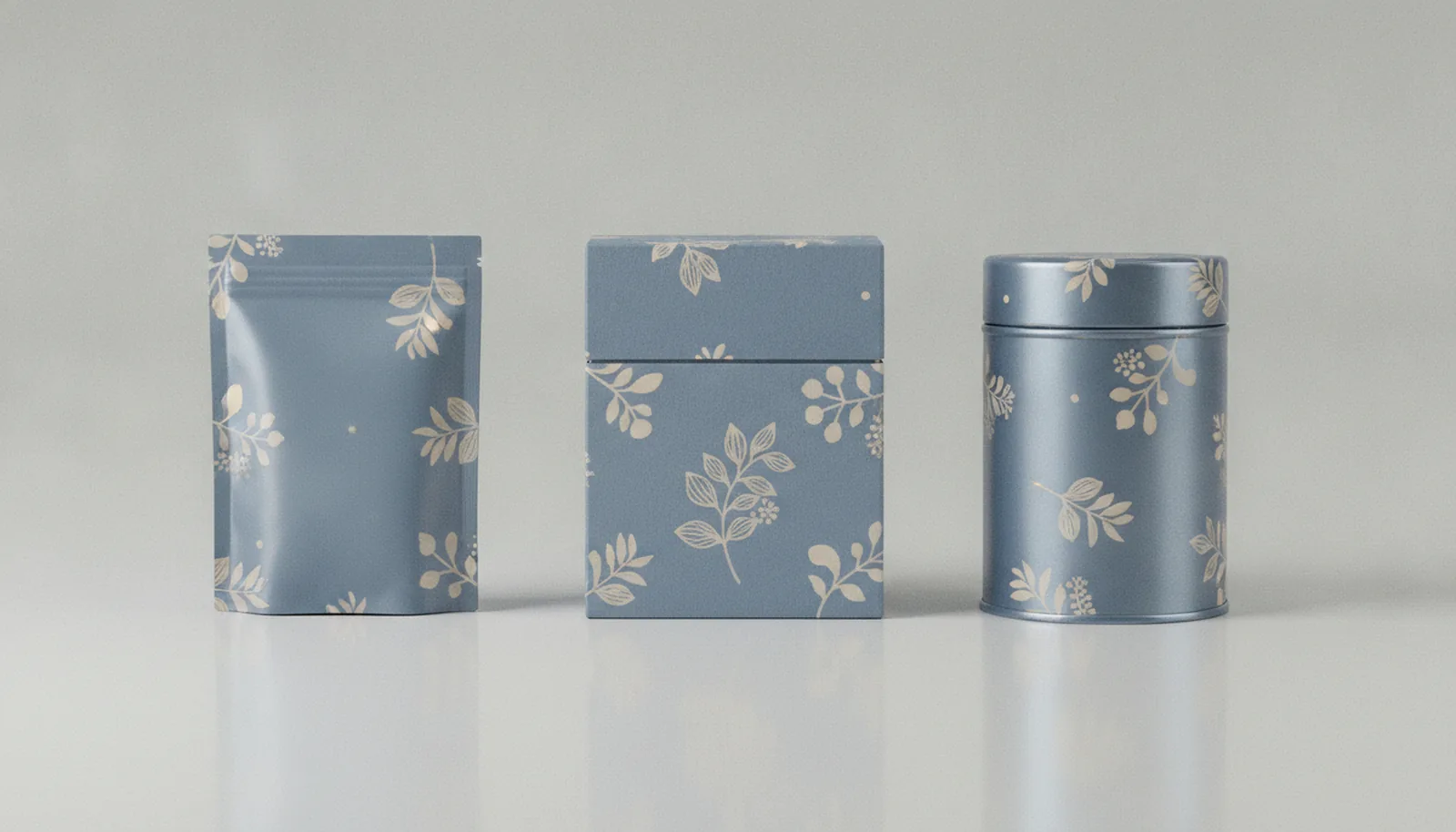
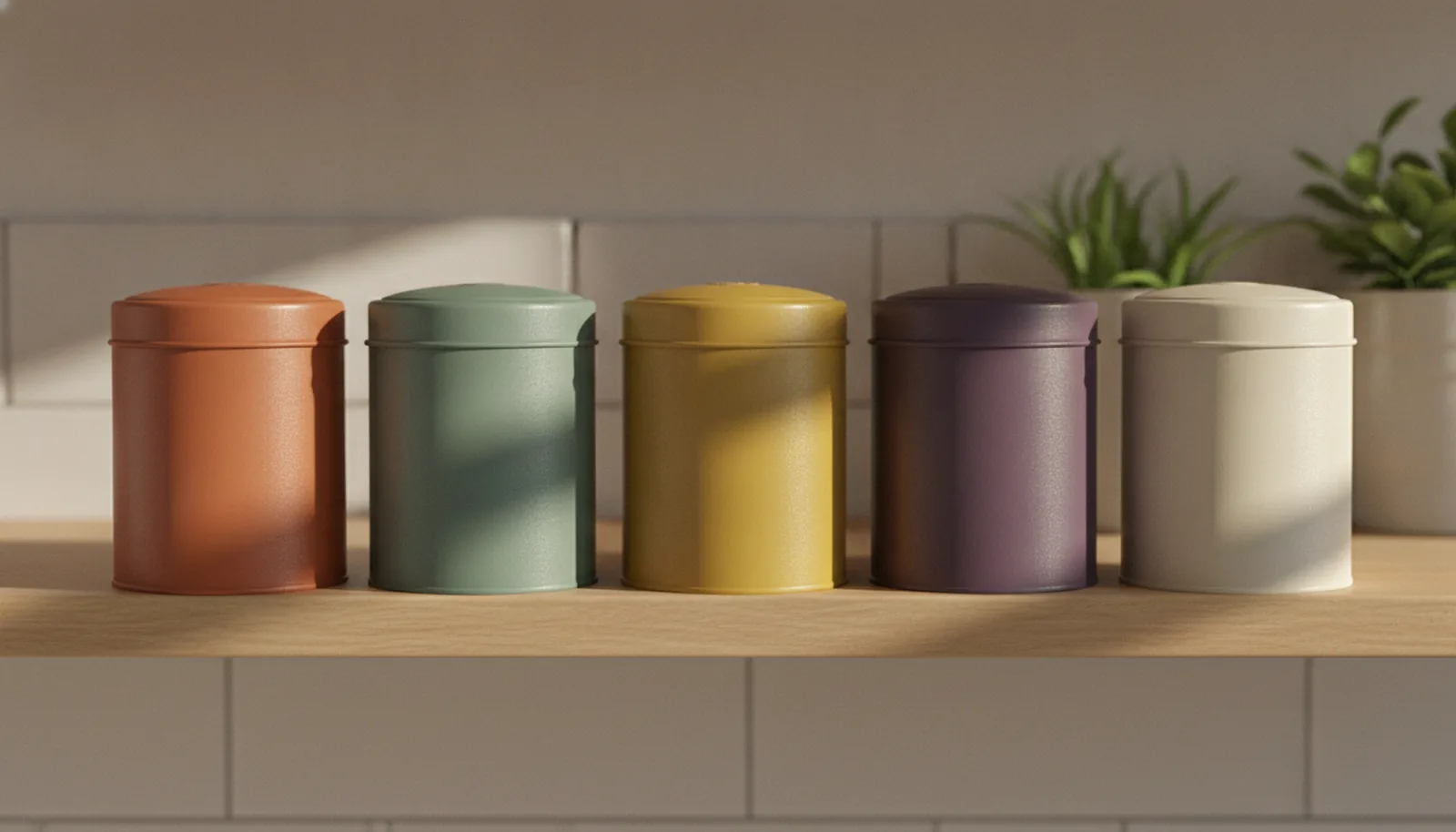
The good-better-best architecture that Simon-Kucher identifies as central to premium private label growth is, from a packaging standpoint, mostly a materials ladder. Pouch, carton, tin. The tier is legible from six feet away without a shopper reading a single word.
What a retail packaging buyer needs to plan for
Private label timelines are usually built around a range reset or a seasonal window, which makes lead times the thing to get right early.
Production runs 30 to 60 days depending on complexity, finish, and order size. If the design uses an existing mold — and with 5,000-plus shapes already tooled, most briefs can — there is no tooling cost and no tooling delay. A genuinely custom shape adds 4 to 6 weeks for new-mold development on top of production. Samples from an existing mold take 10 to 14 days, which is the number that usually matters most, because retail sign-off almost always requires a physical sample in a buyer's hand rather than a rendering.
Then freight. Ocean is 4 to 6 weeks, air is 5 to 10 days, and the honest guidance is that any private-label programme working back from a fixed on-shelf date should be planning around ocean and treating air as the contingency. We handle LCL, FCL, and door-to-door with full customs support, and for US-bound programmes the current tariff position on decorative tins is worth understanding before the costing is locked — we've covered the 2026 picture in detail.
One more practical note, because it comes up constantly. Private-label briefs reach us from two directions: from retailers directly, and from the contract manufacturers who actually produce the range. A tea packer in Baltimore running several private-label projects has the same tin question as the retailer commissioning them, and often a tighter timeline, because the packaging decision lands after the product is already specified. Whichever side of that you are on, the earlier the die-line and artwork conversation starts, the fewer surprises land at sample stage.
The honest trade-offs
Tin costs more per unit than a carton. There is no version of this where it doesn't. The case for it is a perceived-value return and a reuse rate, not a cost saving, and anyone presenting it internally as a cost saving will lose that argument in the second meeting.
Tin is also heavier, which means freight cost per unit is higher and the sustainability picture depends on reuse rather than on lightweighting — a point we've laid out in full in our comparison of tin against cardboard. And a tin is not the right format for a fast-turn, high-volume, low-price SKU. Putting a value-tier product in metal sends a confused signal and burns margin doing it.
The other trade-off is consistency. Simon-Kucher's read on the risk to premium private label is that any inconsistency in quality undermines the perception the whole tier has been built on. Packaging is part of that. A premium tin on one SKU and a thin carton on its neighbour in the same tier does more damage than either choice alone, because the shopper reads the range rather than the item.
Getting it on shelf
The premiumisation of store brands is not a moment that passes. Shoppers who traded across are not trading back, quality has overtaken price as the stated reason they stay, and retailers are pushing their top tiers upmarket rather than defending the bottom. What that leaves is a packaging problem: how to make an own-label product look worth what a national brand charges, on a shelf where the shopper decides in half a second.
Decorative tin is not the only answer to that. It is, in the categories where it fits, the fastest one — a format shoppers already read as premium, in a material that keeps working long after the product is gone.
We have been making custom tins in Toronto and Asia since 1993, producing over 40 million units a month for food, beverage, beauty, and gifting brands including DAVIDsTEA, Nestlé, Rifle Paper Co., and Hampton Popcorn. If you are scoping a private-label range and want to know what a tin would actually cost and how long it would take, browse the mold catalogue or send us the brief and we'll come back with real numbers.
Frequently asked questions
Is tin packaging realistic for a private label programme, or only for national brands?
It is realistic, and increasingly common. The cost driver is not the retailer's name on the tin — it is whether an existing mold can be used. Running a design on one of the 5,000-plus shapes already tooled removes the tooling cost entirely, which brings a decorative tin within range of a premium carton programme far more often than buyers expect.
What minimum order quantity should a retail buyer plan for?
Our MOQ is 3,000 pieces per project, whether it uses an existing mold or a new one, and it can be split across three or four designs on the same tin in equal quantities — useful for a retailer launching a small range. What the mold choice changes is cost and timing: existing molds carry no tooling charge, which is why most first private-label tin programmes start there. Custom shapes require a one-time tooling investment, so they tend to appear in year two of a range rather than year one.
How far ahead of a range reset do we need to commit?
Work backwards from the on-shelf date. Ocean freight is 4 to 6 weeks, production is 30 to 60 days, and samples from an existing mold take 10 to 14 days before that. A new mold adds another 4 to 6 weeks. For a seasonal programme, that means the design conversation should be happening at least six months out, not three — and closer to nine if you are onboarding a new supplier, since quoting, artwork approval, and contracting all sit ahead of the production clock.
Which private label categories get the strongest return from tin?
Tea, coffee, chocolate, confectionery, and biscuits, in roughly that order — categories where the product has a gift dimension, the unit price supports the packaging, and the contents benefit from an opaque, moisture-resistant container that resists crushing in transit. Candles, spice blends, and bath products follow. Fast-turn value-tier staples are the wrong fit, and putting them in metal tends to confuse the range rather than lift it.
Are the coatings and inks food-safe for own-brand food products?
All paints and coatings used are food-grade and suitable for cookies, chocolate, coffee, tea, candy, and other food products. The tins are produced under BRC certification for indirect food contact, alongside ISO 9001, ISO 14001, ISO 45001, and SGS certification, with an EcoVadis Bronze rating. For retailers running supplier audits on their own-label ranges, those certifications are usually the first thing requested and are available on file — and for a specific product, contact us so the right construction and interior lacquer can be confirmed for your fill.
References
2. Store Brand Facts — Private Label Manufacturers Association
6. Kroger Celebrates 25 Years of Private Selection — The Kroger Co. Investor Relations
7. Preliminary Results 2025/26 — Tesco PLC
8. Aldi Premium Specially Selected Sales Up 11% in a Year to £1.6bn — The Grocer
9. The Rise of Private Label: Why Brands Must Redefine Their Worth — Simon-Kucher