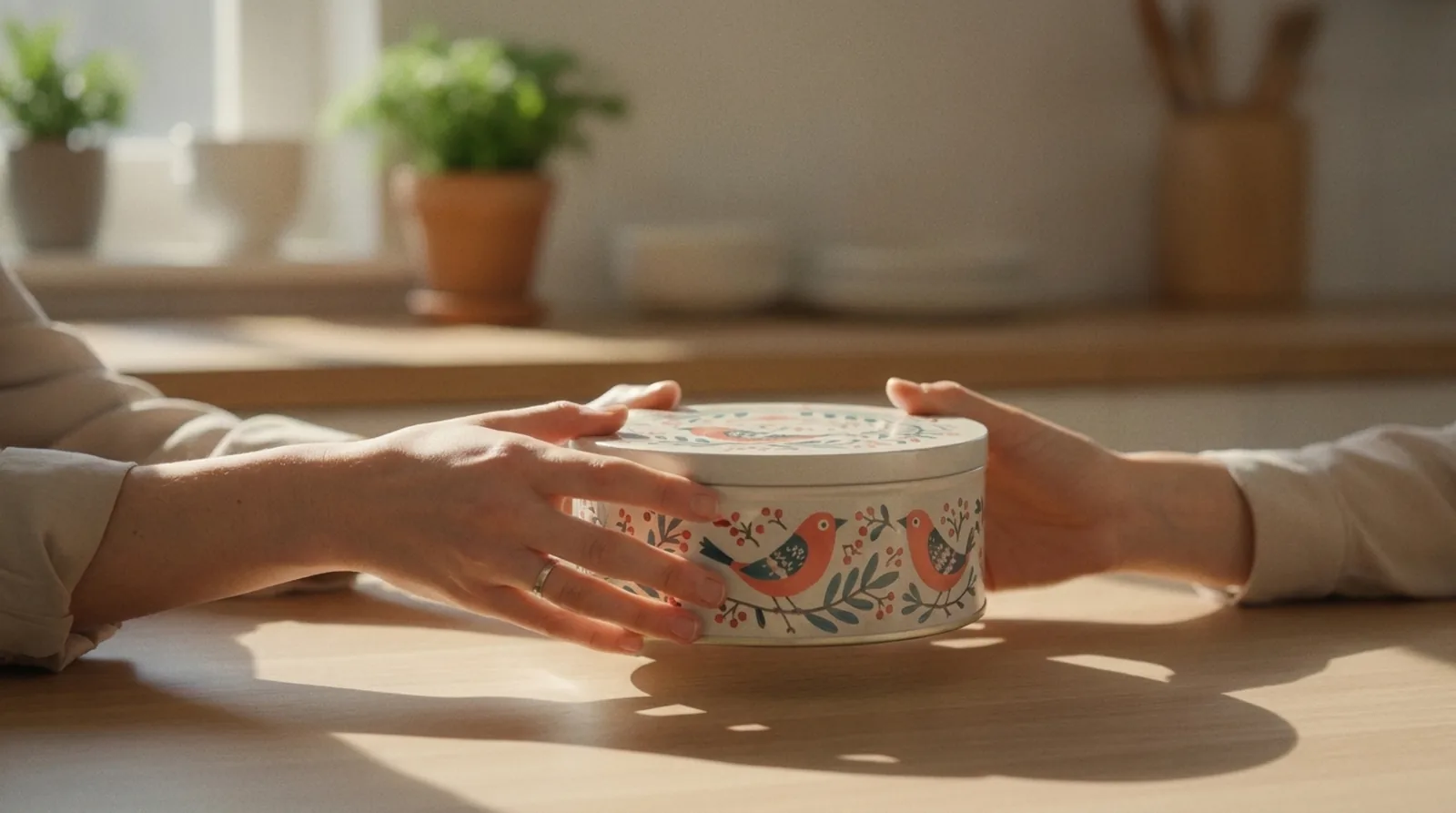
If you've ever costed out a seasonal gifting SKU, you know the stack. There's the product. Then the primary packaging. Then the gift box the primary packaging goes into, the tissue that pads the gift box, the ribbon that closes it, the sleeve or tag that says who it's from — and somewhere in a warehouse, the labour that puts all of it together. Each layer is cheap on its own. Together, they quietly become one of the most expensive and wasteful parts of the whole programme.
Gift-ready packaging is the growing move to collapse that stack into a single object: a container beautiful enough that nothing needs to go around it. The product arrives, gets handed over, and the presentation is already done. And of all the formats brands are using to pull this off, tin is the one that was structurally built for the job.
What "gift-ready" actually means
Gift-ready packaging isn't a finish or a feature. It's a design standard: the container, exactly as it leaves the shelf or the shipping box, is presentable enough to be given as-is. No wrapping, no gift bag, no additional dressing. The recipient's first impression of the gift is the packaging itself.
That standard rules out most conventional formats. A folding carton with a barcode panel and regulatory copy on the back doesn't pass. A pouch doesn't pass. A jar in a printed sleeve gets close but still usually ends up inside something else. What passes is packaging where every visible surface has been designed as a gift surface — and where the physical act of opening it feels like a reveal rather than an unboxing chore.
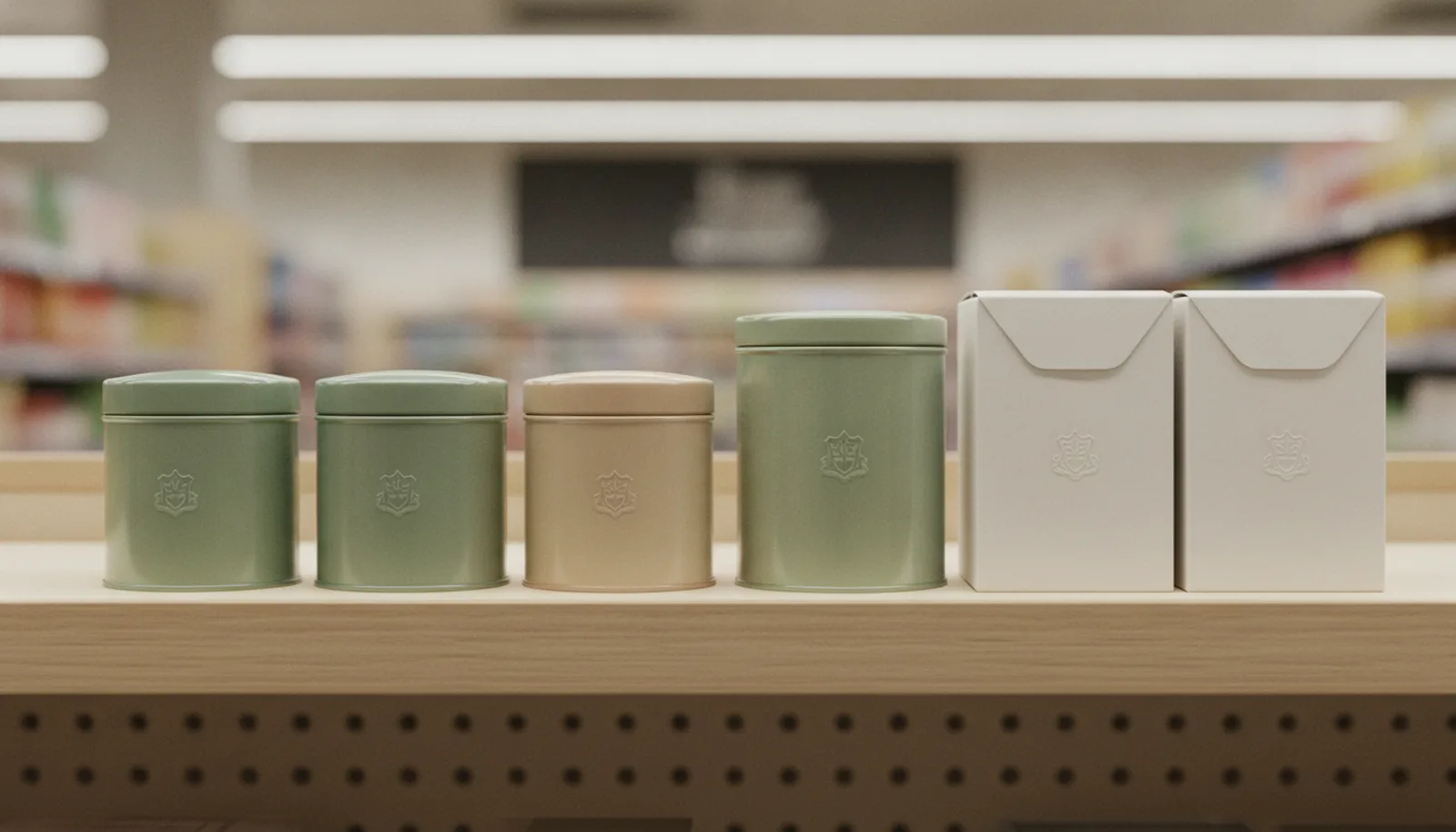
That's a decorative tin's home turf. Full-surface offset lithography means the lid, the body, the base, and even the inside of the lid can carry artwork — there is no "back of pack" that breaks the illusion. A hinged or slip lid opens with the small ceremonial resistance that a good gift should have. And embossing gives the surface something wrapping paper never can: texture you can feel before you've even opened it.
Why the trend is accelerating now
Three forces are pushing brands toward gift-ready formats at the same time, and none of them is a passing aesthetic preference.
The first is that consumers demonstrably reward packaging that feels like a gift. In Dotcom Distribution's e-commerce packaging research, 60% of shoppers said they'd be more likely to share a product image on social media if it arrived in a gift-like box rather than a plain brown one. The same firm's later consumer studies found that among luxury shoppers, premium packaging made 47% more excited to open the package, made the brand seem more upscale to 44%, and made 42% more likely to buy from the brand again. Packaging that photographs like a gift and opens like a gift isn't vanity — it's measurable retention and reach.
The second is wrapping fatigue, and it's as much environmental as it is practical. Most conventional wrapping paper — the laminated, foiled, glittered kind — can't be recycled at all; the plastic content contaminates the paper stream, which is why recyclers recommend the "scrunch test" before anything goes in the bin. Estimates of how much of it ends up in landfill vary widely and mostly trace back to loose secondary sources, but Earth911's rough estimate is that about half of the wrapping paper produced in the US each year ends its life in landfill — and whatever the true figure, the mechanism is not in dispute. Single-use decoration is exactly the category of packaging consumers say they want less of: in Trivium Packaging's 2023 Buying Green Report, 82% of consumers said they were willing to pay more for sustainable packaging, a figure that had risen for three consecutive years despite inflation.
The third force is simple retail economics. A gifting SKU that requires wrapping — whether by the consumer, by store staff at a wrapping counter, or by a co-packer building gift sets — carries costs that never show up in the packaging line item. Gift-ready formats move that spend upstream into the container itself, where it does double duty as both protection and presentation.
Tin is structurally built for this
Plenty of materials can be made to look festive. The reason tin dominates the gift-ready category — cookie tins, chocolate tins, popcorn tins, candle tins, tea tins — is that the format's mechanics line up with what a gift needs to do.
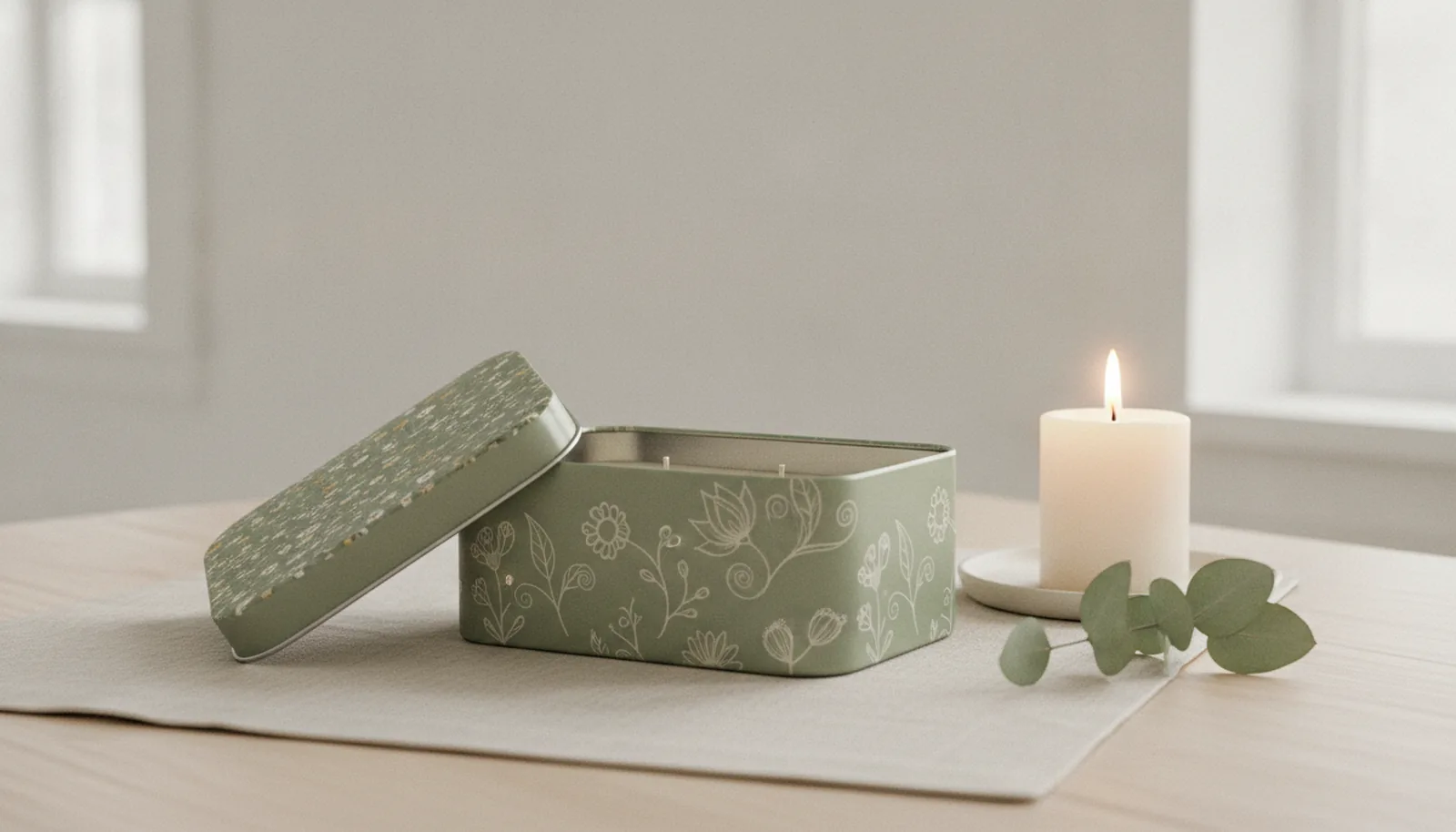
Start with the opening. A hinged lid or a friction-fit slip lid creates a deliberate, tactile reveal — the tin equivalent of untying a ribbon. That moment is designable: the resistance of the lid, the sound it makes, the second surprise of a printed inner lid or a fitted insert holding the product in place. It's one of the details that separates a basic container from a custom decorative tin that feels considered, and it's why custom printed tins with inserts have become a default for premium gift sets.
Then the surface. Tinplate takes full-wrap CMYK lithography with Pantone spot-colour matching, which means the artwork doesn't stop at a label edge — it flows over the curl of the lid and down to the base. Add embossing or debossing, which our design team can hold to 1mm precision, and the container gains the physical texture that makes people run a thumb over it. Wrapping paper is a printed image; an embossed tin is an object.
And then durability, which is the unglamorous requirement everyone forgets until December. A gift travels: into a shipping box, under a car seat, into a tote bag, under a tree for three weeks. Paper-based gift packaging shows every one of those journeys. Tinplate shrugs them off, protects the product inside — with food-safe paints and coatings on every surface we finish — and still looks like day one when it's finally handed over. If you're weighing the formats directly, our tin vs cardboard comparison walks through where each one honestly wins.
One honest caveat, because gift-ready design has a failure mode: the tin has to earn its keep visually on every surface, and that puts pressure on artwork preparation. A misregistered pattern on a lid curl or intricate detail placed on the lip — a bad place for it — undermines the whole premise. The die-line work matters more on a gift-ready SKU, not less; our guide to reading and placing artwork on a die-line covers the specifics.
The economics: one container instead of five components
Here's the part that gets a gifting SKU approved. A decorative tin costs more per unit than a folding carton — that's true, and pretending otherwise helps nobody. But a carton isn't the real comparison. The real comparison is the full gift stack the tin replaces.
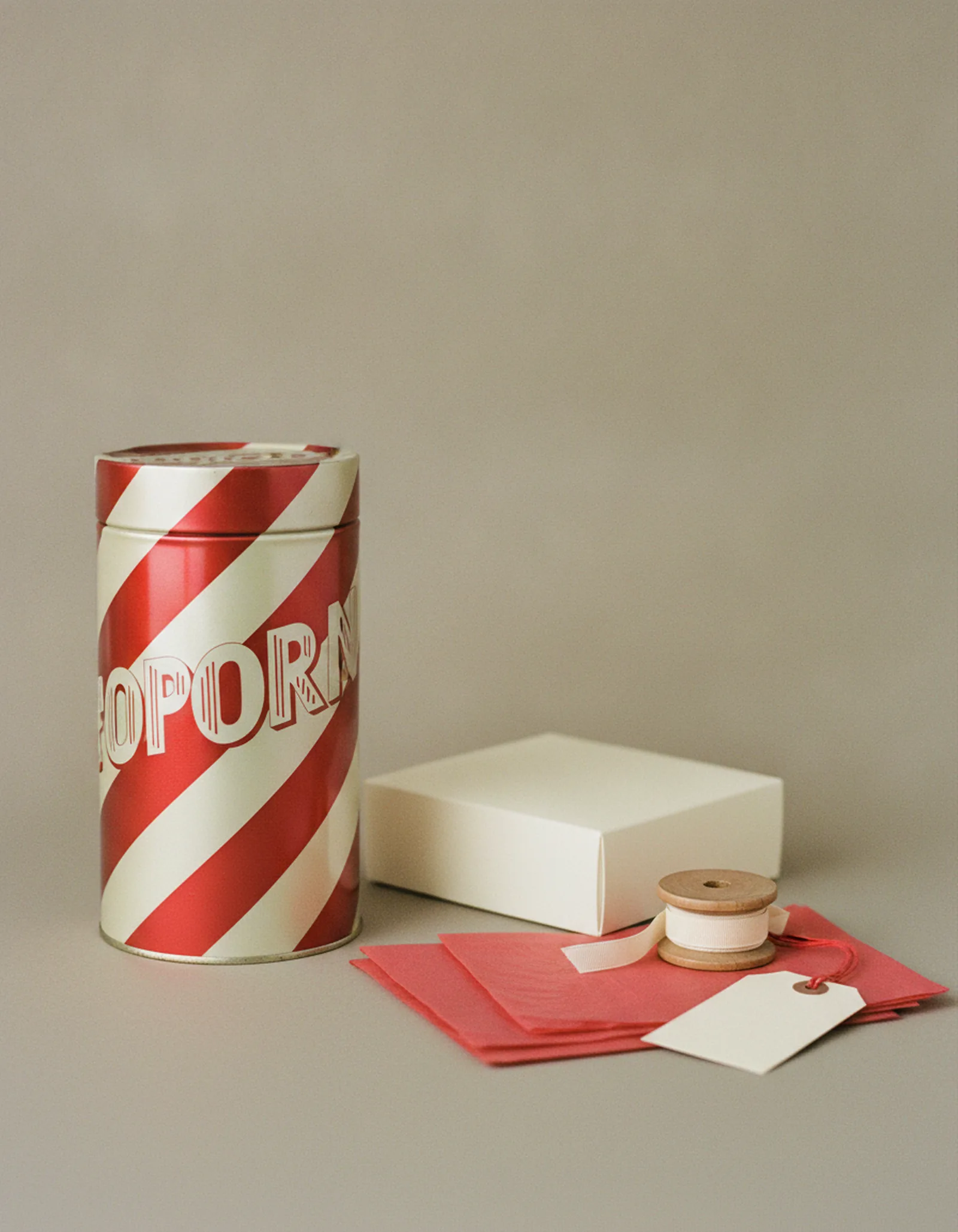
Line them up. On one side: primary packaging, plus a gift box, plus tissue, plus ribbon, plus a tag or sleeve, plus the assembly labour to bring them together — or, if the wrapping happens at retail, staffed wrapping counters and their queues. On the other side: one lithographed tin. The tin consolidates five procurement lines into one, eliminates a co-packing step, removes the single-use decoration from the waste stream entirely, and ships as its own protective packaging. For direct-to-consumer brands, it also solves the awkward problem of gifts ordered straight to the recipient's door, which by definition nobody is home to wrap.
The math shifts further at the end of life. When the wrapping stack is opened, everything but the product is waste — much of it, as covered above, unrecyclable waste. When a tin is opened, the packaging either stays in service (more on that below) or enters the single best-performing recycling stream in packaging: steel is the most recycled packaging material in Europe, with 84% of steel packaging actually recycled in the EU in 2024 under the EU's harmonised methodology — a figure based on material entering recycling operations, not merely collected. And because tinplate is infinitely recyclable without quality loss, that end-of-life story holds up on the sustainability page and in front of a sceptical procurement team alike.
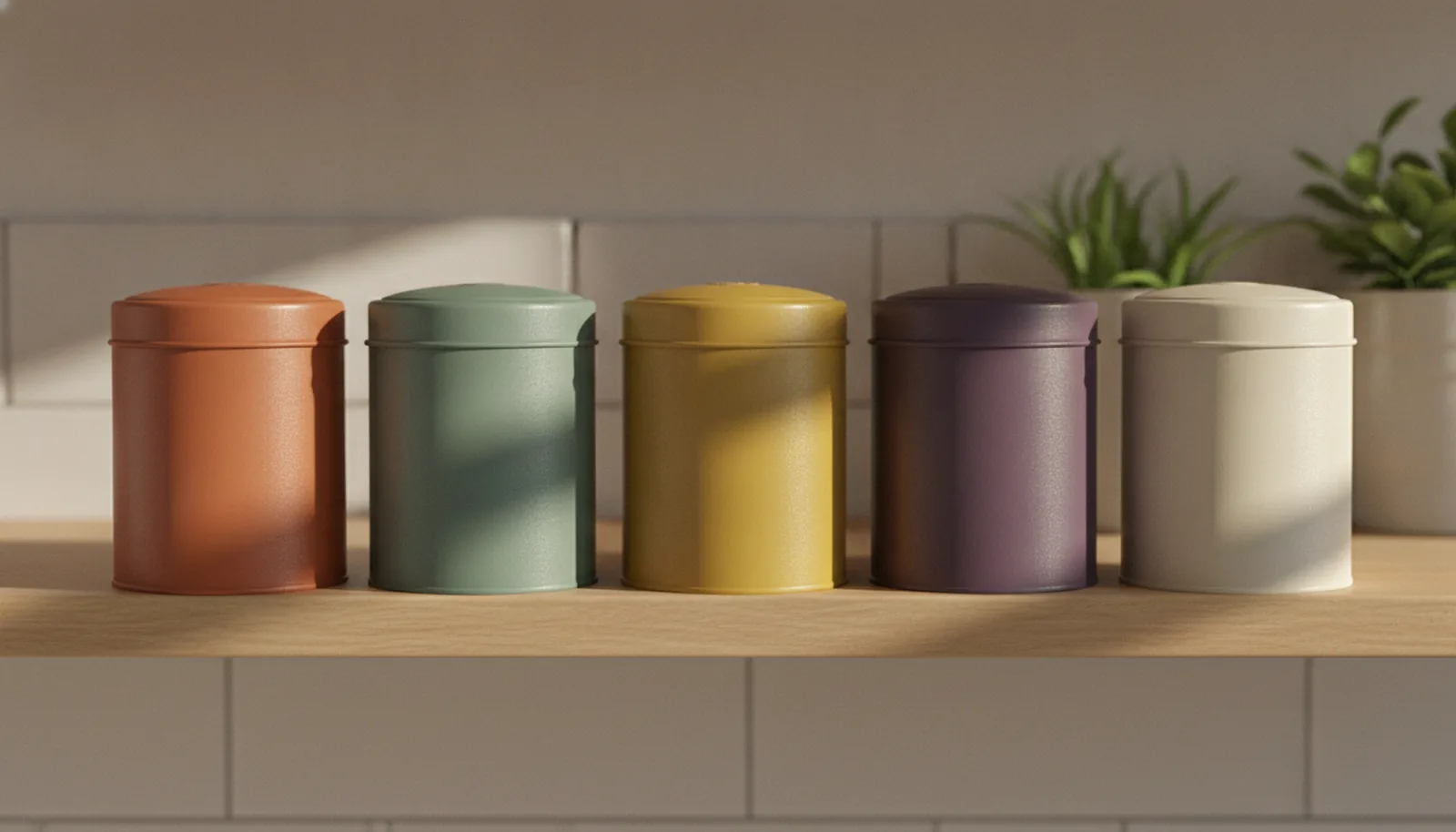
None of this means tin wins every brief. If the product is ultra-lightweight, margin-thin, and bought on impulse, the tin premium may not pay back. Gift-ready economics work when the SKU is positioned as a gift in the first place — seasonal, occasion-led, or premium-tier — because that's where the eliminated wrapping costs and the elevated perceived value both land.
The keepsake effect: your brand, still on the counter in July
Ask anyone what's in the old cookie tin at their parents' house. It's sewing supplies. It has been sewing supplies for fifteen years. That joke exists in a dozen languages, and it's the most underrated brand asset in packaging.
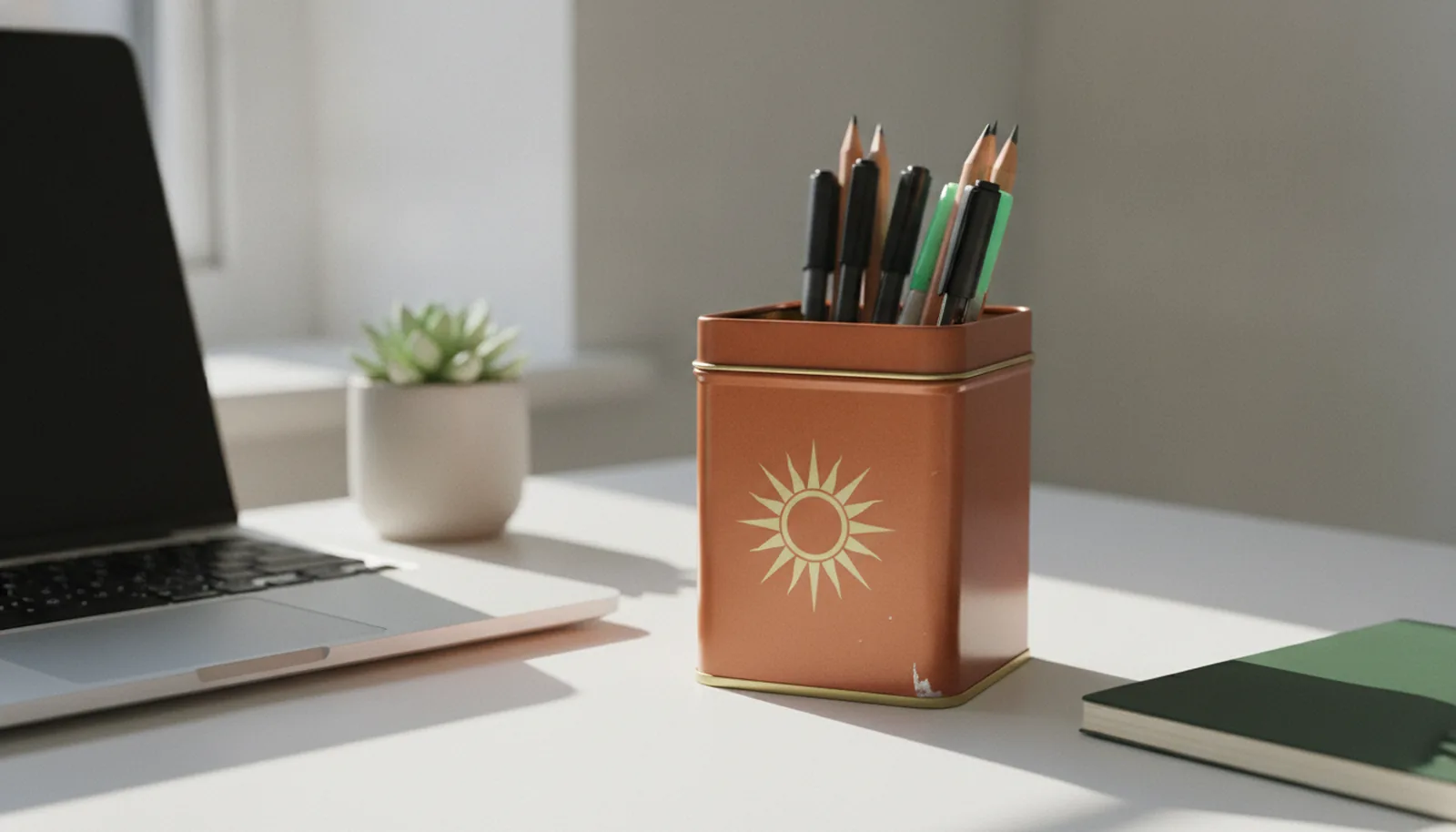
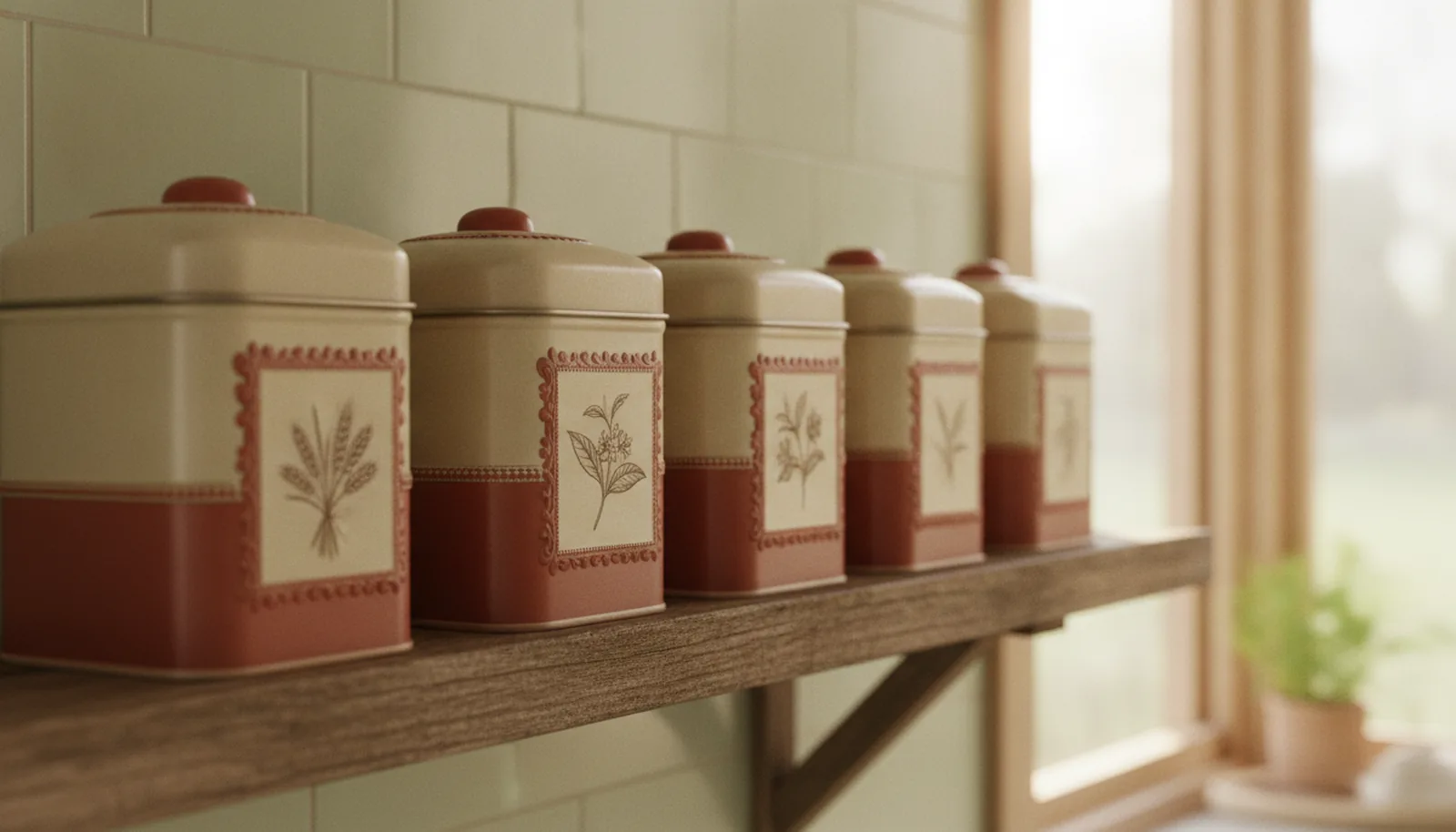
Wrapping paper's working life is measured in seconds. A well-made tin's is measured in years — as a biscuit tin turned button box, a tea tin turned pen cup, a candle tin turned travel case for chargers. It's the reason tins function as time capsules for the brands that make them. Every one of those second lives keeps a brand's artwork physically present in a home long after the product is gone. The pattern shows up across categories: tea brands like DAVIDsTEA and gifting-led names like Hampton Popcorn work in tin formats that tend to stay in kitchens long after the product is gone, because the reuse is part of the value proposition. A recipient who keeps the container has, in effect, kept the gift twice.
For brand managers, this reframes the packaging spend. A gift box is a cost amortised over one reveal. A keepsake tin is a cost amortised over years of countertop impressions — plus the social sharing that gift-like packaging measurably drives at the moment of opening. Design for the second life deliberately: artwork that isn't date-stamped to one season, a shape that stores well, a lid that keeps working after five hundred openings. A "Holiday 2026" banner across the lid guarantees the tin looks expired by February; a beautiful winter illustration doesn't.
Planning a gift-ready SKU: the calendar is the constraint
The most common failure in seasonal tin programmes isn't design or cost. It's the calendar. Gift-ready tins are manufactured objects with real lead times, and Q4 does not negotiate.
Working backwards from a November shelf date: ocean freight runs 4–6 weeks, production runs 30–60 days depending on complexity, finish, and order size, and sampling from an existing mold takes 10–14 days. That puts a comfortable kick-off for an existing-shape project in late spring to early summer. If the concept needs a new custom mold — a novelty shape, a non-standard hinge — add 4–6 weeks of tooling and start the conversation a full quarter earlier. Air freight (5–10 days) exists as a rescue lever, but it's an expensive way to fix a planning problem.
A few things we see often enough that they're worth a pre-launch checklist:
- Choose an existing mold if the shape isn't the story. With 5,000+ molds already in the library, most gift-ready briefs can skip tooling entirely, which saves both tooling cost and lead time.
- Design every visible surface, including the inside of the lid. Gift-ready means no hiding places.
- Keep the artwork season-proof. Wintery, not year-stamped, unless you're deliberately running a collectible limited-edition drop.
- Prototype the opening. Order physical samples and hand the tin to five people. If the lid reveal doesn't make at least one of them say something, iterate.
- Confirm food-safety requirements early if the tin will hold edible product — our paints and coatings are food-safe and the facility is BRC-certified for indirect food contact, but the spec conversation should happen at the design stage, not at pre-production.
FAQ
Why is regular wrapping paper so hard to recycle?
The problem isn't the paper itself — it's what's laminated onto it. Foil, glitter, and plastic coatings can't be separated at a curbside facility, so the whole sheet contaminates the paper stream and gets pulled out at sorting. Recyclers recommend the "scrunch test" first: if a crumpled sheet stays balled up it's usually paper, and if it springs back it's laminated and belongs in the general bin.
Do gift-ready tins actually drive more social sharing and repeat purchases?
The consumer research is unusually consistent on this. In Dotcom Distribution's e-commerce work, 60% of shoppers said they'd be more likely to share a product image on social media if it arrived in a gift-like box rather than a plain brown one, and luxury shoppers responded even more strongly in follow-up studies — premium packaging made 47% more excited to open the package and 42% more likely to buy from the brand again. Packaging that photographs like a gift compounds into measurable reach and repeat sales, not just aesthetic goodwill.
What should artwork on a gift-ready tin avoid?
Two traps show up in almost every brief. First, dating the artwork — anything that reads "Holiday 2026" across the lid guarantees the tin looks stale by February and loses its keepsake life, so wintery beats year-stamped unless it's a deliberate collectible drop. Second, leaving any visible surface undesigned; the inside of the lid, the base curl, and every panel that catches a glance need to carry the story, because there is no "back of pack" hiding place on a gift-ready SKU.
How much does a custom tin shape add to Q4 lead time?
A brand-new tin shape adds roughly four to six weeks of tooling on top of the standard 30–60 day production window and 4–6 week ocean freight leg. In practice that means kicking off a full quarter earlier than an existing-mold project — early spring rather than late spring for a November shelf date. Brands whose story doesn't hinge on a novel shape usually do better picking from the existing 5,000+ mold library, which saves both tooling cost and lead time.
What makes tin so reusable compared to other gift packaging?
Tin's shape stays useful after the product is gone in a way most packaging can't match — a biscuit tin becomes a button box, a tea tin becomes a pen cup, a candle tin becomes a travel case for chargers. The lid keeps working after hundreds of openings, the material shrugs off years on a counter, and the artwork doesn't fade under kitchen light. Wrapping paper's working life is measured in seconds; a well-made tin's is measured in years, and every year is another impression the brand gets to make in someone's home.
The container is the gift
The gift-ready trend is really a correction. For decades, packaging and presentation were treated as separate budgets — the container did the protecting, and a disposable layer of paper and ribbon did the delighting. Brands are discovering that one well-made object can do both jobs, cost less than the sum of the stack, waste dramatically less, and then hang around on a shelf advertising the brand for years.
Stannum Can has been building that object since 1993. If you're scoping a seasonal or gifting SKU, our gallery shows what gift-ready looks like across cookies, candles, tea, and specialty shapes — and if you'd rather talk timelines against your own launch date, get in touch and we'll work the calendar backwards with you.
References
3. 2023 Buying Green Report — Trivium Packaging
4. Holiday Tip: Don't Recycle Gift Wrap — Earth911
5. Steel for Packaging Europe — Steel packaging recycling rate reaches record high (84% in 2024)