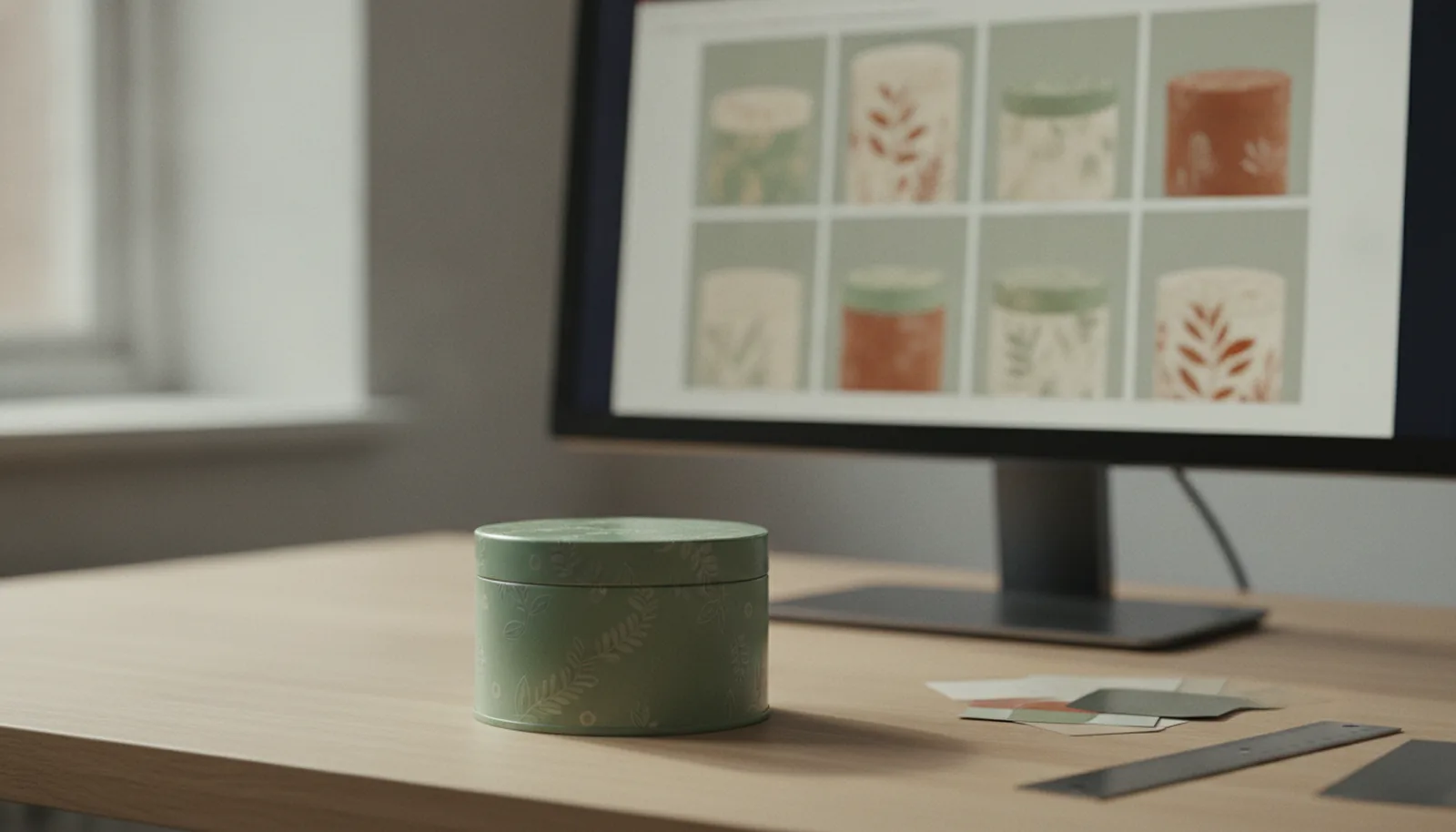
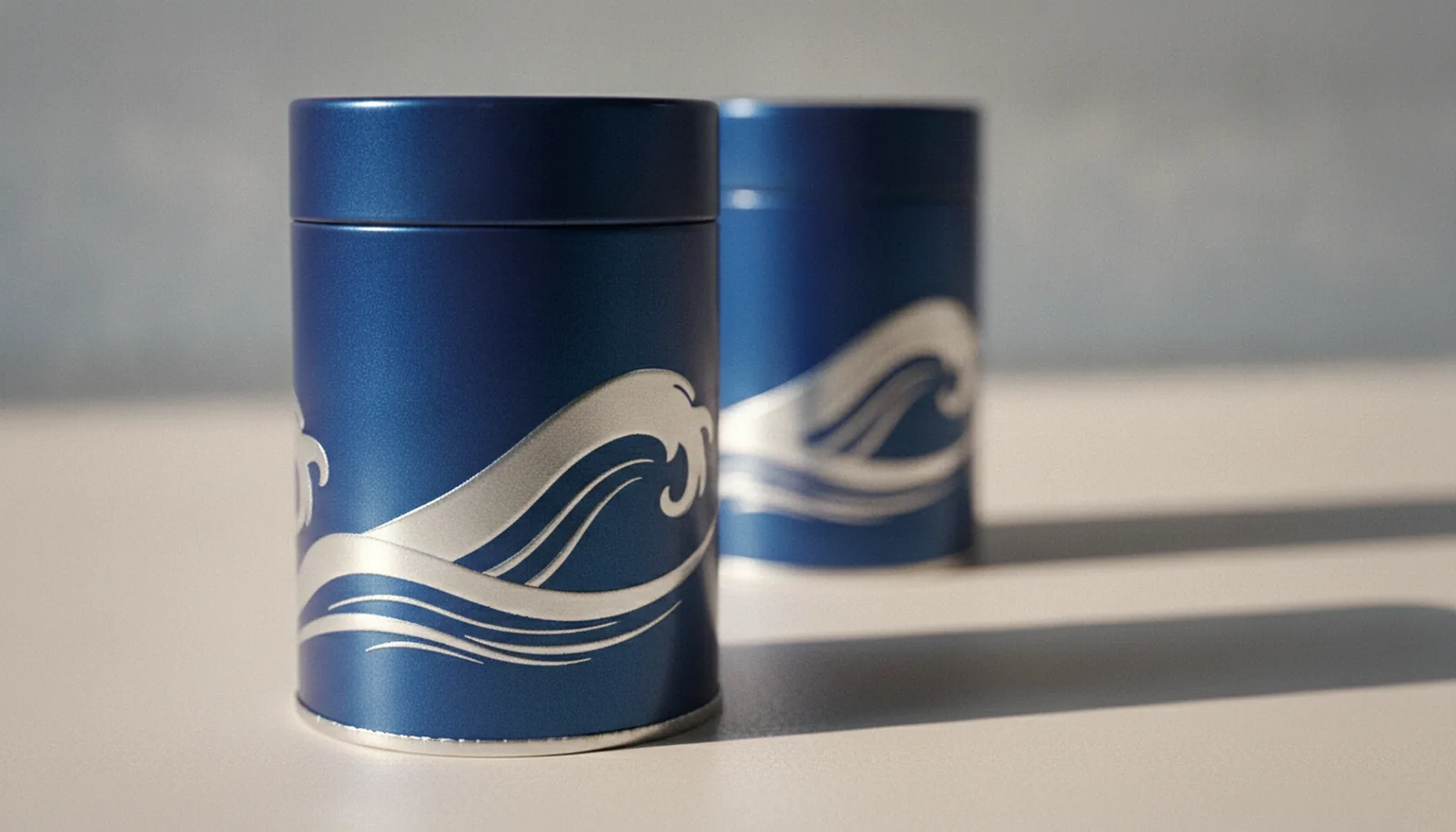
A brand manager can now sit down on a Tuesday morning, describe a tin — round, sage green, botanical pattern, gold accents, something that feels like it belongs in an apothecary — and have nine variations on screen before the coffee goes cold. Three years ago that was a week of agency time and a purchase order. Now it's a prompt.
That shift is real, and it's genuinely useful. It also creates a new and slightly awkward problem, which is that the distance between a beautiful concept and a manufacturable tin has never been more invisible. The image looks finished. The mold does not exist. Somewhere between those two facts sits everything our tooling technicians actually do.
This piece is about both halves of that. Where AI is legitimately changing how tin packaging gets designed — and where the physical constraints of stamped, embossed, lithographed metal still require a factory floor and the people standing on it.
What AI is actually good at in packaging design
The honest version of the story starts with concepting, because that's where the tools are strongest and the risk is lowest.
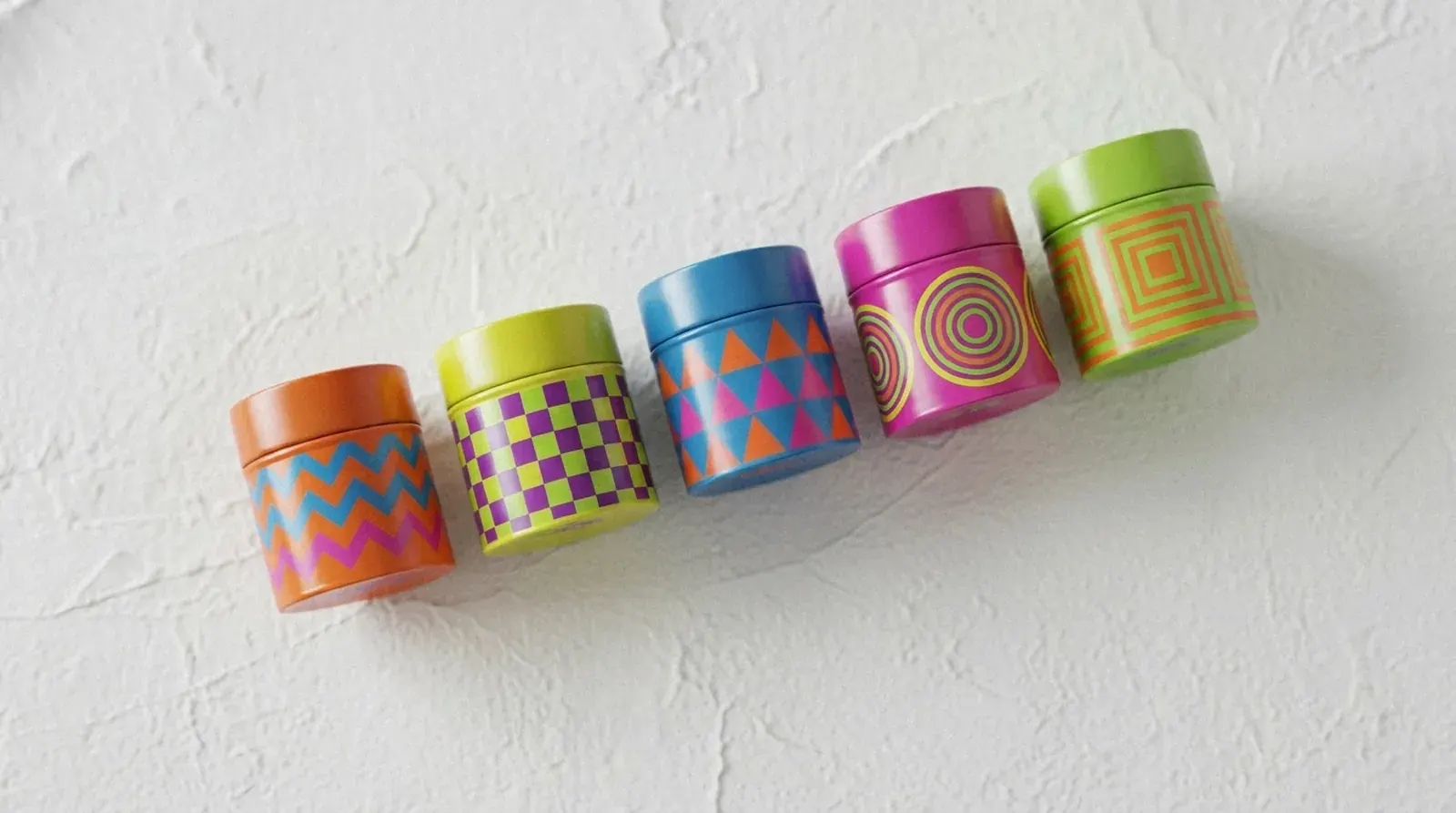
Generative image tools let a team explore a visual direction at a speed that used to be impossible. Twelve colourways in an afternoon. A vintage-apothecary route sitting next to a bright contemporary route sitting next to something minimal and Scandinavian, all rendered convincingly enough that a marketing director can react to them. The value here isn't the artwork — it's the rejection. Being able to kill eight directions cheaply before anyone commits budget to one is worth more than any individual output.
Industry tooling has moved in the same direction. Structural CAD platforms and 3D visualization tools now sit between design and prepress, letting teams map artwork onto a three-dimensional model, simulate finishes and lighting, and share a photorealistic preview for approval before anything is cut. Adobe's Firefly and similar tools have been folded into existing creative workflows for texture, pattern, and layout generation. Analysts at Smithers have positioned generative AI as one of the major forces reshaping the packaging sector, from personalised design through to production-line optimisation.
The second thing AI does well is iteration under constraint. Once a direction is chosen, generating twenty layout variants that keep the same lockup but move the pattern density, or testing whether a pattern reads at 40% scale, is fast and cheap. Designers used to do this work; now they supervise it and spend their attention on the choices that matter.
The third is communication. A brand manager who can put a rendered tin in front of a founder, a retail buyer, or a board is having a much better conversation than one holding a flat artboard. Concepts get approved faster because they look like objects.
None of that is hype. It's a real compression of the front end of the process.
Where the concept meets the metal
Here's the part that doesn't show up in a render.
A tin is not a printed surface. It's a formed steel object that was printed flat, then stamped, drawn, flanged and assembled — and every one of those operations imposes rules on the artwork. An AI-generated concept has no knowledge of those rules, because it was trained on pictures of tins, not on the process that made them.
Four constraints come up constantly.
Embossing has a depth budget
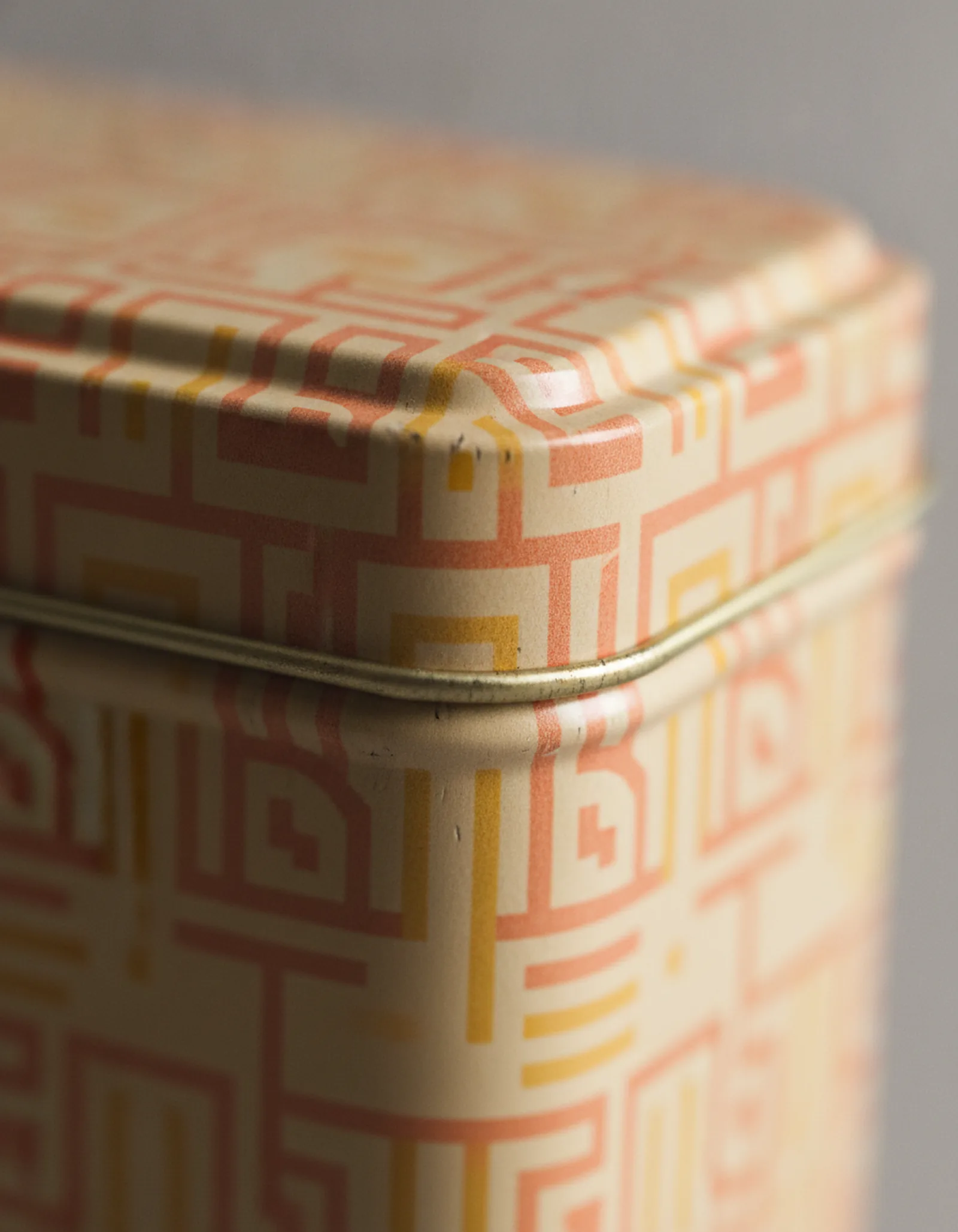
Embossing on tinplate is not a graphic effect. It's metal being physically displaced by a die, and how far it can be displaced depends on the thickness of the plate, the geometry of the pattern, and how much the surrounding area can stretch without tearing or wrinkling. We work to roughly 1mm precision on embossing, which is a fine tolerance — but it's a tolerance, not an unlimited allowance.
Generated concepts routinely include relief that would be beautiful if it could be made. Hair-thin embossed script. Deeply raised patterns running right to the edge of a lid where the metal is already under forming stress. Two different emboss depths sitting a millimetre apart. A render doesn't care; the die does. The lip and the radius of a tin are bad places for intricate detail, and this is one of the first notes our technicians send back on almost every AI-originated concept we see.
The workable version usually keeps the idea and changes the execution — simplify the finest elements, pull detail away from the forming edges, and let the emboss do fewer things more confidently. It still looks like the concept. It can also be tooled.
The substrate is silver, and it fights you
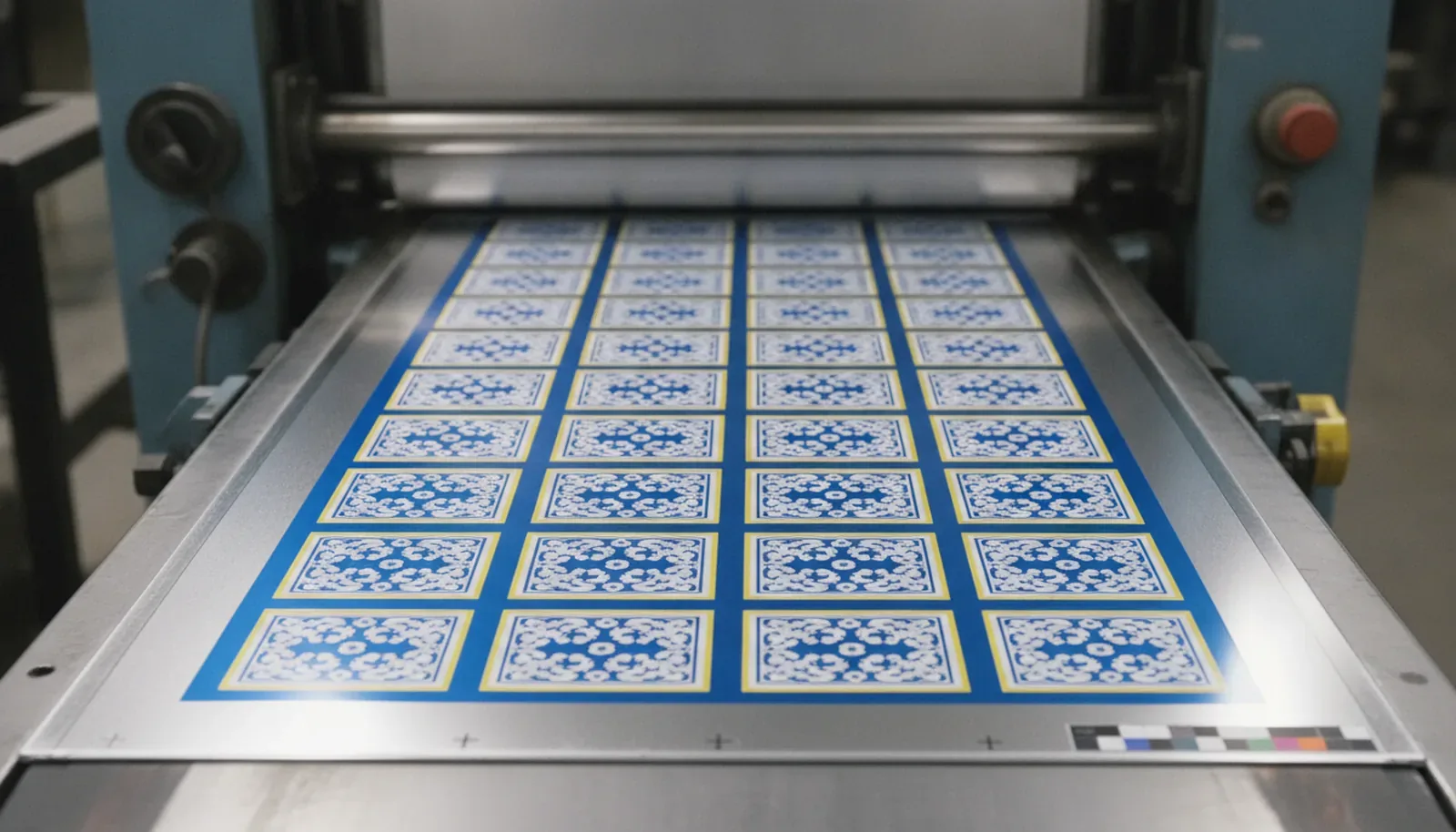
Full-surface CMYK offset lithography on tinplate follows the same lithographic principles as paper printing, but the material behaves differently. Tinplate is smooth, non-absorbent and metallic, and it typically requires surface preparation and a base coat before ink will sit predictably on it — trade practitioners describe the size or white base coat as a near-universal requirement, partly because of mill oils and the surface characteristics of the raw plate.
That base coat is also what makes colour behave. Because the raw substrate is reflective silver, printing directly onto it lets the metal show through the ink film; skip the white and colours shift, reading darker or more metallic than intended. A white underprint gives the inks a neutral ground to sit on.
This is where AI renders and printed reality separate most visibly. A generated image of a "soft dusty pink tin with gold foil detail" is describing three different production decisions at once — a printed pink that needs white underneath it to stay pastel, a metallic effect that could be a metallic ink, an unprinted area of bare tinplate showing through, or a separate foil operation entirely — and those three routes have different costs, different lead times and different finished appearances. The render collapses them into one image. Someone has to un-collapse them.
We talk about this in more detail in our guide to choosing the right tin finish, and the mechanics of preparing files for a curved metal surface are covered in our piece on reading and placing artwork on a die-line.
Structure is engineering, not illustration
A generated tin can have a lid that couldn't close, a hinge with no mechanical basis, a corner radius no draw operation would produce, or a shape whose proportions make the stamping unstable. It looks fine because nothing is being asked to function.
Real structural work runs the other way. Either the design maps to one of the existing molds — we hold more than 5,000 — or it needs new tooling, which adds roughly four to six weeks before production even starts. That single fork is often the most consequential decision in a tin project, and it's determined by geometry no image model is reasoning about. A concept that lands within an existing mold family can move to samples in 10 to 14 days. A concept that doesn't is a different budget and a different calendar.
The practical move is to bring the mold library into the concepting stage rather than after it. Choose the structure first, generate against it second, and the AI work becomes far more useful because it's exploring surface design within a shape that's already known to be producible. That's a workflow change, not a technology limitation — but it's the one that saves the most time.
Nobody has resolved who owns the output
This one is less about physics and more about risk, and it deserves a straight answer rather than a cheerful one.
In the United States, copyright protection requires human authorship. The Copyright Office's January 2025 report on copyrightability concluded that purely AI-generated material isn't protectable, and — importantly for anyone treating prompting as a design process — that prompts alone don't give a user enough control over the expressive elements of an output to make them its author. Human contributions to an AI-assisted work can be protected, but the analysis is case by case, and it turns on whether there is substantial, independently copyrightable human creative input. In 2025 the D.C. Circuit likewise confirmed that the Copyright Act requires human authorship.
For a brand, the practical implication is uncomfortable but manageable: a tin design that came straight out of a generator, unaltered, may not be something you can defend as yours. A design that a human designer materially reworked, arranged and refined is on much firmer ground. Documentation of that human contribution matters. This isn't legal advice, and the right move is to put it in front of your own counsel — but it's a question worth asking before the tooling invoice, not after a competitor releases something similar.
There's a disclosure dimension too. Under Article 50 of the EU AI Act, transparency obligations covering AI-generated content apply from 2 August 2026, with providers of generative systems required to mark synthetic outputs in a machine-readable, detectable format. A provisional agreement in May 2026 extended the marking deadline to 2 December 2026 for generative systems already on the market before August. These obligations sit primarily on AI providers and on deployers in specific situations rather than on packaging buyers generally — but the direction of travel is toward provenance being traceable, and brands building creative pipelines on these tools should be watching how the implementing guidance settles rather than assuming it won't touch them.
The bridge: what a factory actually adds
The framing we find most useful with clients isn't "AI versus human designers." It's that AI has made the front of the process fast and left the back of the process exactly where it was.
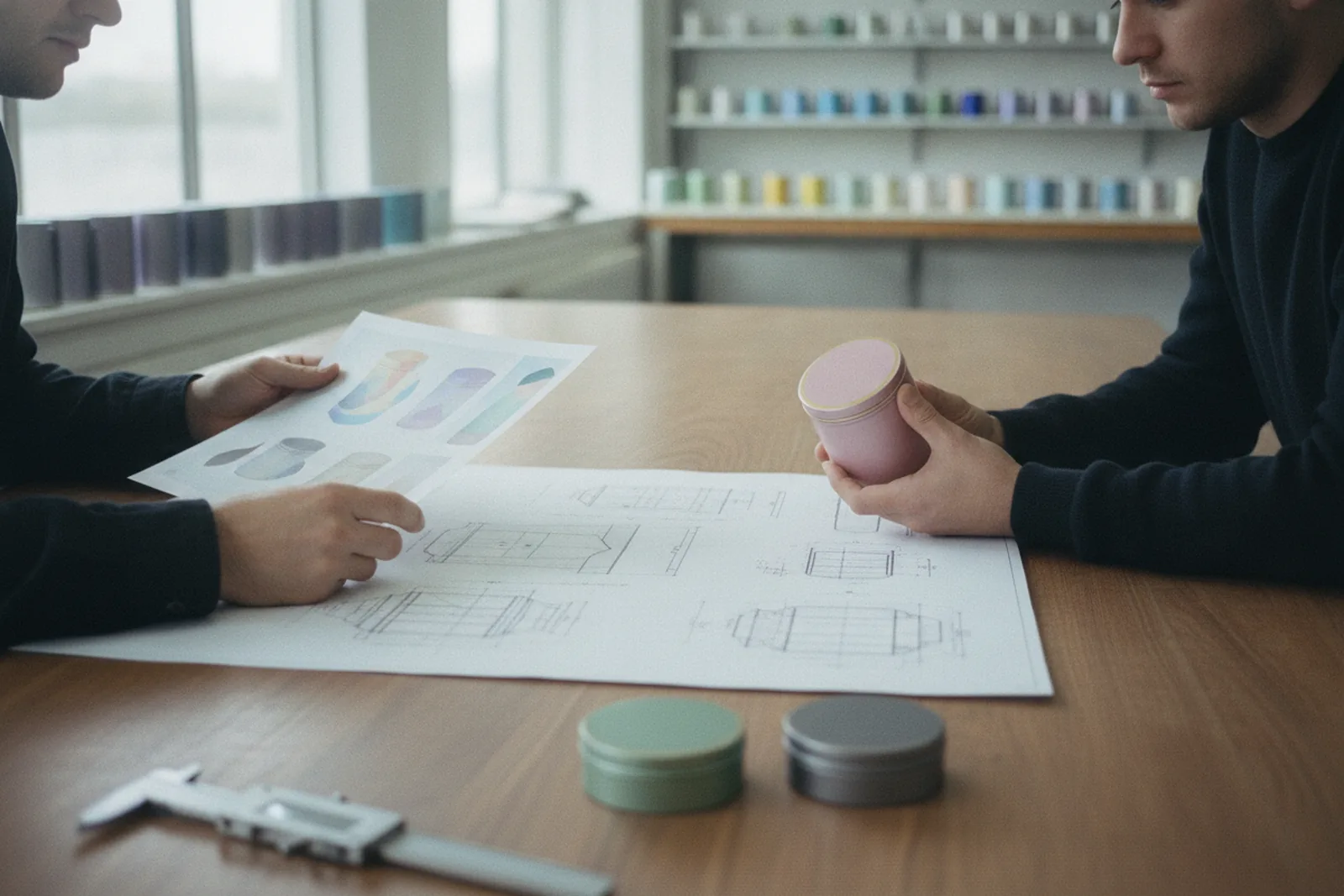
What our 50+ in-house design and molding technicians do is translation. They take a concept — a render, a mood board, a competitor's tin, a sketch on a napkin, increasingly a folder of generated images — and answer four questions. Can this shape be drawn from tinplate, and does a mold exist for it? What happens to this artwork when the flat sheet becomes a curved object? Which of these visual effects is a print decision, a finish decision, or a tooling decision? And what has to change so that it survives 40 million units a month of production without drifting?
That's not a creative bottleneck. It's the part that makes the creative work real. The tins we produce for clients like DAVIDsTEA and Rifle Paper Co. look the way they do because someone reconciled an intent with a die.
There's also a quieter benefit to running concepts past a factory early. Constraints are generative. "That emboss depth won't hold on a 0.23mm plate, but if we move it inboard 4mm and simplify the linework it will — and here's a sample" is a more productive conversation than an unlimited canvas, because it produces a decision instead of another render.
A workflow that actually works
If you're bringing AI into a tin project, the sequence that we've seen produce the fewest surprises looks roughly like this.
Start with structure. Pick a shape family from an existing mold library, or accept upfront that you're funding new tooling and add four to six weeks. Generate concepts against that fixed structure rather than in the abstract. Treat every generated image as a mood reference, not a specification — the job of the render is to communicate intent, and it should be labelled that way internally so nobody downstream mistakes it for artwork. Get a manufacturability read before the concept is presented to leadership, because a concept that's been approved is much harder to change than one that hasn't. Then hand the direction to a human designer to build the actual production file against the die-line, with real colour separations and a decision recorded for every effect in the render.
And build one physical sample before you commit. No render, however photorealistic, tells you how a matte varnish feels under a thumb or whether a printed cream reads warm or grey in a retail lighting environment. Samples from existing molds run 10 to 14 days. It's the cheapest insurance in the entire project.
AI has genuinely changed the first two weeks of a packaging project. It has not changed the metal. The brands getting the most out of these tools are the ones using them to arrive at a clearer brief faster — and then handing that brief to people who know what a die can do.
If you have a concept, generated or otherwise, and you want to know whether it can be tooled and what it would cost, that's a conversation we have most days. Send us the images and the shape you have in mind and we'll tell you honestly what holds, what has to change, and which of our 5,000+ existing molds it might already fit. You can see the range of what we've produced in our work gallery, read more about our lithograph printing capabilities, or get in touch to start a project.
Frequently asked questions
Can I use an AI-generated design directly as artwork for a custom tin?
Generally, no — not without rework. Generated images are raster files without colour separations, die-line registration, bleed, or the layer structure a metal decorating press needs. They also frequently contain effects that combine printing, finishing and tooling decisions into a single visual. The realistic path is to treat the generated image as a direction and have a designer build the production file against the actual die-line for your chosen shape.
Will using AI in the concept phase speed up my lead time?
It compresses the design phase, which can be substantial — but it doesn't change manufacturing. Production still runs 30 to 60 days depending on complexity, finish and order size, new-mold tooling still adds four to six weeks, and ocean freight is still four to six weeks. Where AI genuinely helps is getting to an approved direction sooner, which moves the whole schedule forward.
Does a design generated by AI belong to my brand?
This is unsettled and worth asking a lawyer about. In the US, the Copyright Office has stated that purely AI-generated material isn't copyrightable and that prompting alone doesn't establish authorship, though human contributions to an AI-assisted work can be protected on a case-by-case basis. Practically, the more substantive human creative work goes into the final design, the stronger your position — and documenting that work is sensible.
Why does my printed tin look different from the render?
Usually because of the substrate. Tinplate is reflective silver, and unless a white base coat is applied under the artwork, inks let the metal show through and colours read darker or more metallic than intended. Renders also tend to simulate ideal lighting. Finish choice matters too — a gloss varnish makes colour appear richer, while matte softens saturation. This is why a physical sample matters more than any preview.
Can AI tell me whether my tin design is manufacturable?
Not reliably. Generative image tools have no model of tinplate thickness, draw limits, emboss tolerances or mold geometry. Structural CAD software can validate a structure once someone has defined it properly, but that's a different category of tool from a generative one — and for a formed metal object, a technician who has tooled similar shapes will catch things software won't.
References
1. Copyright and Artificial Intelligence, Part 2: Copyrightability — U.S. Copyright Office, January 2025
2. Copyrightability of AI Outputs: U.S. Copyright Office Analyzes Human Authorship Requirement — Jones Day
3. Article 50: Transparency obligations for providers and deployers of certain AI systems — European Commission, AI Act Service Desk
4. Quick Facts: Transparency rules for AI systems — European Commission, Shaping Europe's Digital Future
5. The substrate — CanTech International
6. Generative AI set to transform packaging industry — Label & Narrow Web, reporting on Smithers research
7. Esko Studio — Esko, structural and 3D packaging visualization tooling