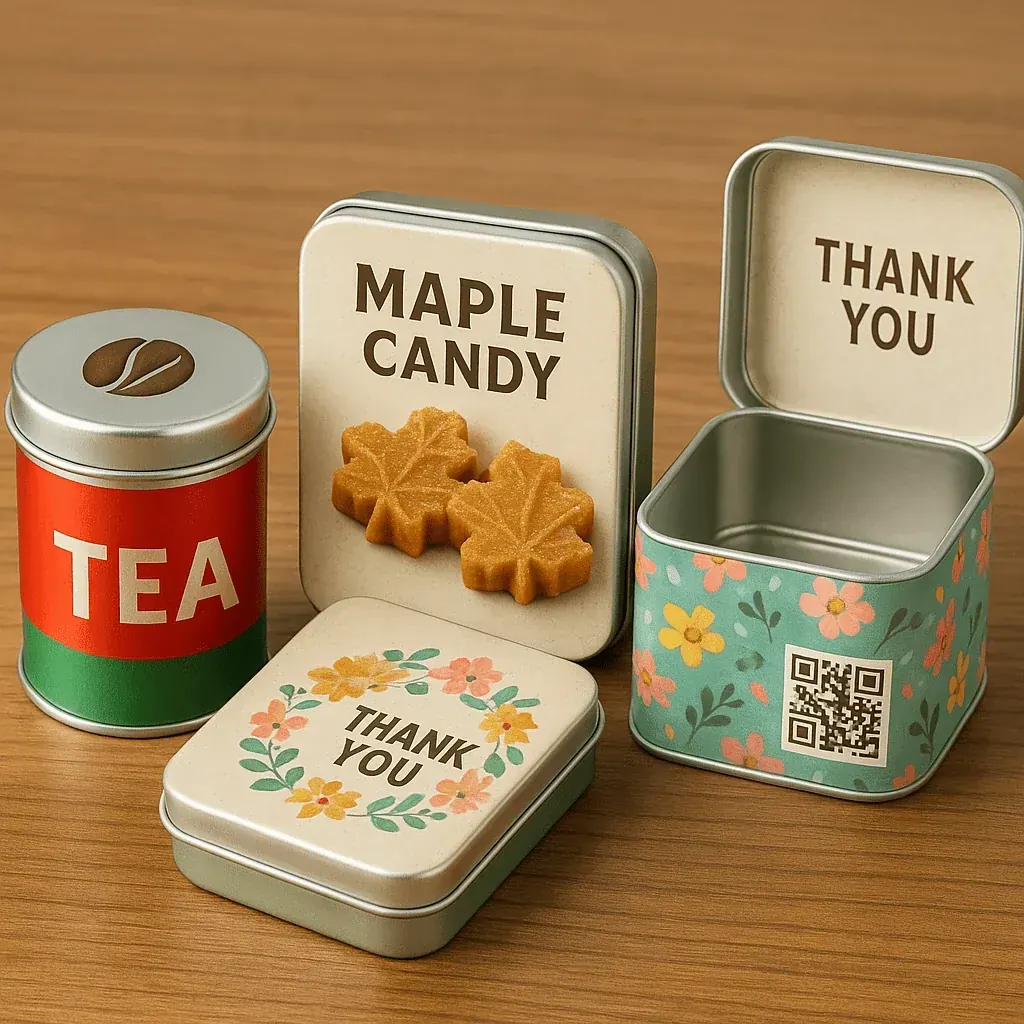
Unboxing and product-photography content is one of the most durable sources of organic brand reach a consumer packaged goods brand can build. A tin that photographs well becomes influencer content for free — shared, tagged, and amplified by customers who were going to buy anyway. Designing for that moment is deliberate, not accidental.
Seven principles for tin packaging that performs on Instagram and TikTok.
1. Finish Contrast Beats Busy Graphics
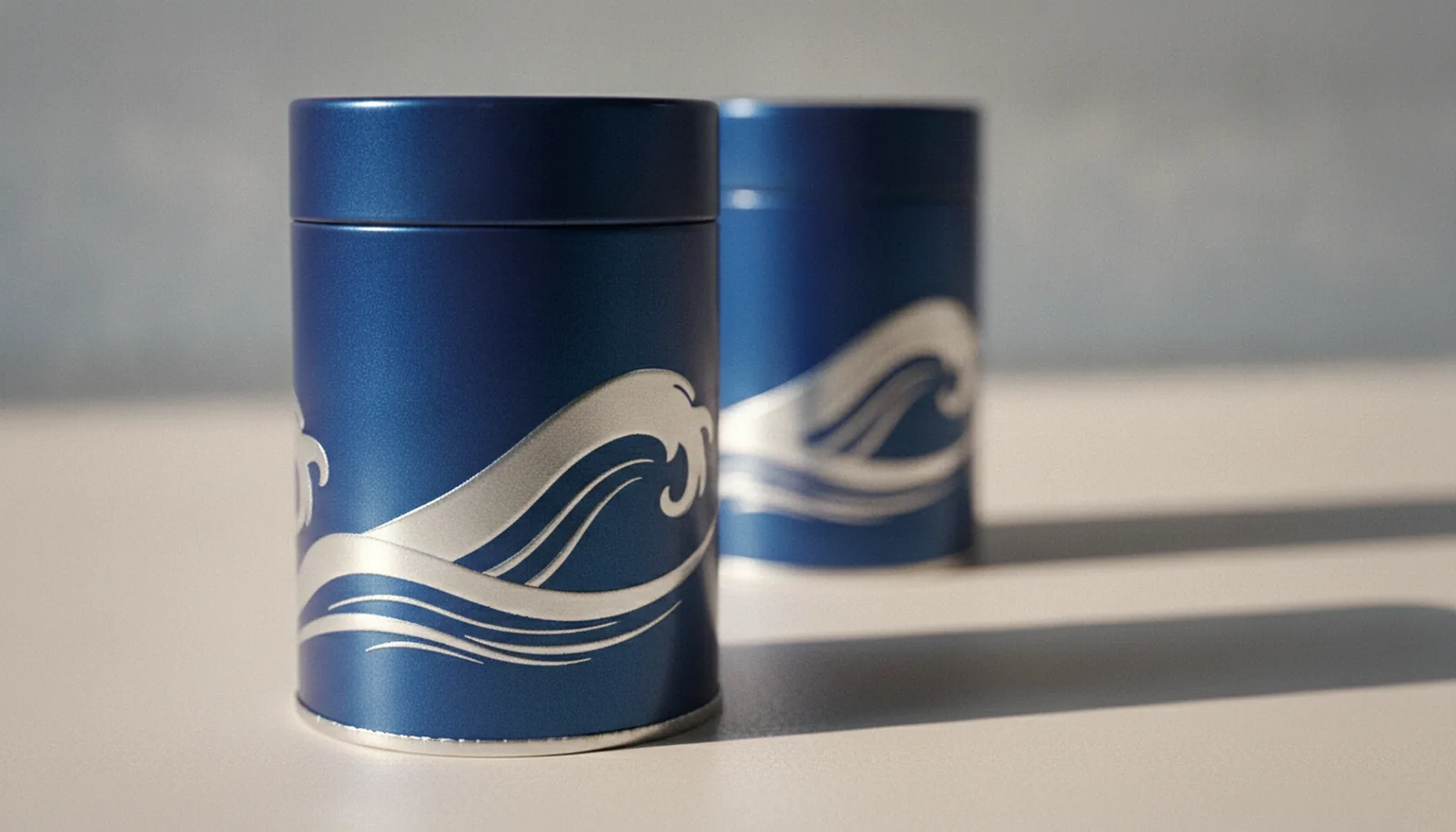
A single polished surface does more for a photo than a dense design. Iridescent inks, mirror varnishes, and holographic foils create movement in video; matte and soft-touch finishes absorb light and read as premium in stills. Mix only two finishes on one tin — the contrast is where the visual interest comes from, and more than two starts to look cluttered.
2. Emboss for Natural Shadow
Ring lights and studio softboxes flatten printed graphics. Embossing and debossing introduce a shadow line that photographs well in any lighting — a 1mm raised logo will catch light that a flat print cannot. For macro photography (beauty brands, small candle tins, gift sets), embossing makes a tin look three-dimensional on screen without any editing work.
3. Mirror Finishes Double as Bounce Cards
A high-gloss lacquer on a flat lid reflects ambient light back onto the product. Influencers shooting tin-packaged cosmetics, foods, or candles handheld can use the lid itself as a reflective fill, which cuts production time significantly compared to setups that require dedicated reflectors. This is a real technical advantage for creators, and it's worth flagging when you send product to reviewers.
4. Shape the Frame
Instagram and TikTok are vertical-first platforms. Tin shapes that hold composition in a portrait frame outperform wider or flatter formats for content that needs to crop well to 9:16. Round canisters, tall rectangular tins, and squat square formats all work. Very wide or very shallow tins get cropped aggressively and lose their shape signal.
Think about hand-scale too. A tin that sits comfortably in one hand enables single-hand "reveal" videos — the lid lifting, the product emerging. Tins in the 70–90mm diameter range tend to work best for this.
5. Hide a Detail for the Engaged Viewer
Printing brand messaging on the inside of the lid, the base, or a recessed inner panel creates a small payoff for the customer who opens the tin slowly on camera. It doesn't take up retail shelf real estate, and it gives creators something to show that feels like a discovery rather than an ad.
6. Limited Editions Drive Scarcity Posts
Short runs with numbered editions, artist collaborations, or seasonal colourways generate a specific kind of social content — the "look what I got" post. The creator is not just photographing the product; they are photographing access. This works particularly well for heritage food brands, high-end confectionery, and cosmetics, where scarcity reads as desirable rather than gimmicky.
7. Make the QR Code the Bonus Track
Printing a small QR code on the underside of the lid opens a channel that does not show up at retail but rewards the creator who opens the tin. Link it to a behind-the-scenes video, a recipe, a refill page, or a loyalty program — whatever gives the customer a reason to scan after unboxing. The tin becomes a dual-channel marketing asset: a retail object and a DTC funnel entry point in the same piece.
Photography Tips to Send Influencers
If you are shipping tins to creators for review, a few quick production notes travel well:
- Side-light at roughly 30 degrees — this catches embossing and creates contrast on mirror finishes.
- Use the lid as a white-balance reference if it's a neutral finish.
- Textured fabric backgrounds (linen, raw silk, matte paper) contrast well with metal surfaces.
- Shoot on cloudy daylight where possible — harsh direct sun blows out polished surfaces.
Common Mistakes to Avoid
- All-matte tins. They photograph flat and disappear against most backgrounds.
- Busy type over more than ~15% of the surface. Dense copy is unreadable at thumbnail scale.
- Dark artwork on very small tins. Anything below 60mm diameter with dark graphics looks like a commodity mint container at feed size.
- No hook for a caption. If the tin doesn't suggest a reason to be posted (scarcity, artistry, a reveal), influencers default to showing the product, not the packaging.
FAQ
Do metallic inks affect recyclability?
No — tin is still recycled in the steel stream. Stannum uses water-based inks where possible to reduce solvent load.
What tin sizes photograph best for social?
Anything that holds a portrait crop — round canisters 70–90mm diameter, tall rectangles, square tins with a substantial lid. Very wide or very shallow tins tend to lose their shape signal once cropped for vertical video.
Can you print on the inside of a lid?
Yes — inside printing is available and is one of the highest-leverage decisions for unboxing content. There's no additional print pass cost.