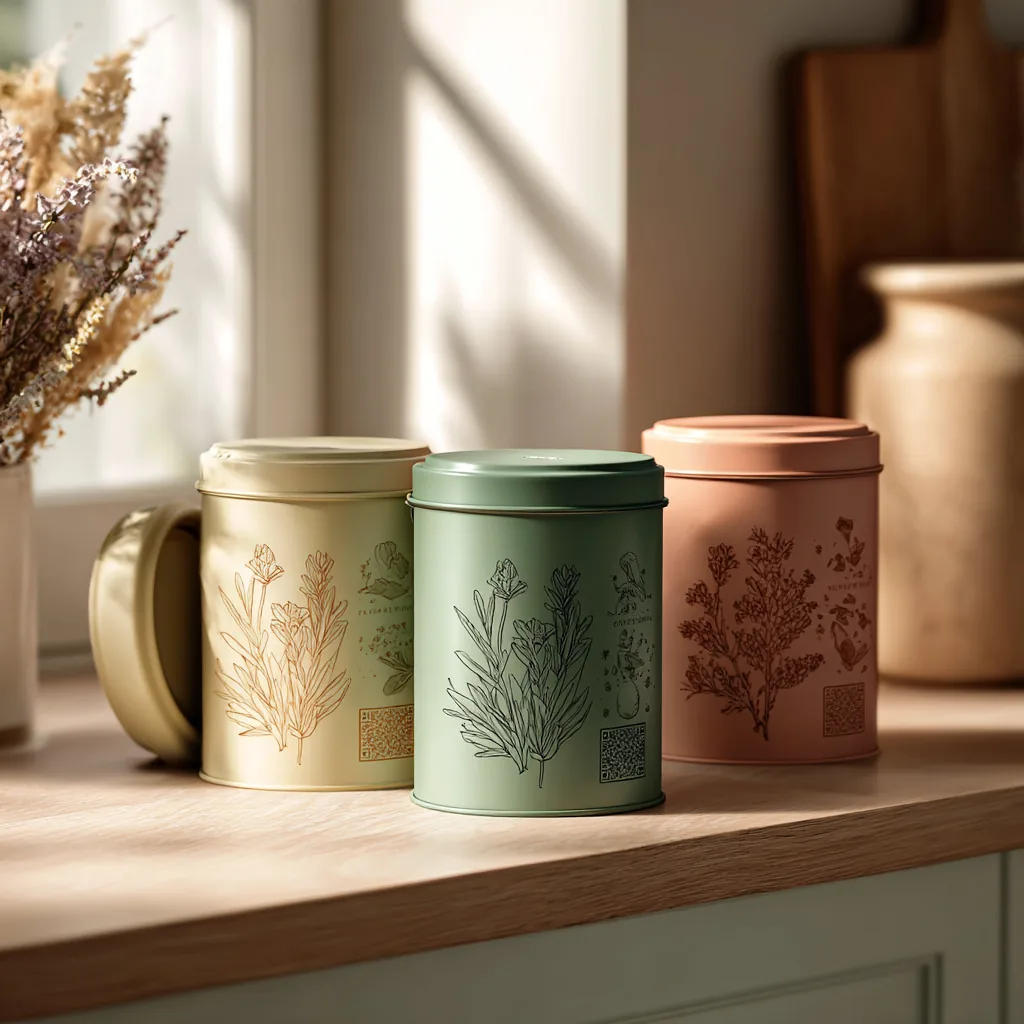
Smart tin packaging is quietly redefining what a metal tin can do. You pick up a product, notice a small square printed on the lid, and pull out your phone almost without thinking. You scan it. Maybe it takes you somewhere interesting, maybe it doesn't. Either way, the instinct is there — and brands are paying close attention.
Connected packaging — the practice of embedding digital touchpoints directly into physical packaging — has gone from a novelty to an expectation. QR codes, NFC (Near Field Communication) chips, and augmented reality triggers are showing up on everything from wine bottles to running shoes. And while much of the early adoption happened on cardboard and flexible packaging, metal is emerging as one of the most capable surfaces for this technology. Specifically: tins.
At Stannum Can, we've been watching this shift closely. Here's what's happening, why tin is particularly well-suited for it, and what it could mean for brands that want to do more with their packaging.
What "Connected Packaging" Actually Means
Let's get the basics out of the way, because the terminology gets muddled quickly.
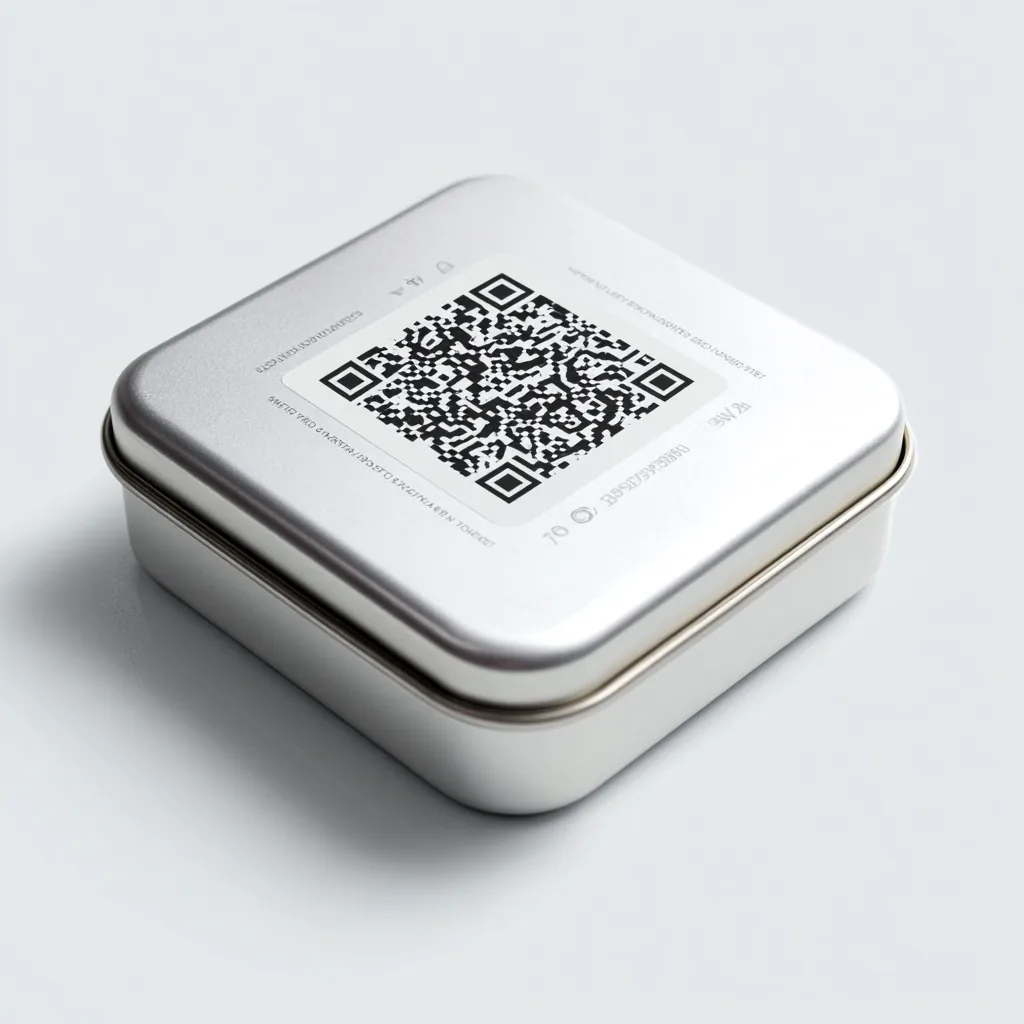
QR codes are the most familiar entry point. They're printed directly onto the packaging surface and read by a smartphone camera. No app required — just point and scan. The code links to a URL, which can be anything: a product page, a video, a recipe, a loyalty portal. The code itself costs nothing to generate; the investment is in what you build on the other end of the scan.
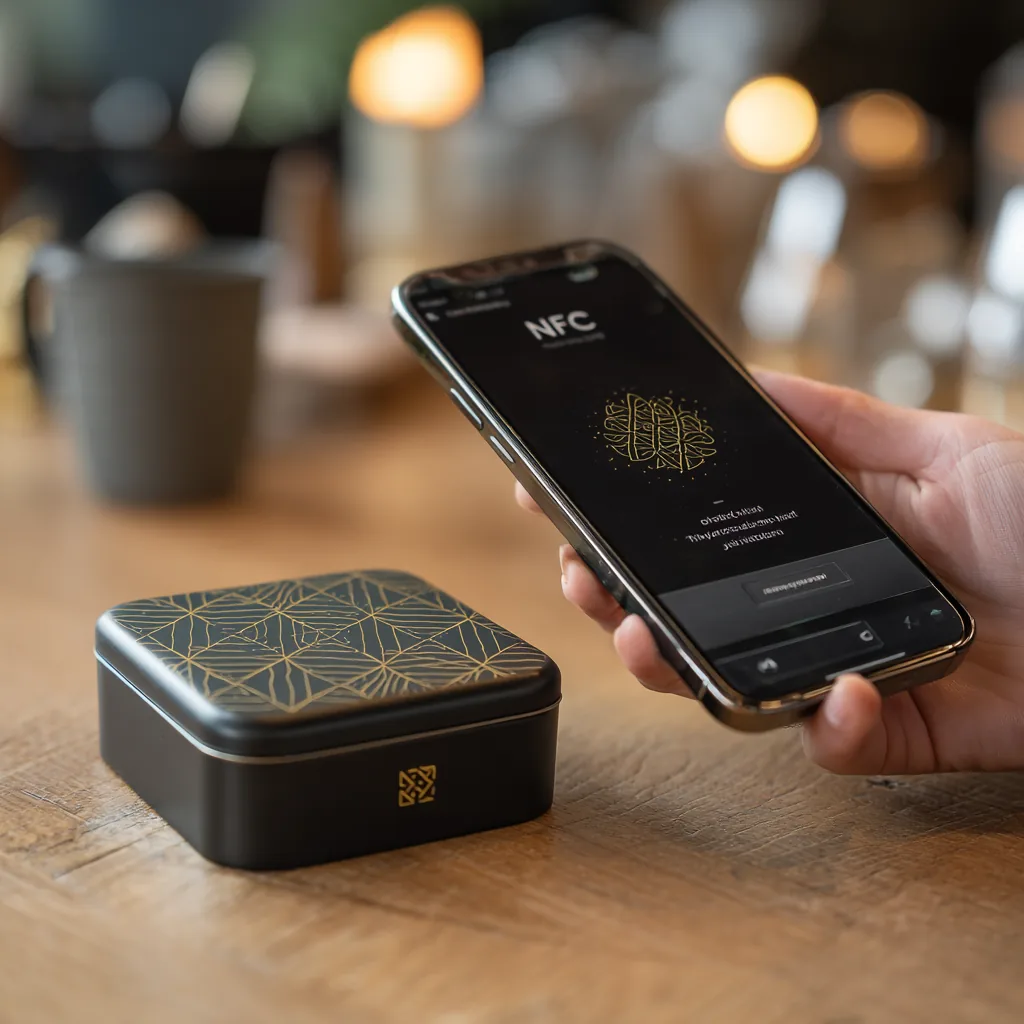
NFC tags are a step further. These are tiny passive chips — usually embedded in a label, a sticker, or increasingly in a lid or base — that communicate wirelessly with NFC-enabled phones when tapped. No camera needed. The user just holds their phone near the packaging and the interaction happens. Most modern smartphones (iPhone 7 and later, most Android devices from around 2015 onward) support NFC reading without any special app.
AR triggers are more niche, requiring either a printed marker or GPS/object recognition to overlay digital content onto a camera view. They're compelling for the right product, but they require a dedicated app and a more deliberate user intent. For most brands, QR and NFC are the workhorses.
The common thread across all three: they turn passive packaging into a live, updatable communication channel. The physical object stays the same; the digital experience behind it can change whenever you need it to.
Why Tin Is a Better Canvas Than Most
Here's the honest version of why metal packaging handles this technology particularly well — and it's not just marketing.
The print quality holds up
QR codes are surprisingly demanding. A code that's smudged, slightly distorted, or printed on a surface with a competing visual texture can fail to scan cleanly. Tinplate lithographic printing — done via offset lithography directly onto the metal — produces sharp, high-contrast imagery with precise registration. The code comes out exactly as designed, and it stays that way. It won't absorb moisture, peel at the edges, or fade in a shop window the way paper labels sometimes do. For a technology that depends on a phone camera reading a precise pattern, that kind of fidelity matters.
NFC and metal: a relationship that took some engineering
This one is worth addressing directly, because it's a common concern: NFC doesn't play well with metal by default. Radio frequency signals can be disrupted by conductive surfaces, which causes problems when you try to embed a standard NFC tag directly against a metal wall.
The solution — which has been available for several years now and is now well-established — is a category of tags specifically designed for on-metal applications. These use a ferrite layer or similar material that essentially acts as a buffer between the chip's antenna and the metal surface. They cost a bit more than standard tags, but they work reliably. The practical approach for tin packaging is to embed NFC tags in lids (often with a small foam or spacer layer), or to apply them to the interior base of the tin. Both approaches are proven in the field.
The premium context makes scanning feel worthwhile
This might be the most underappreciated factor. Consumer behavior around connected packaging is heavily influenced by perceived product value. People are more likely to scan something when the act of scanning feels appropriate to the context — when it feels like there's something worth finding.
A QR code on a tissue box is easy to ignore. The same technology on a beautifully printed tin of specialty tea, or a matte-finish tin of artisan chocolates, or a hinged keepsake tin from a luxury brand — that's a different proposition. The packaging communicates that what's inside is worth engaging with. The scan feels less like a promotional gimmick and more like unlocking something curated. The tin earns the interaction before the phone comes out.
What Brands Are Actually Using This For
The technology is well-understood at this point. The more interesting question is: what are brands using it for, and does it generate real value?
Anti-counterfeiting and authentication
This is one of the most commercially compelling applications, and it maps directly to product categories that already favour tin packaging — luxury goods, premium spirits, high-end confectionery, collector items.
The approach is straightforward: each tin gets a unique NFC tag or serialised QR code. When a consumer (or a customs inspector, or a retailer) taps or scans, they hit an authentication endpoint that confirms whether that specific unit is genuine. The data on the backend — where it was manufactured, when, which batch — is logged and traceable. Counterfeits either lack the chip entirely or, if they've been reproduced with a copied code, will show up as duplicates against a unit that's already been authenticated elsewhere.
For brands that have dealt with grey market goods or outright fakes, the appeal is obvious. And because tin packaging is already the format of choice for many premium and gift products, adding authentication doesn't require a packaging overhaul — it's an addition to the existing format.
Recipe content and product storytelling
Here's a use case that's simpler but genuinely useful: a cookie tin or a spice tin that links to recipes. Seems straightforward, but the execution is more interesting than it sounds.
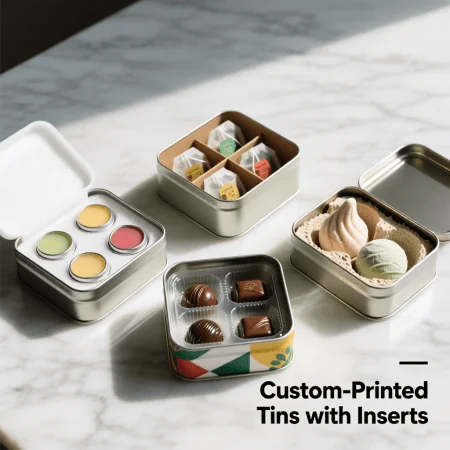
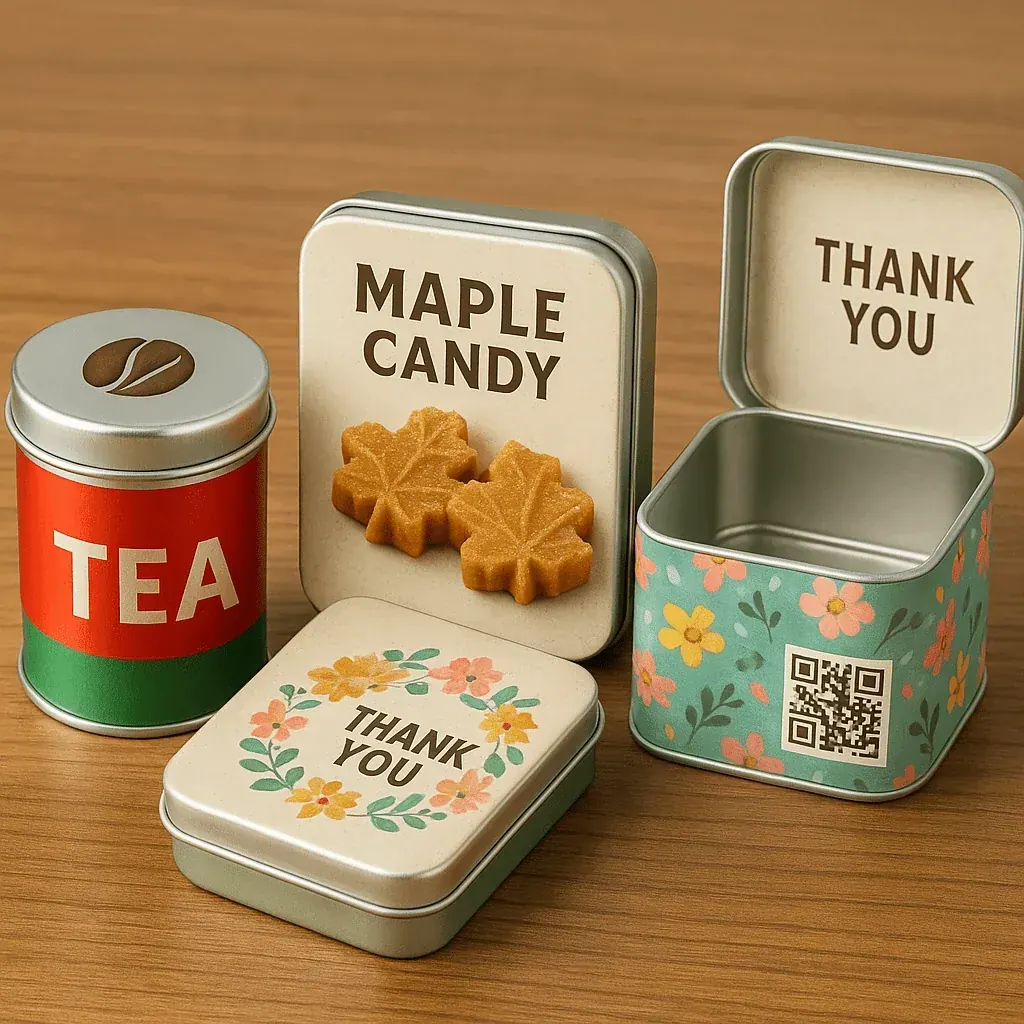
A printed recipe inside a tin has a fixed amount of space and fixed content. A QR code on the same tin can link to a curated, seasonal recipe library that updates every few months. It can link to video content — a baker demonstrating technique, a chef walking through a dish. It can link to user-generated content where customers share their own results. The tin becomes the entry point to an ongoing relationship rather than a one-time purchase.
We've seen this work particularly well in gifting contexts. A beautiful seasonal tin becomes a gift that keeps giving — the recipient uses the product, scans the tin, discovers a recipe they love, and comes back to buy more. The tin acts as a persistent brand touchpoint sitting on a shelf.
Loyalty programs and repeat purchase incentives
Tapping a tin lid to register a purchase and earn loyalty points is a more elegant interaction than asking someone to log onto a website and enter a batch code by hand. It lowers the friction dramatically, which means higher participation rates.
The mechanic is simple: each tin gets a unique NFC tag. First tap registers the purchase and adds points to the user's account. Subsequent taps can be configured to offer content, recipes, or early access to new products without additional point accrual. The brand gets verified purchase data tied to a real user. The consumer gets a reward and a reason to engage.
For brands that sell through retail channels and don't have direct visibility into who's actually buying, this kind of first-party data is genuinely valuable.
Transparency and traceability
Particularly relevant for food, wellness, and agricultural products: consumers increasingly want to know where things came from and how they were made. A QR code on a tin of loose-leaf tea can link to the specific farm and harvest season. A tin of honey can show the beekeeper and region. A cosmetic tin can link to full ingredient sourcing information.
This is sometimes called "radical transparency" in brand strategy circles, and it tends to resonate with the same consumer segment that buys premium packaged goods in the first place — people who are paying a little more and want to feel good about why.
A Few Things Worth Getting Right
If you're considering adding connected packaging features to your tins, a few practical points are worth keeping in mind:
The landing experience has to earn the scan. A QR code that leads to a mobile-unfriendly website or a generic product page is worse than no QR code at all. It's a small breach of implicit promise — you suggested there was something interesting here, and there wasn't. Whatever you link to should be built for mobile, load quickly, and deliver something the consumer actually wants.
Plan for the long term. One advantage of QR codes in particular is that the printed code can stay the same while the destination URL changes. This means you can update the content — seasonal recipes, new video content, a refreshed loyalty offer — without changing the tin. But it also means you need someone responsible for keeping that content current. A QR code linking to outdated content is a problem.
NFC tags add cost, but it's modest. On-metal NFC tags in volume typically run in the range of a few cents to around a dollar per unit depending on chip specifications, quantities, and integration complexity. For premium products where the tin itself is already a significant packaging investment, this is usually a small percentage of total packaging cost.
Tell people what to do. "Scan to unlock" or "Tap lid to authenticate" needs to appear somewhere on or near the code. Most consumers won't notice a QR code without a prompt, and almost no one will instinctively tap a lid without being told to. The call to action is part of the design — much like a well-designed tin lid that tells a story, the prompt is what invites engagement in the first place.
Where This Is Heading
Connected packaging is not a passing trend. The underlying drivers — consumer demand for transparency, brand desire for first-party data, the economics of digital content versus print — are structural. QR code scanning in particular has normalised dramatically since the pandemic, when they became ubiquitous in restaurants and public spaces. The behaviour is embedded now in a way it wasn't five years ago.
What's evolving is the sophistication of what happens after the scan. Early connected packaging was often just a link to a website. Now brands are building genuine digital experiences: loyalty ecosystems, AR content layers, real-time product authentication, personalised recommendations. The packaging is becoming the interface.
Tin is unusually well-positioned for this. The format is durable, premium, and reusable — qualities that give connected features a longer active life than a cardboard box that gets recycled in a week. A tin that sits on a kitchen shelf or a bathroom counter for months is a recurring brand touchpoint. A well-designed NFC tag or QR code in that context isn't a gimmick — it's a channel.
If you're thinking about how connected packaging might work for your brand or product line, contact our team to talk through what's practical for your format and your goals. The technology is accessible — the interesting work is in the design of the experience.
Stannum Can manufactures custom decorative tin packaging for food, cosmetics, gifts, and collectibles. We work with brands at every stage of the packaging process, from concept through production.