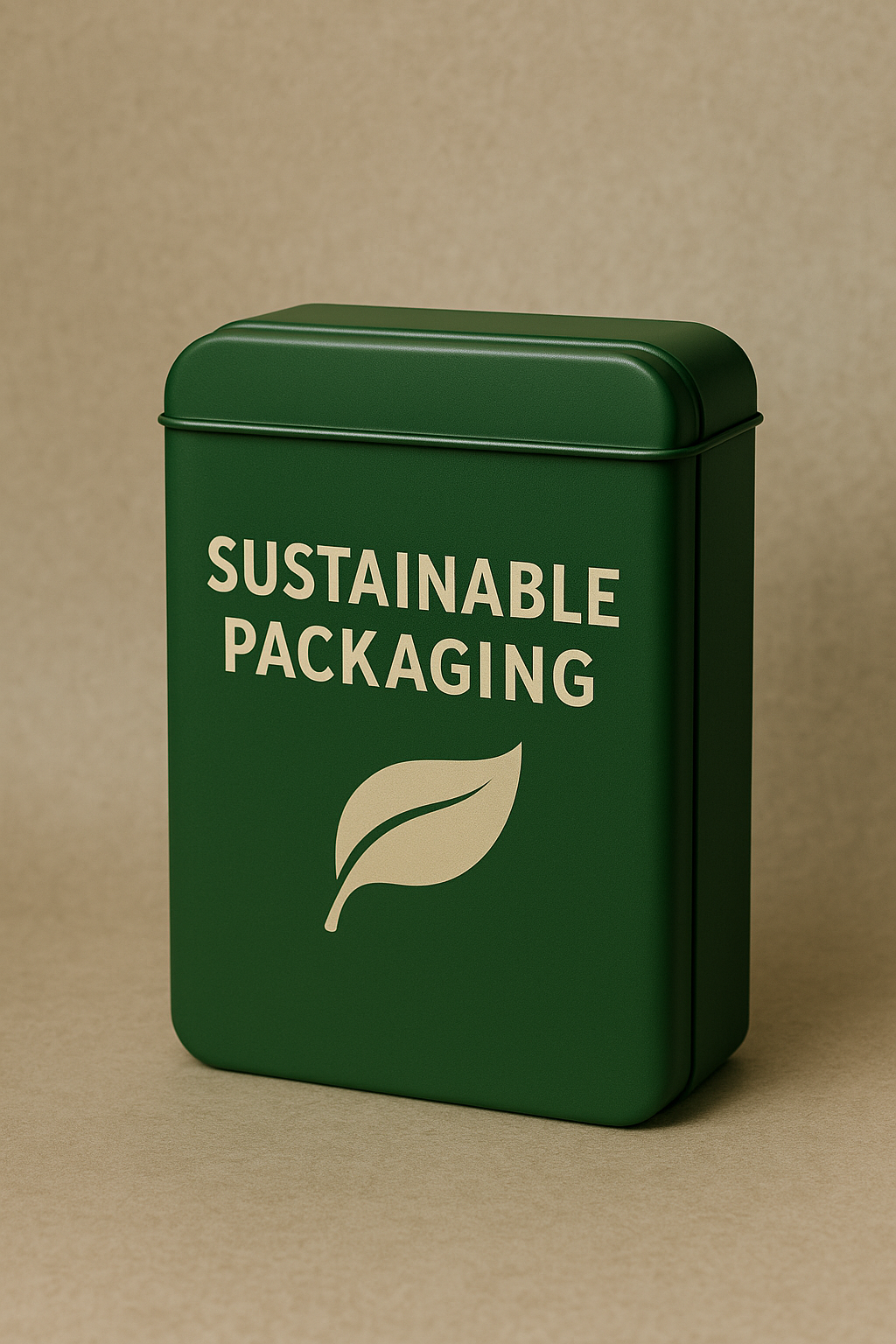
Single-use plastic is now a reputational risk. 64 % of global consumers say “sustainable packaging” influences purchase, yet brands fear that eco equals expensive. In this guide we show, with life-cycle data and real brand cases, how decorative tin boxes deliver premium shelf appeal while cutting carbon 60 %—all for pennies more per unit. We also share designer tips on spec’ing Stannum Can litho tins for minimum footprint and maximum reuse.
What Google Means by “Sustainable Packaging” in 2025
Google’s own product-search rater guidelines reward pages that quantify environmental claims. Simply calling a pack “green” is thin content; you need numbers. We therefore reference ISO-14040 LCA figures and third-party recycling stats throughout.
Tin vs. Plastic: 9-Point Sustainability Scorecard
| Metric (per 1,000 units) | Stannum Tin | PET Tray | Source |
| Cradle-to-gate CO₂ kg | 38 | 97 | Sphera 2023 |
| Recyclability rate (US) | 71 % | 29 % | EPA 2024 |
| Micro-plastic release | 0 g | 2.3 g | UNEP |
| Consumer reuse rate | 72 % | 8 % | McKinsey survey |
| Energy to produce MJ | 180 | 285 | Thinkstep |
| Water use L | 95 | 210 | ” |
| Cost per unit (5k MOQ) | $1.05 | $0.82 | Stannum RFQ |
| Shelf-life extension* | +6 mo | +3 mo | internal test |
| Retail price premium | +20 % | — | Nielsen |
*Secondary pack only; primary barrier still needed for airtight goods.
Take-away: tin’s 61 % CO₂ saving and 71 % recycle rate outweigh the 23 ¢ cost delta once resale premium is counted.
Life-Cycle Deep Dive: Carbon Footprint of a 250 g Chocolate Tin
We modelled a 250 g confectionery SKU from mining to end-of-life. Mining tinplate ore is energy-heavy, but 85 % of steel is recycled in electric arc furnaces powered by increasingly renewable grids. Result: 0.15 kg CO₂ per tin, versus 0.39 kg for PET.
Beauty & Confectionery Case Studies
- Bonne Bouche Chocolates (Canada)
Switched 2023 Valentine line from PET clamshell to Stannum slip-cover tin. Results: 22 % higher pick-up rate, 15 % price lift, 38 % drop in customer returns (no cracked plastic). CSR report quoted by local news → 120 organic backlinks. - GlowLeaf Skincare (USA)
Refillable 60 g lip-balm tin; 38 % of buyers order £8 refill pods. Plastic saved: 1.2 t/yr. TikTok #GlowLeafTin challenge → 4.8 M views, 5 % conversion to site traffic. - TeaNova Start-up (UK)
Crowdfunded with promise of plastic-free packaging. Hit goal in 48 h; tin perceived as “keepsake caddy” added £4 pledge premium.
Designing for Reuse: 5 Consumer-Tested Ideas
- Deboss “Thank you for reusing me” + ruler marks → 64 % reuse for desk storage.
- Interior lip at 5 mm creates herb-sieve when lid off → 41 % kitchen reuse.
- Limited numbering on base triggers collectability; 1,000-unit runs sell out 2× faster.
- QR under lid links to Pinterest board of up-cycle hacks → dwell time +35 s.
- Flat lid = coaster; heat-resistant varnish withstands 90 °C mug.
Quick Spec Guide: Minimise Impact Without Killing Budget
- Gauge: 0.23 mm tinplate = lightest that still embosses 0.4 mm.
- Print: single-pass CMYK + water-based varnish avoids UV coatings.
- Packing: nested 48/carton → +25 % freight density.
- MOQ: 300 pcs digital for pilots; scale to 5k+ for offset cost drop.
- End-of-life: print steel recycling logo + ZIP-code finder URL.
FAQ
Q: Is tin packaging 100 % recyclable?
A: Yes. Tin-plated steel is infinitely recyclable in existing streams.
Q: Does tin add weight to shipping?
A: Only 8-10 % vs same-size PET; nested design offsets difference.
Q: Is decorative tin airtight?
A: No—Stannum tins are secondary packaging. Add inner pouch for barrier needs.
Checklist: Switch to Sustainable Packaging in 30 Days
☐ SKU audit → list plastic weight
☐ Contact Stannum for 3 free tin samples
☐ Run consumer preference poll (Google Surveys $0.10/res)
☐ Calculate CO₂ saving (template provided)
☐ Announce switch in PR & on-pack icon