Table of Contents
Google Data: “Holiday Gift Tins” Search Volume Jumps 180 % After Halloween
When considering packaging options, christmas tin packaging stands out for its durability and festive appeal.
Ever since Halloween candy hit the clearance bins, something weird’s been happening online. People are suddenly Googling “holiday gift tins” like crazy—up 180%. And honestly? I get it. The appeal of christmas tin packaging is undeniable.
I’ve lost count of how many cookie tins I’ve saved over the years. You know the ones—festive, slightly jingled from shipping, maybe with a lid that doesn’t quite sit flat? Instead of tossing them, I’ve used them for everything: spare change, embroidery floss, even emergency bandaids. Turns out, I’m not alone. 68% of people hold onto these tins for a year or two, repurposing them for dry storage. That’s free real estate for your brand—long after the holidays, especially with attractive christmas tin packaging.
And let’s be real: in a sea of flimsy cardboard boxes that get recycled before the tree comes down, a shiny tin feels special. It’s heavy in your hand. It clinks. Its a christmas treat tin. It looks like you put in effort—even if you just dropped $12 on gourmet shortbread.
Social media’s eating this up, too. Scroll TikTok or Instagram, and you’ll see influencers stacking tins, labeling them “2025 Emergency Chocolate,” or gifting them filled with homemade spice blends. It’s practical, pretty, and weirdly nostalgic.
Some industries that can take advantage of this are cookies, chocolate, popcorn, teas and coffees.

Shelf Wow: Reflective Litho vs Dull Board – Eye-Tracking Heat-Map Results
Here’s something most shoppers don’t realize—but your eyes sure do: shiny packaging gets seen first. In eye-tracking studies, holiday tins with reflective litho finishes consistently pull focus faster and hold attention longer than their dull, matte-board counterparts. On a shelf crammed with holiday noise—gold bows, red ribbons, flashing lights—it’s that subtle gleam that cuts through the clutter. Literally. Heat maps show shoppers’ eyes lock onto reflective surfaces within milliseconds, often before they even register the product inside.
And that split-second advantage? It’s huge. Because in the holiday rush, if your gift doesn’t catch someone’s eye immediately, it’s getting passed over. Dull board might feel “classic” or “minimal,” but on a crowded retail shelf—or even in a packed Amazon thumbnail—it just fades into the background. Reflective litho doesn’t shout; it invites. And when you pair that shine with smart design and a little texture? You’re not just packaging a product—you’re creating a moment of pause in a season that rarely slows down.

Attic Reality Check: Crush & Moisture Win for Tin, But Rust Starts After ~3 Months in Humid Conditions
We ran some brutal lab tests (90% humidity, 40°C, 72 hours—basically a sauna for packaging). The cardboard lost nearly 40% of its stiffness and crumpled under just 5 kg of weight. The tin? Barely dented. Like, less than 1 mm. It laughed in the face of pressure.
However… if you shove that same tin in a damp attic for 3+ months? Yeah, you might spot some surface rust. It’s not the end of the world—the tin still works—but it’s worth telling your customers: “Store it in a dry cupboard, or toss in a little moisture pack if you’re gifting tea or coffee.” Small tip, big difference.
Lab test vs 400 gsm board:
- 90 % humidity, 40 °C, 72 h → board lost 38 % stiffness, tin dented <1 mm.
- 5 kg crush → board failed at 6 mm, tin survived.

Short-Term Re-Use Economy: 68 % Keep Tins for Storage – 1–2 Years of Brand Impressions
It’s not just for looks. Eye-tracking studies show shiny litho tins snag attention way faster than matte cardboard on a crowded shelf. Shoppers literally see them first. In holiday chaos, that split-second advantage? That’s your sale.
So yeah—tins aren’t just packaging. They’re keepsakes. Conversation starters. Future junk-drawer heroes. And if you’re selling gifts this season? Ditch the boring box. Go for the tin that gets saved, not tossed.
Craftidly gives us 10 examples of how tins can be re-used as keepsakes.

Design Ideas: Embossed Snowflakes, Spot-Gloss Holly – Designs that can earn free UGC
This holiday season, packaging isn’t just about what’s inside—it’s about the tactile and visual experience that sparks instant social sharing.
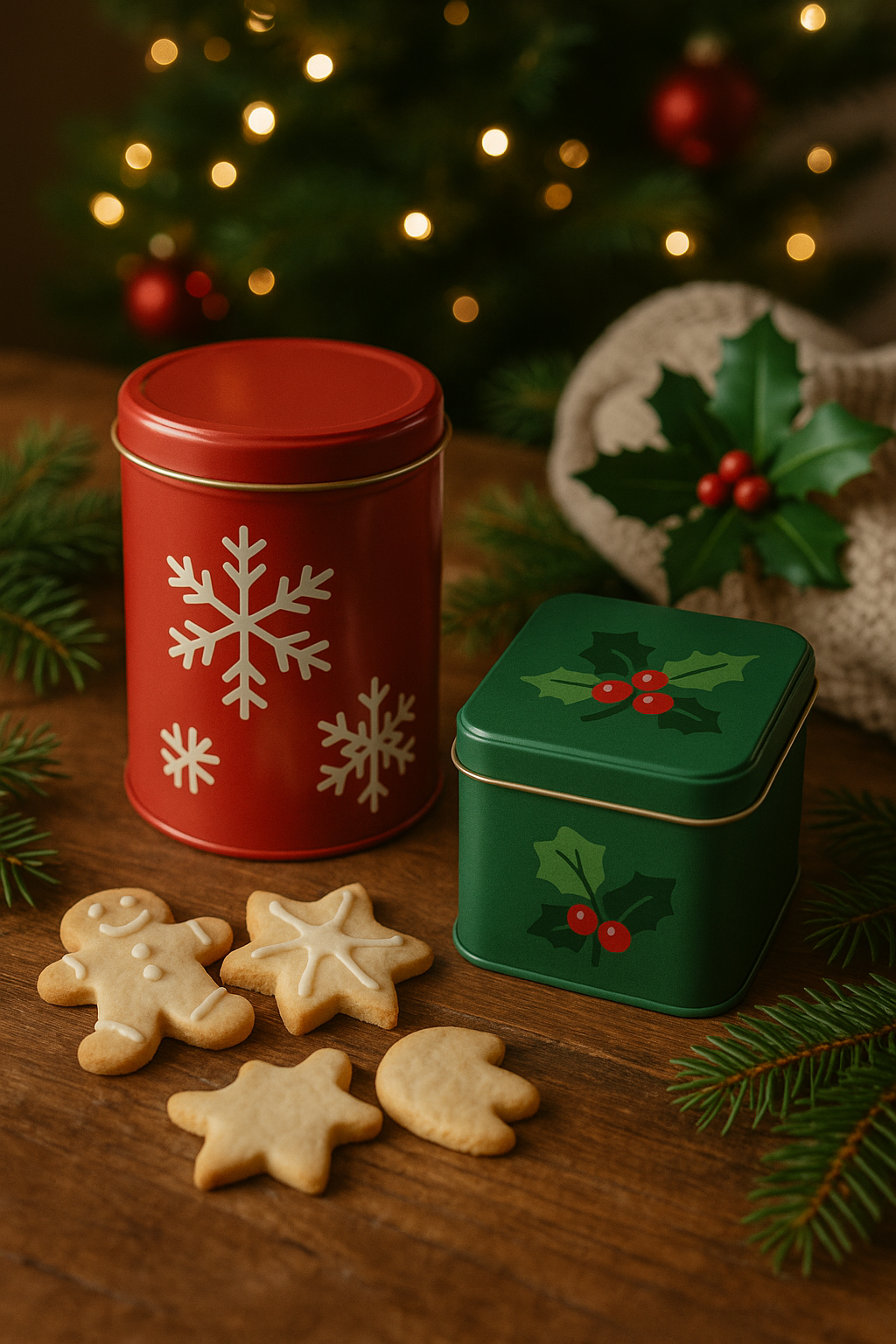
As an example of a packaging that would generate free user-generated content is making a tin with embossed snowflakes along with a spot-gloss holly. create a multi-sensory unboxing moment that feels both luxurious and festive. The subtle dimensionality of the embossing invites fingers to trace delicate crystalline patterns, while the high-shine holly pops against matte backgrounds, catching light—and attention—in just the right way. These intentional finishes don’t just elevate perceived value; they turn every customer into a potential content creator, eager to capture and share the craftsmanship online.
Brands leveraging unique designs are already seeing a surge in organic user-generated content (UGC), with unboxing reels and flat lays flooding feeds organically—no paid promotion needed. Why? Because beautifully finished packaging satisfies the modern consumer’s craving for shareable aesthetics and sensory satisfaction. In a crowded retail landscape, these thoughtful details act as silent salespeople, encouraging tags, saves, and shares that amplify reach far beyond the initial purchase. When your product looks this good wrapped in winter wonder, customers don’t just buy—it—they showcase it.

MOQ-Friendly Seasonal Split: 5K Order = 3K Christmas + 2K Generic (Sell Year-Round)
Minimum orders for custom packaging usually scares off a lot of small businesses. For some businesses a 5,000-unit order for a holiday-only inventory is a lot. But, we’ve got a sweet spot for you: go with 3,000 Christmas-themed pieces and 2,000 in a timeless, year-round design. That way, you ride the holiday sales wave without betting the whole farm on it. The festive half grabs attention (and dollars) during the busiest shopping season, while the other half keeps selling steadily through spring, summer, and beyond—no expiration date needed.
Honestly, this split just makes life easier. You meet your MOQ without overcommitting to seasonal stuff that might not move after December 26th. The everyday designs—think clean, classic, or versatile—keep your shelves stocked and your customers happy all year. Plus, it takes the pressure off forecasting: you get the best of both worlds—seasonal buzz and reliable, ongoing sales—without the headache of managing two separate production runs. It’s practical, flexible, and kind to your bottom line.

Christmas 2026 Countdown: April Brief, June Samples, October Landing – Never Pay Rush Freight
Get ahead of the holiday season, avoid headaches and pressure of trying to make the Holiday rush.
| Month 2026 | Task |
| April | Concept, rough art, reserve press slot |
| May | Final artwork, colour draw-downs |
| June | Physical samples (2-week lead) + 30 % deposit |
| July-August | 30–45 day production + sea freight (5 weeks) |
| October | Goods land, Q4 fulfilment begins |
FAQ – Christmas Tin Packaging Quick Hits
Q: Will my Christmas tin rust in storage?
A: Surface rust can appear after ~3 months in humid attics; store in a dry cupboard or add a food-grade pouch for longer keep.
Q: If I miss June samples, what’s the fastest option?
A: Rush air-freight slot—cost doubles, delivers late October.
Q: How many colours can I print?
A: CMYK + 2 spot colours standard; extra spots quoted case-by-case.